Bishop of Cork and Ross says arrivals bring fresh impetus to the Catholic Church
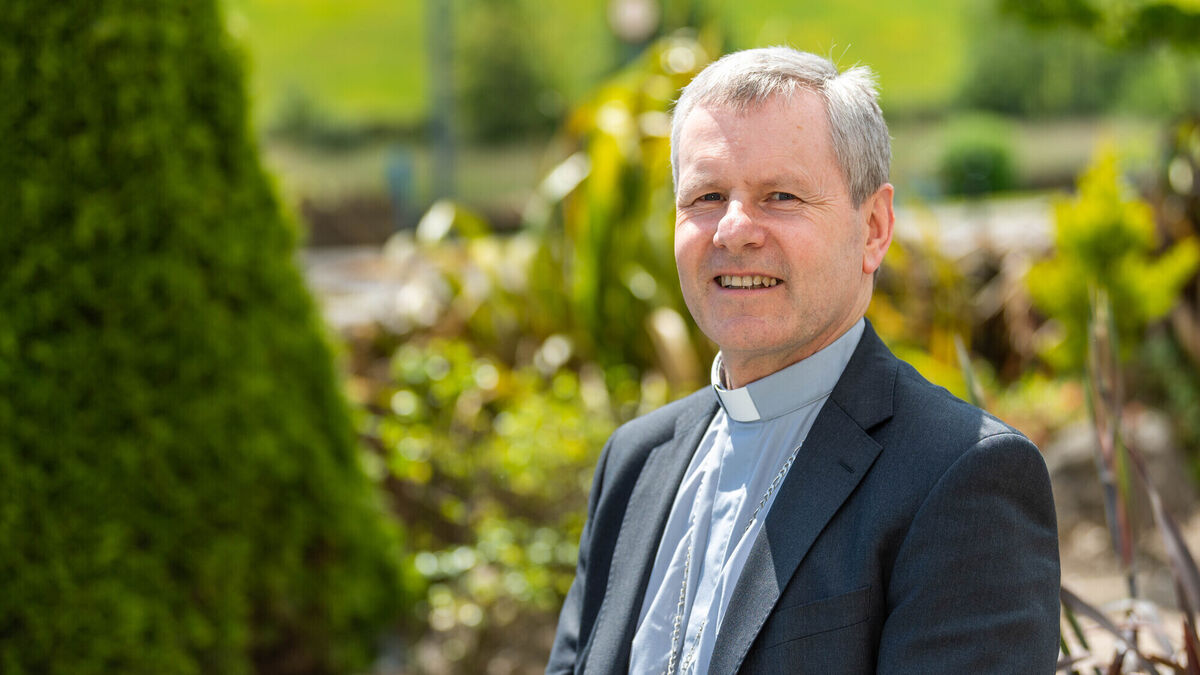
Then Bishop of Cork and Ross, Bishop Fintan Gavin.
The Catholic Church has been given fresh life by new arrivals to Ireland, and by the young people of the faith, the Bishop of Cork and Ross has said.
In an interview with , Bishop Fintan Gavin said the new “families of parishes”, which had incorporated parishes into groups that share clergy, had been a great success in the diocese and he cited one such family of parishes which has thrived with fresh members.
“We’ve created the Cathedral family of parishes, and it has a particular welcome to the new Irish,” Bishop Gavin said of the city grouping.
“We have been enriched and are able to support a Brazilian community, a Croatian community, an Indian community, African communities from across different African countries and a Polish community. They have enriched our church and hopefully they have found a welcome and an enriching,” he said.
“We now have a number of African priests working with us, integrated, part of our Presbyterate.
“We have someone working with our Brazilian community, he’s a Capuchin and he’s Polish, worked most of life in South America, sees the need here, and he’s gone off and learned Portuguese so he can minister to the Brazilian community here, he’s living in Holy Trinity,” Bishop Gavin said.
When a new bishop is appointed, Pope Francis writes a papal mandate, a personal letter to the man he’s appointing, and Bishop Gavin recalled that when he was appointed, the Pope had a special message for him, ending with the instruction: 'I want you to work together in unity with the people of the diocese towards a period of renewal'.
“It’s mutually enriching, so it’s not to the exclusion of one community over the other.”
He added that it was not, for example, about the new Irish over the people who have lived in Cork city for a very long time. “It’s that enrichment for both [communities].”
Four years in post now running the geographically largest diocese in the country, the softly-spoken Dubliner had barely arrived in Cork, having just completed a four-and-a-half day retreat with his priests in Killarney, when the Covid-19 pandemic hit.
The diocese is still in the process of getting back to normal from that trauma, but one welcome sign was the return in June of the annual Eucharistic Procession, which saw thousands of people take to the streets, the bishop said.
“It really is a very strong Cork tradition, and we had numbers that we haven’t had in 15 years.
“You had core people from all of our parishes, enriched by the new Irish that are coming among us, and a real celebration of something that really resonates with the people of Cork city, which respects diversity, but celebrates in a very respectful way, a faith that’s very deep within the people and an identity.”
Recalling the origin of the Cork procession 98 years ago in the immediate aftermath of the Civil War, Bishop Gavin said the Eucharistic Procession was an initiative of reconciliation to bring people together unified around the Eucharist in the person of Jesus.
“It really came from the business people in the city, when the two sides of the war wouldn’t talk, they went to the Bishop of the day and said, ‘We’ll unite these people around the Eucharist’, and there’s something very lovely about that.”
Another sign of a return to normalcy, the bishop said, was the return of pilgrims from the diocese – “some of our most vulnerable, sick people” - to Lourdes for the first time since before the pandemic.
“We had 300 people, let’s say two plane-loads, from Cork, just a lovely community event in Lourdes, all coming together and huge positivity, and hugely enriching,” he said.
“The young people, by just being themselves enriched the older people, [and] the young people learned so much by just listening to the older people. We had lovely sing-songs and there was just a lovely atmosphere.” Pointing to a ubiquitous modern phenomenon, the mobile phone, the Bishop noted that the young Cork people visiting Lourdes and offering assistance to their fellow pilgrims were noticeably off their phones.
“They were fifth year students, they didn’t have their phones when they were with what we would call ‘the assisted pilgrims’ – the sick – because they didn’t need them, they were engaged.”
He pointed to two recent appointments to key roles within the diocese as proof against any popular perception that the Catholic Church is still overly clerical, and cited them as evidence of renewal in the church’s mission and ministry.
Eilís Casey was appointed to the role of parish life cordinator in the Office of Mission and Ministry, which is attached to the North Cathedral,, where she was joined by Lorraine Buckley, who was appointed faith development coordinator.
“It’s about empowering, and the community working together.”
Bishop Gavin said had been very impressed during a recent visit to Malawi by “the music, the energy, the colour, the simplicity of the life, but the joy”.
Some of that joy had been evident, he said, during World Youth Day in August, when 40 pilgrims from Cork and Ross were among 1.5 million young people from all around the world who camped out under the stars in Lisbon.
“We saw some of that joy at World Youth Day, and we saw some of that joy in Lourdes, and it’s that joy that we need to bring, and I also see that joy in school visits, [but] I would also see a lot of angst.
The bishop added that he believes the Catholic Church in Cork has benefited greatly from the energy of the young people who are drawn to the faith.
“I think they enrich the community so much, and we’ve had some lovely gatherings of young people in what we call ‘connect events’ here in the city, where we bring young people of faith together, and the energy and life, and the values and idealism, there’s no cynicism, it’s just very positive, and that’s what generates energy.
“Our world needs that positive energy more than ever,” Bishop Gavin said.



 App?
App?


