Two thirds of greenhouse gases in Cork city coming from home and transport
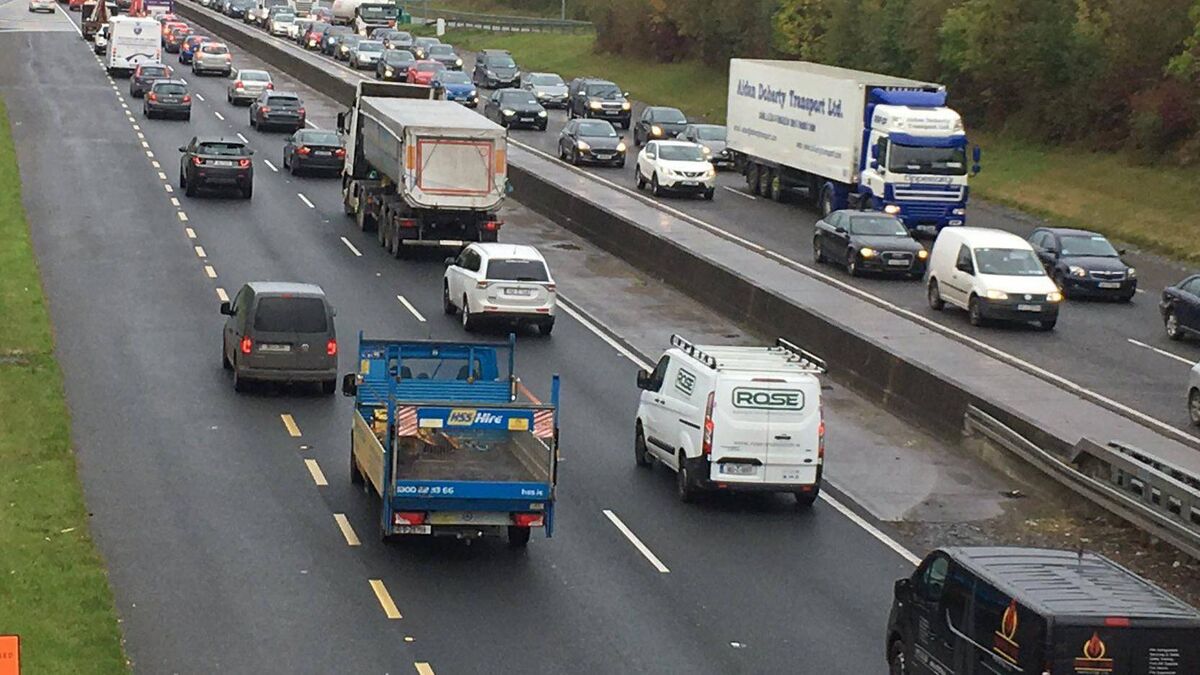
The city's most congested roads, including the South Ring, N8 and Anglesea Street, among others, are emissions blackspots it found. Pic: Larry Cummins
The findings confirm that upgrading our homes to be more energy efficient, and moving around the city by public transport, walking or cycling are among the best ways to tackle climate change.
A second and separate piece of research completed by KPMG Future Analytics, also for Cork City Council’s Climate Action Unit, confirms people’s concerns that unless serious action is taken to reduce emissions, Cork city is facing more frequent and severe flooding, droughts, and heatwaves.
The ‘Modelling and Spatial Mapping of Cork City Baseline Emissions’ study, completed by UCC’s School of Engineering and Architecture, MaREI and ERI, gathered data on emissions from homes, vehicles and businesses. It calculated energy demand and modelled CO2 emissions across transport, residential, commercial/industry, public, agriculture and fishing, and waste while mapping energy and CO2 emissions and comparing them against national emissions models.
The research, led by Dr Marguerite Nyhan, found that Cork city is releasing nearly one million tonnes of greenhouse gases into the air every year. The 78,856 or so homes in Cork city contribute 34% of total emissions while road transport, especially cars, account for another 29%.
The city's most congested roads, including the South Ring, N8 and Anglesea Street, among others, are emissions blackspots.
The remaining balance of the city’s greenhouse gas emissions are from commercial and industrial buildings which contribute another 22%, public services 7%, agriculture and fisheries 6% and waste 2%.
While the emissions baseline was being prepared, the council commissioned KPMG Future Analytics to study the climate change risks to the city.
The ‘Cork City Council Climate Change Risk Assessment’, led by Dr Barry O’Dwyer, used the Government’s projections of what Ireland’s climate is likely to be by 2050 to estimate how the pattern of extreme weather events already experienced in Cork might change and affect the growing population.
The assessment found that all types of river, surface and tidal flooding, droughts and heatwaves will be more frequent and severe. These events will cause increasingly expensive losses and damage to our infrastructure, our health, our environment, our social networks, our cultural heritage, our budgets, and reputation. Action to minimise these growing risks, by cutting emissions, especially from buildings and road transport, and to adapt to them to protect us in the future, is critical.
The Lord Mayor of Cork, Cllr Kieran Mc Carthy, said: “Increasingly, every year we see different parts of Europe affected by dramatic, climate-driven disasters like floods and fires. If we want to reduce the chance of similar things happening here, we must play our part by reducing our own greenhouse gas emissions and adapting to the climate changes that are already locked in. I urge everyone in the city to join the growing numbers who are making improvements to their homes, and are walking, cycling or travelling by public transport more. These aren’t the only things people can do to combat climate change, but they are among the things that have the biggest positive impact on our own health, comfort and wellbeing, as well as on our planet."
Cork City Council Chief Executive, Ann Doherty added: “These reports re-confirm the strategic imperative of priority projects like the Cork Metropolitan Area Transport Strategy (CMATS), which we are delivering with our partners in the National Transport Authority, Transport Infrastructure Ireland and Bus Eireann, to support people to make the shift from car dependence to walking, cycling or to reliable and regular public transport and also the crucial importance of the Lower Lee Flood Relief Scheme and a number of other flood relief schemes that we have delivered and are delivering with the OPW."




 App?
App?


