Cork consultant among group aiming to improve hospital experience of women with secondary breast cancer
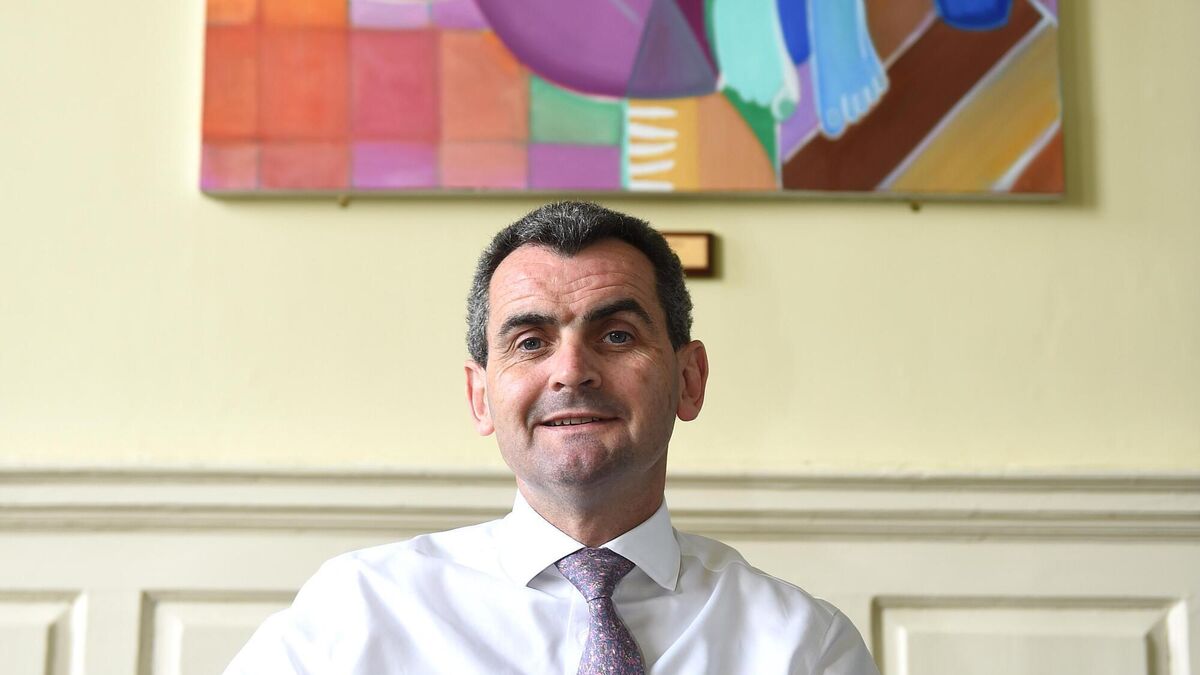
Professor Seamus O’Reilly, consultant oncologist and vice clinical lead with Cancer Trials Ireland, is serving as a co-chief investigator on the survey spearheaded by a former research scientist with a diagnosis of secondary breast cancer.
Cork consultant among group aiming to improve hospital experience of women with secondary breast cancer

Professor Seamus O’Reilly, Consultant Oncologist and Vice Clinical Lead with Cancer Trials Ireland is serving as a co-chief investigator for a survey designed to improve the hospital experience of women with secondary breast cancer. Picture: Larry Cummins

A Cork-based consultant oncologist is lending his expertise to a survey designed to improve the hospital experience of women with secondary breast cancer.

Professor Seamus O’Reilly, consultant oncologist and vice clinical lead with Cancer Trials Ireland, is serving as a co-chief investigator on the survey spearheaded by a former research scientist with a diagnosis of secondary breast cancer.

Siobhan Gaynor, who forms part of the Cancer Trials Ireland Patient Consultants’ Committee, was initially diagnosed with breast cancer in May 2019. She is now receiving targeted oral chemotherapy and hormone therapy, having spent 30 years herself developing medicines.

Despite the gruelling treatment, Ms Gaynor continues to play a key role in the research which investigates patient experiences from discussions with medical teams to accessing information sources.

Research also covers important topics from sexuality and fertility issues to financial stresses.

Impacts on mental health and conversations with family and children are also considered in addition to exercise programmes and the palliative care process.

The survey, which aims to recruit 300 people to detail their experiences, is being described as Ireland’s first-ever patient-led research initiative to undergo rigorous ethics and scientific approval.

Professor Seamus O’Reilly described the importance of the survey.

“Breast cancer is the most common cancer globally,” he told The Echo.

“It is also the commonest cause of death among women rearing families in Ireland.

“It’s been like that since I was growing up and has an enormous transgenerational and societal impact”.

He described some aspects of trauma touched upon in the survey that are often linked with a diagnosis.

“The sexuality and fertility aspects are discussed because of the implications of treatment.

“Oftentimes when the cancer spreads, the realisation that having a family may not happen is often worse than the diagnosis.

“There is a saying that chemotherapy for women in their 30s is a speed bump whereas fertility is a mountain on a motorway. 

“It can have a real psychological impact as starting a family is hugely important to so many people in this age bracket”.

The frontline worker hopes that this can help improve the experience for women living with secondary breast cancer.

“With this study, we have data to help us mould our services so that we can make them more appropriate for patients.

“The word hospital comes from the Latin word hospitality. Oftentimes we forget in medicine that the patients are our guests”.

Motivation

He described the motivation behind the project.

“I remember a conversation I had with one patient. We talked about infertility because we were starting chemotherapy and it was an advanced cancer.

“Infertility treatment like egg harvesting wasn’t going to be an option. It was more about what wasn’t said than what was said.

“I can still see her face in that interaction where we discussed it and the awful finality of the conversation.

“This is what motivates us to make cancer treatments better.

“We know that surveys like this will make for a better environment in which patients are cared for.

“Sometimes you have to look at the other side and use that to bring about positive change."

He praised former research scientist Siobhan Gaynor for making the survey possible.

“This is a precious time for her and her family yet she is still taking time out to improve the lives of others.

“The cancer community are very grateful for her leadership. It’s a hugely generous act on her part."

He described the importance of improving communication in medical settings, particularly when breaking sensitive news.

“How it’s handled the first time is remembered, particularly if it’s not done sensitively. I think sometimes things aren’t delivered well. This may be down to circumstances or environmental factors. It may be the conversation you had before the patient stepped into the room.

“Something that went wrong earlier that day. In healthcare, we can’t always control the environment but we can learn how to do things better and deal with them and improve in the future for the benefit of other patients."

Personal Experience 

Meanwhile, Siobhan Gaynor spoke of her own experience with the Irish health system which inspired her to undertake the project.

“Once I finished active treatment for my initial diagnosis of primary breast cancer, I was more than happy to move on with a renewed sense of how precious life is.

“Receiving the news of secondary breast cancer, and knowing that it is currently incurable, was a completely different animal to deal with.

“It left me reeling.

“Suddenly having to confront my own mortality, I felt traumatised, afraid and lost."

She opened up about the questions she raised following her own experience.

“For me, coping with my secondary diagnosis, there were clear gaps in areas such as access to information and emotional support,” she said.

“I wondered ‘do I tell my family?’, ‘how long will I live for?’, ‘how much will it cost me?’. I had lots of questions but few answers. Yet, I was struck by the fact that there was very little by way of scientific research into these most difficult and upsetting aspects of my care.”

Learn From Experiences 

Ms Gaynor reiterated the importance of learning from patients’ experiences.

“Diseases happen to people and patients are the ultimate experts in their own bodies. Answering ‘the why’ of health research, it is vital that we capture and learn from these real-life experiences.

“With my science background, I wanted the survey to be on a solid scientific footing and evidence-based with which to drive change in cancer care, to develop new health and psychosocial services and resources, and to make life that little bit better for those who may follow in our footsteps.”

The survey is aiming to recruit up to 300 patients who have been diagnosed with stage IV secondary breast cancer and is now available online at www.cancertrials.ie.

Read More

Cork-based INMO officer calls for infection control protocols to be reviewed 

more Cork health articles

Smiling retired man with female home carer Over 1,000 Cork home support carers vote 'overwhelmingly' for strike action
stretcher 130 without beds in Cork as CUH reports highest level of patients on trolleys in country
North Cork nursing takes measures to address Hiqa concerns     North Cork nursing takes measures to address Hiqa concerns    

More in this section

Cork murder trial hears from garda who was called to scene  Cork murder trial hears from garda who was called to scene 
More than €50m funding allocated to greenways and active travel in Cork  More than €50m funding allocated to greenways and active travel in Cork 
Cork weather: Rain warning issued and strong winds forecast  Cork weather: Rain warning issued and strong winds forecast 

Sponsored Content

Turning risk into reward: Top business risks in 2026 Turning risk into reward: Top business risks in 2026
Top tips to protect Ireland's plant health Top tips to protect Ireland's plant health
River Boyne in County Meath, Ireland. Water matters: protecting Ireland’s most precious resource
Contact Us Cookie Policy Privacy Policy Terms and Conditions

© Examiner Echo Group Limited

Add Echolive.ie to your home screen - easy access to Cork news, views, sport and more