Once regarded as a fugitive in his homeland, blind former UCC lecturer overcomes obstacles to escape into the world of art
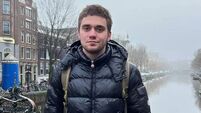
During his lifetime, Robert Fourie, who is 95% blind, studied to be a priest, took a stand against apartheid, became a fugitive, looked death in the eye and, eventually, found himself lecturing in Cork. Against all the odds, he is hosting an exhibition of his own artwork in Cork next month. He spoke to Sarah Horgan.
Once regarded as a fugitive in his homeland, blind former UCC lecturer overcomes obstacles to escape into the world of art

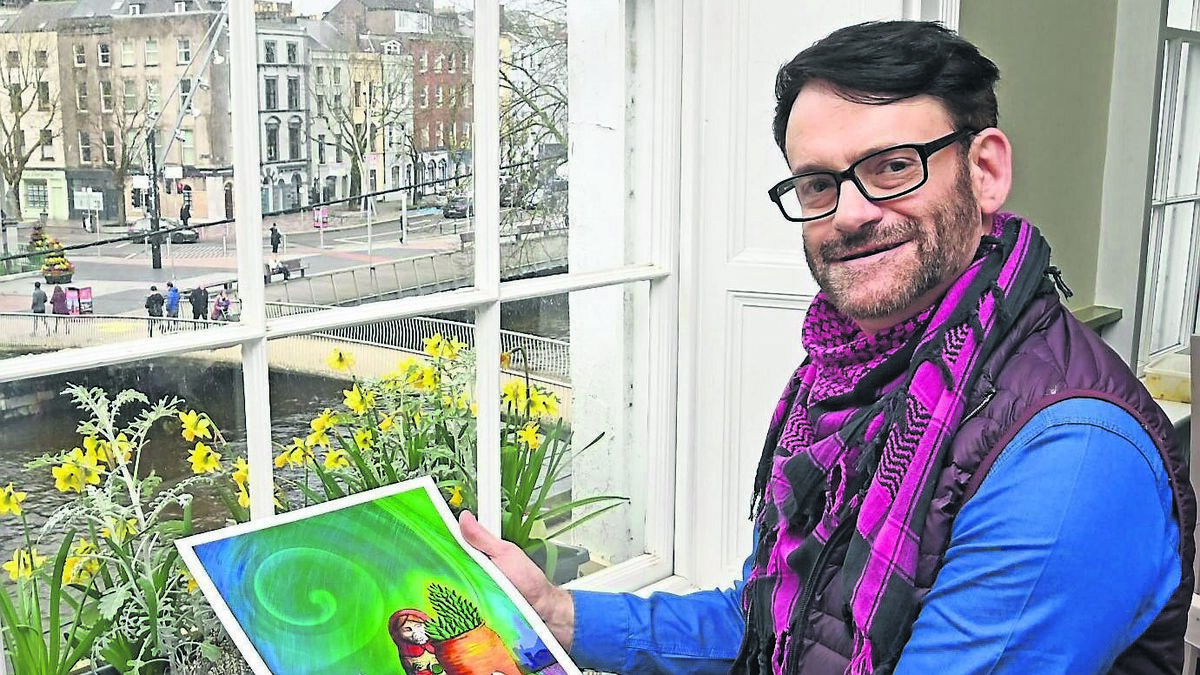
Robert Fourie at the Quay Co-op, Sullivan’s Quay, Cork, where his upcoming art exhibition, Mindsight, will be held. Picture: Denis Minihane

A BLIND former UCC lecturer who once roamed the streets as a fugitive after taking a stand against the South African apartheid has defied adversity again as he prepares to host his first art exhibition.

Heroic Robert Fourie, who lives in Cork City, suffers from retinitis pigmentosa, which resulted in him gradually losing his eyesight over time. Rather than give up on his painting passion, he developed a love for electronic art.

The former audiologist and UCC lecturer now creates all of his artwork on an electronic canvas. The device was introduced to him by a young cousin in Australia who had been using it for schoolwork. Due to the closeness and brightness of the screen, Robert is now able to make out certain images. This is despite the fact that he is 95% blind.

Entitled ‘Mindsight’, his upcoming exhibition takes place in the Quay Co-op On Tuesday, May 9, at 7pm. It features artwork inspired by the psychotherapist Carl Jung and humanists such as Marshall Rosenburg. The pieces are almost as colourful as Robert’s life experiences which, he explains, have been eventful to say the least.

The South African native succeeded in many disciplines before making a name for himself as an artist, even training as a priest. This was before his defiance to follow orders from the South African Army turned him into a reluctant fugitive.

The years leading up to this frightening period saw him join two religious orders to train as a priest.

“In 1987, aged just 17, I worked for the Catholic Welfare Bureau, a soup kitchen in Cape Town,” Robert explained. “I can still recall how I used to help young drug addicts make sandals with the help of a social worker. I joined the Redemptorist Order but left after they had postulants on starvation rations. In 1988, I joined the Dominican Order in Maseru, Lesotho, for a year. Here I taught expatriate Irish children Christian doctrine and preparation for their first communions.”

Robert enrolled at the University of the Witwatersrand in 1989 after realising he was not suited to religious life. However, while studying speech and hearing therapy in Johannesberg, he received a call from the South African Defence Force demanding that he travel to Pretoria to report for duty as a soldier.

“I phoned them and explained that I was studying,” he recalled. 

“However, they told me that I was unable to change my course of study and would now have to serve with the army for two years. I tore up the call-up papers as well as the train ticket and meal ticket they sent me and decided that I would not go. I had black friends who I had met at St Dominic’s Parish in Welkom where I grew up,” he added. 

'EVIL OF APARTHEID'

“I had become conscientised by my exposure to black people in the poor townships during my time in religious life. I understood the evil of apartheid and could not envision myself dressed in an army uniform on the back of a tank. There was no way I was going to travel with them into a township and shoot black people rioting against apartheid,” 

Robert stated further. “Aside from this I was a very sensitive, effeminate, partially sighted boy and I have no doubt that I would not have coped in the South African Army. It would have literally killed me.

“I was on a fugitive list of people who did not turn up for conscription. If the military police caught me I would have been jailed for six years. Thankfully, they didn’t but it was very stressful having the possibility they might find me hanging over me.”

Despite this, Robert still managed to make an impact, playing a huge part in the creation of The South African Sign Language Dictionary project. That was in his third year studying speech and hearing therapy. Robert helped compile the dictionary part-time for two years as part of an initiative run by the South African Human Sciences Research Council. In the years that followed, he became very active in the anti-apartheid movement but miraculously evaded capture by police.

“I thank God for small mercies when I look back at one incident in particular,” he said. “A group of us were involved in an anti-apartheid rally outside a church. People were singing freedom songs and it was very much a peaceful event. My friend Celeste complained of pains in her legs so we went home. 

"What I didn’t realise then was that, if I had stayed just eight minutes longer, I would have been arrested and thrown into jail for being a fugitive. The images in the newspapers the next day of the police breaking up the crowd were horrific,” he added. “It didn’t matter to them that this was a place of worship.

“They came in with whips and sprayed tear gas, beat people up and sprayed protestors with a water cannon containing dye so everyone could be clearly identified. Little did Celeste realise she was sparing me going to jail.”

Robert Fourie, who lives in Cork City, suffers from retinitis pigmentosa.	Picture: Denis Minihane
Robert Fourie, who lives in Cork City, suffers from retinitis pigmentosa. Picture: Denis Minihane

Robert recalled with fondness that happy day in 1990 when Nelson Mandela, the leader of the movement to end South African apartheid, was released after 27 years.

“I was living in a commune when the news came on that Nelson Mandela was being released from prison,” said Robert. “We all went crazy. People were so happy they were dancing in the streets. At that time, we didn’t have the international perspective so failed to realise how big the story was all over the world.”

Robert excelled in a number of posts after graduating with his degree in speech and hearing therapy. He eventually took up a role with the National Rehabilitation Board in 1999, covering Cork, Limerick and Kerry.

MISSED IRELAND

After contracting meningitis in 2000, which almost resulted in the loss of his life, he briefly returned home to South Africa. Nonetheless, he admits he missed Ireland dearly and feared for his safety when intruders entered his home.

It was not long before he was back in Ireland to begin a new role at St Columbus’s National School in Douglas. He started work as a speech and language lecturer in UCC prior to retiring early in 2015. Since retiring Robert has found an escape in art like no other.

“The iPad gave me a new lease of life,” he explained. I just kept painting. Sometimes six hours would go by and I’d look up to see the power had gone out of the machine. Photographer Stephen Bean has become a great mentor to me,” he added. 

“I showed him my images and he was very excited about my work. Since then, he has been a great friend and an ardent supporter of my work. I attended his lecture on lighting in the Caravaggio style. I have since been trying to add the artist’s drama to my work, which is taking a surrealistic direction.”

Corkonians can book tickets for the Robert’s art exhibition via Eventbrite. Admission is free but tickets are necessary to ensure there is space for everyone in attendance.
more UCC articles

From South Sudan to Cork: Woman defies challenges to graduate from UCC From South Sudan to Cork: Woman defies challenges to graduate from UCC
Cork researcher: ‘It’s time women’s health is given the research it deserves’ Cork researcher: ‘It’s time women’s health is given the research it deserves’
Hacker, IT and person with code on computer, programming and phishing scam with malware or virus. Hacking, system glitch and clo Cork-based research finds deepfake victims struggling to get content removed

More in this section

Judge holding gavel in courtroom Suspended sentence for man who threatened father outside Cobh shop over son's drug debt
Cork-based 'Rendy Vlad' banned from TikTok days after Instagram removes his account Cork-based 'Rendy Vlad' banned from TikTok days after Instagram removes his account
Carrigaline councillors reject budget as inadequate, due to rapid growth of area Carrigaline councillors reject budget as inadequate, due to rapid growth of area

Sponsored Content

How hormonal changes during perimenopause and menopause affect desire, relationships and sex How hormonal changes during perimenopause and menopause affect desire, relationships and sex
Aisling Walsh, customer and strategy manager at ESB Networks More than 50,000 households are being rewarded for flexible electricity use
The office worker presents a document to the client across the desk. Pensions become part of the talent equation
Contact Us Cookie Policy Privacy Policy Terms and Conditions

© Examiner Echo Group Limited

Add Echolive.ie to your home screen - easy access to Cork news, views, sport and more