Nostalgia: Looking back at the early years of pantomimes in Cork
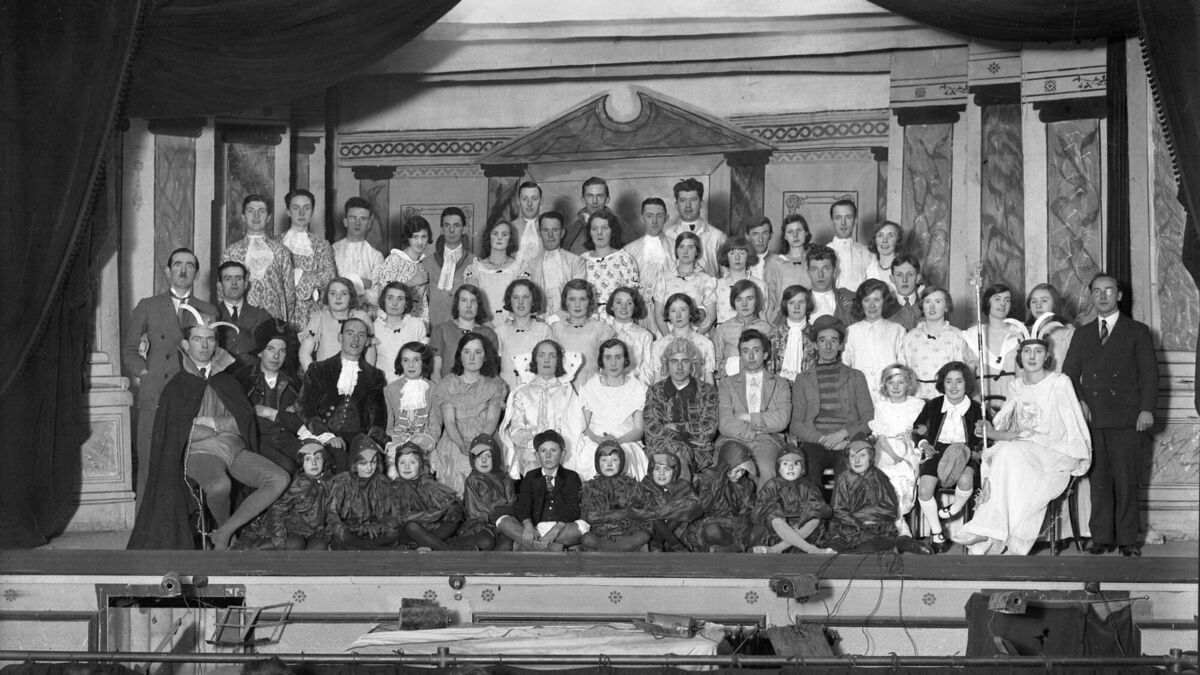
The cast of 'Babes in the Wood' pantomime at Father Mathew Hall, Cork pictured before an expectant young audience in 1930.
Cork theatre lost one of its true stalwarts earlier this week with the passing of Billa O’Connell.
The entertainer, who is survived by his wife Nell, their six children, 19 grandchildren and 10 great-grandchildren, has been remembered as an “icon” who was a “master of comedy”.
Denis McSweeney, Chair of the Everyman Board said Mr O'Connell was, for many Corkonians, their "first experience of the magic of theatre".

"His career on the boards stretches over 70 years, including the old and new Opera House.
"Born on Christmas Day, 1929, it is plain that he made it a lifetime dedication to ensure that children would always enjoy that special time of year.”
This week’s Nostalgia takes a brief look back at the panto scene in Cork over the decades, of which Mr O’Connell was a key figure.

The first panto reported on by was in January 1897.
The article, published on January 20 reads:
"The management of the Opera House have done well in securing a pantomime for Cork while yet the principal cities of the kingdom are being entertained with that form of entertainment."
The first performance was held on Monday, January 25 bearing the poetical title .
Troupes would come from Belfast and further afield to stage the productions in Cork, but only after they had finished their runs elsewhere.

This meant that pantomimes could only be shown in late January or February.
To combat this, local groups began forming and held their own productions in venues across the city which included Father Mathew Hall, Blackpool Hall, the Catholic Young Men's Society on Castle Street and the former Father O'Leary Hall.
In 1930, a production of was held in Father Mathew Hall and marked a new era of pantomime in the city.
Where previous productions had only run for a week or similarly short time, this effort had a fortnight-long run.
The success of this pantomime, along with the equally popular the following year was a turning point for the then President of the Hall, Father Michael to stage lighter productions in the venue.
Where previous Father Mathew Hall had focused on plays of a religious nature, it's President was forced to accept that public appetite had changed.

"The audience is, of course, the ultimate judge and if local humour, even if guised in such obvious vein is what they support and demand, then that is what script writers are justified in saying that they should continue to get," he said.
The interest and intrigue in pantomime only gained momentum in the decades that followed.
With the multitude of productions open to Corkonians, many panto-goers would see more than one, comparatively viewing the faults of one through the merits of another.

When Billa O'Connell hit the panto scene, audiences were instantly captivated by his presence in roles such as Dame and as one of the Ugly Sisters in Cinderella.
An review of a performance in 1955 lauds Billa saying:
"His type of comedy was neither silly nor of the slap-stick category but his simple acting and 'serious' humour in the much scripted Maggie (Dame) Murphy brought endless laughter."
Indeed endless laughter is perhaps the reason why pantomimes have such a long legacy in Cork and attract families in their droves year after year.



 App?
App?


