90 years on, recalling fireman Bill, a hero amidst Lee tragedy
When a car plunged into the icy depths of the Lee in Cork in 1936, a brave firefighter went beyond the call of duty to try to save the occupants, says PAT POLAND
90 years on, recalling fireman Bill, a hero amidst Lee tragedy

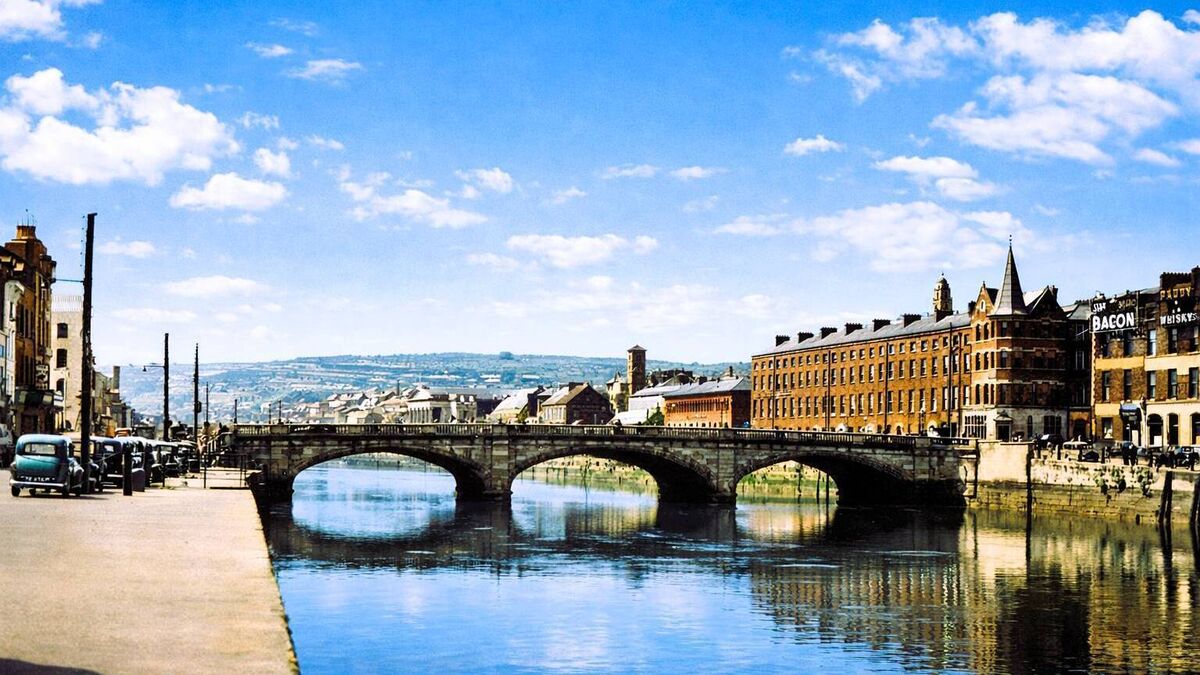
How the city quays looked in 1936 when the rescue attempt took place. Sadly, two men, Daniel O’Connell, 47, of Co. Tipperary, and John Joe Power, 44, of Co. Limerick, drowned in the tragedy

She was American, glamorous, ‘upwardly mobile’, a ‘commoner’, divorced, had won the heart of a senior member of the British Royal Family, divided public opinion in the UK, and her name invariably dominated the pages of the popular press.
But the year was not 2026, but 1936, and the woman’s name was not Meghan Markle, but Wallis Simpson.

On a December day 90 years’ ago - Saturday the 12th, to be precise - the papers, both broadsheets and tabloids, were full of the astonishing news that the King of England, Edward VIII, had renounced the throne in order to marry Simpson - a course of action closed to him, as monarch, under the British Constitution.

He had “found it impossible”, he declared to his subjects on the radio, to carry out his duties as King as he would wish to do, “without the help and support of the woman I love”. His shy brother, ‘Bertie’, Duke of York, would become a reluctant King George VI.

Here in Ireland, the head of the Government, the ever-opportunistic Éamon de Valera, saw the crisis across the water as another excuse to further dismantle the 1921 Treaty between Britain and Ireland, which he had opposed.

The office of Governor General was to be abolished, he announced, and references to the King were to be removed from the Irish Constitution.

While all of this was probably digested with mildly detached interest by the average Corkonian - particularly the shenanigans of the occupants of Buck’ House - the main topic of conversation on the street was of the shocking tragedy that had unfolded on the Cork quays the night before, and of the heroic efforts of a popular young firefighter to save lives.

Implausibly, on that morning’s newspapers, Probationer Fireman Maskelyne William Hosford - ‘Big Bill’ to his friends and comrades - found himself sharing banner headlines with the King of England.

******

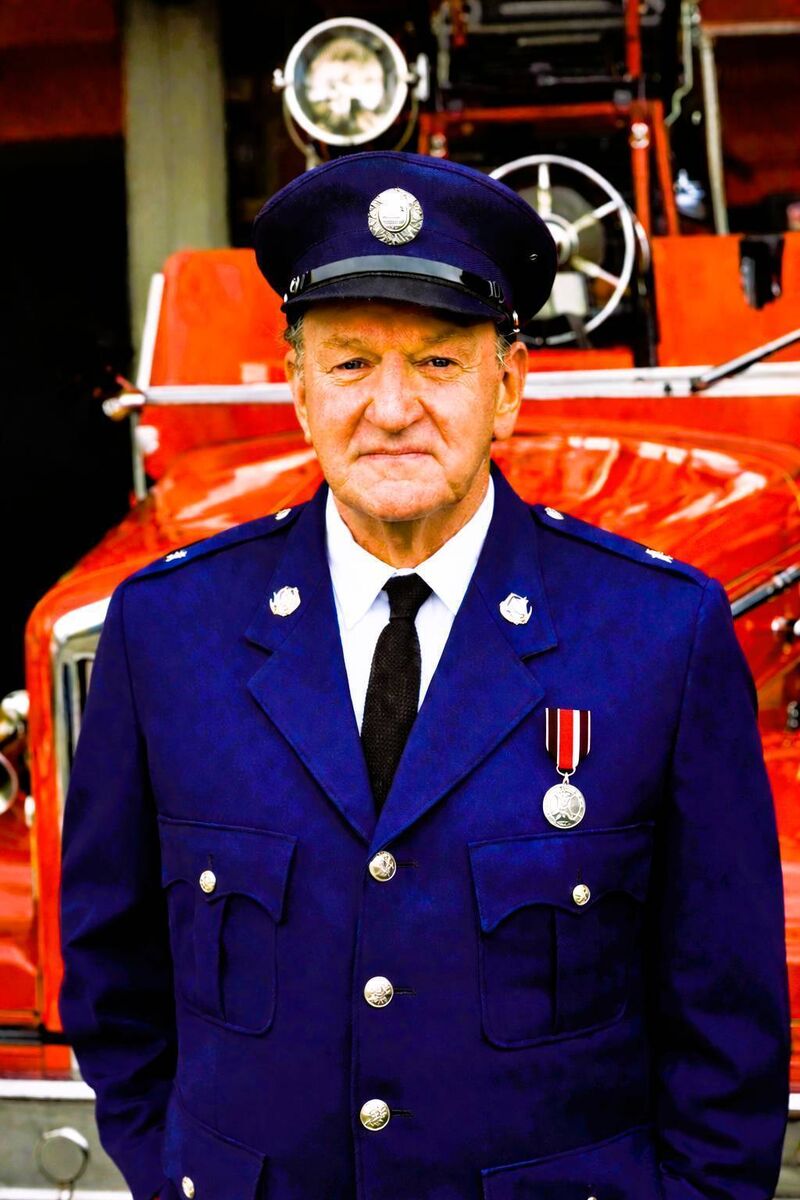
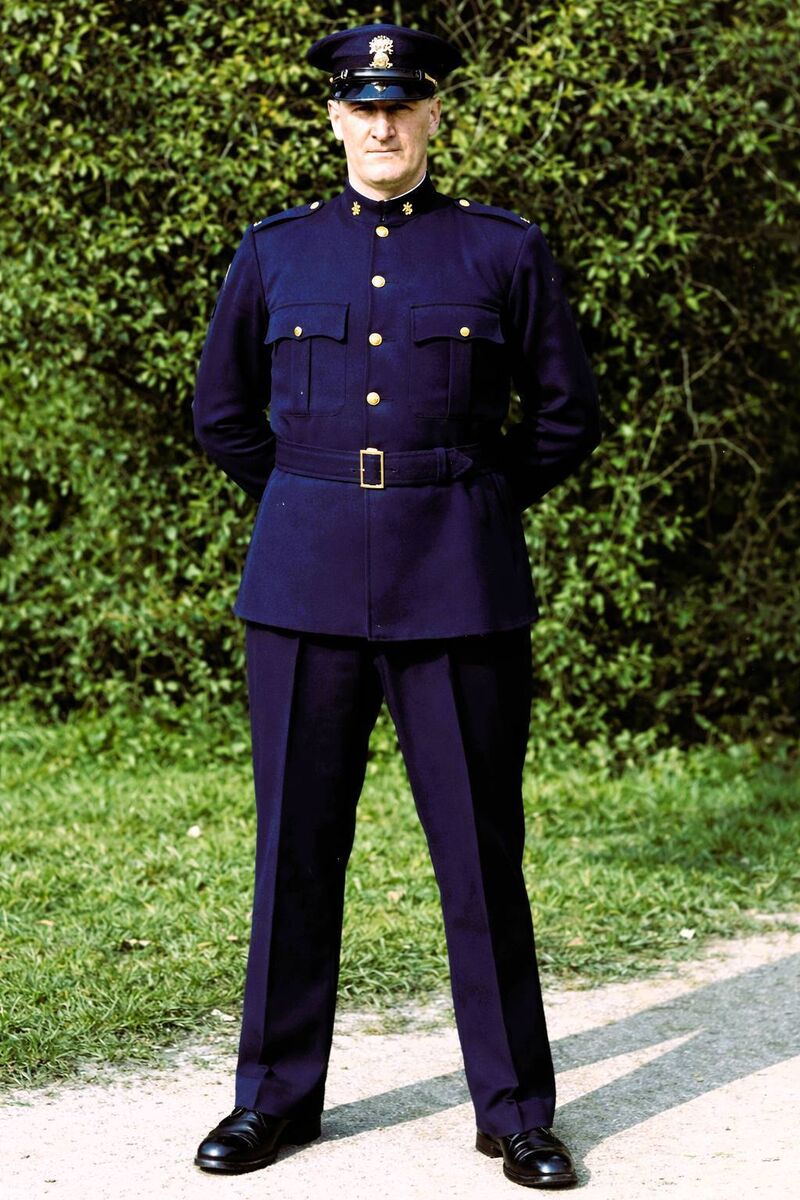
Probationer Fireman Bill Hoskins was aged 28 in 1936 when he carried out the dramatic River Lee rescue attempt. He remained in the Cork brigade and retired in 1967

Bill Hosford, who was 28 in 1936, had joined Cork Fire Brigade as a Probationer Fireman on June 7, 1936. A native of Dorset in England, he had previously worked at the Ford Motor Company on the Marina, within walking distance of where he lived in Ballintemple.

With his easy-going, confident personality and fine physique, Bill was soon a valued and popular member of the station team, and quickly settled into the challenges and routine of Fire Service life.

Regarded as a powerful swimmer, his other interests included rugby and athletics, and he was an active member of his local Church of Ireland community.

As a Probationer Fireman (a ‘rookie’), in the normal course of events Hosford would be due for examination and assessment after 12 months’ service. All going well, in June, 1937, his advancement to ‘Fireman’ grade could be expected.

Little did he know when reporting for duty on the morning of Friday, December 11, 1936, that all that was about to change.

******

Daniel O’Connell, 47, of Co. Tipperary. and his colleague, John Joe Power, 44, of Co. Limerick, were both creamery managers and were in Cork that day to attend the monthly meeting of Munster creamery managers in MacCurtain Street.

Usually, they made the journey by rail but, on this occasion, they had also to attend a funeral and decided to go by car.

Both were married men; Daniel with four children and John Joe, seven. They were last seen having dinner in Corrigan’s Hotel on MacCurtain Street.

At 8.45pm, Garda Reid was on duty at Parnell Place when a Singer car passed him heading towards Merchant’s Quay. The car was not being driven fast; estimates varied between 5 mph and 15 mph.

To the garda’s horror, the car failed to turn at the junction but drove straight over the side of the open quay and plunged about 12ft into the river.

Running to the quayside, he was quickly joined by Joseph Woodward, the well-known local auctioneer, and Robert Rea, of Friar’s Walk, and all saw a man in the car making desperate attempts to break the back window.

As the vehicle disappeared from view below the surface of the Lee, the garda ran to the nearest call-box to phone the Fire Brigade and his colleagues at Union Quay Garda Station.

Witnesses later testified that a safety chain that should have been stretched across the quayside opening was observed to be “lying in a heap” near a bollard.

******

In 1936, Cork Fire Brigade operated out of two stations, the Central Fire Station on Sullivan’s Quay and a sub-station on Grattan Street in the city centre (now the footprint of the SHARE complex).

Bill Hosford was stationed at Sullivan’s Quay. At 9pm, he and his fellow colleagues would be exactly halfway through their 24-hour duty shift, and, the last parade of the day having been called at 8 pm, were now on a ‘stand down’ period when they could pursue a hobby, read, listen to the ‘wireless’, or enjoy a game of billiards in the Recreation Room.

Now, upon Garda Reid’s urgent 999 call being received, the station’s alarm bells were activated and the response was immediate. Within one minute, the brigade was speeding down the quays in a desperate race against time.

The Cork Examiner reported on how the events then unfolded: “The brigade, under the Chief Officer, arrived with two fire appliances and an ambulance. In a desperate effort to get at the car as quickly as possible, Fireman Hosford took to the water, being secured with a life-line and sling.

“For ten minutes, he dived into the icy cold water in an endeavour to locate the car. He was assisted in his gallant efforts by the use of the searchlights from the fire tenders.

“After ten minutes, however, he was overcome by the cold and had to be hauled ashore.”

Despite appalling conditions - icy water, total darkness, and a powerful tidal current - Firemand Hosford made repeated dives in an attempt to locate the submerged vehicle and rescue its occupants.

His efforts were sustained, determined, and carried out at grave personal risk, but the strength of the current and the blackness and cold of the water ultimately defeated the rescue attempt.

He had done his best. No more could be expected from any human being.

Meanwhile, the gardaí, under Chief Supt Hannigan, had contacted the O’Flynn and Jeffers families of French’s Quay, the noted fishermen who, knowing every nook and cranny of the river, and every nuance of the tide, were frequently called upon to assist the authorities in such situations.

A small flotilla of boats presently arrived and, aided by the brigade searchlights, and the headlights of numerous cars on both sides of the channel, began trawling the river bed with grappling hooks. Fireman Michael Murphy joined the fishermen in one of the boats.

After about an hour, the car was located in 15ft of water. With the aid of a mobile crane from the Cork Steam Packet Company, the vehicle was taken from the river, and the two bodies laid gently on the quayside.

There, they were examined by Dr Blake, who had remained on the scene throughout the drama, and who now, sadly, pronounced life extinct.

Fr O’Donoghue, curate at SS Peter and Paul’s, administered the Last Rites of the Church, and both deceased men were then transported by Fire Brigade ambulance to the North Infirmary where they were received by Dr Dillon, House Surgeon.

A garda expert witness testified that the car, when examined, was in perfect mechanical order.

******

At the subsequent Inquest, Coroner J. J. McCabe noted: “The rescue efforts made were really the most heroic and were a redeeming feature of the case. I thought, above all, that the attention of the public should be directed towards the work of Fireman Hosford who performed a most heroic act.

This man actually volunteered to go down into the river, and the Coroner thought that there should be some public recognition of his heroism.

Although the two men in the car were tragically drowned, Hosford’s courage was formally recognised the following year.

On February 23, 1937, he was awarded the Parchment for Gallantry of the Royal Humane Society, an honour reserved for exceptional bravery in attempts to save life.

The award was presented by Cork Lord Mayor Seán French, at a full meeting of Cork Corporation, marking the city’s official acknowledgement of his selfless conduct.

William Hosford’s actions exemplify the quiet heroism of Cork firefighters in the early 20th century. While not all rescues ended in success, his conduct at Merchants’ Quay secured his place in the civic memory of Cork as a firefighter who faced extreme danger without hesitation in the service of others.

As alluded to, there was an unusual sequel to the events of December 11, 1936. The day after his gallant rescue attempts, two colleagues, John McInerney and Matt Poland, took the unorthodox step of writing to the City Manager, Philip Monahan, advocating that he be upgraded forthwith to ‘Fireman’ rank. Monahan upgraded Bill Hosford later that day.

******

Postscript: When this writer joined the Fire Service as an 18-year-old in 1964, Bill was, by then, Third Officer. By the time he retired some three years’ later, he had been promoted to Second Officer.

Bill Hosford later in his career, he was Second Officer with Cork Fire Brigade when he retired

He was the calmest, most unflappable man I ever served under at a fire or other incident. And I never heard of him charging a man under the Discipline Code; a quiet, fatherly word of advice in his office was usually sufficient to ensure there would be no reoccurrence.


The following, personal, anecdotes are offered as an insight into Bill’s urbane character.

During the Marian Year of 1954, the station party erected a small shrine in honour of the Virgin Mary at the back of the Appliance Room at Sullivan’s Quay Fire Station, which was blessed by the nearby Capuchin friars. Every evening, after 8pm parade, the men would assemble at the ‘shrine’ to recite the Rosary, invoking Mary’s blessing for the successful, and safe, execution of their duties.

Bill, frequently and unobtrusively, joined them for this nightly ritual of quiet reflection.

One other lasting memory of the man is his ‘party piece’. Who can ever forget his rendition of Trees, sung a la Paul Robson? ‘I think that I shall never see / a poem lovely as a tree’.

Pure magic.

More in this section

My Weekend: 'When I'm off, I like to spend time with friends and family' My Weekend: 'When I'm off, I like to spend time with friends and family'
'It's like being a part of the  history of Cork': Meet the Holly Bough cover artist 'It's like being a part of the  history of Cork': Meet the Holly Bough cover artist
My Weekend: I love to entertain and cook a roast beef dinner or a pot of stew My Weekend: I love to entertain and cook a roast beef dinner or a pot of stew

Sponsored Content

JSA Planning strengthens Cork presence as region prepares for next phase of growth JSA Planning strengthens Cork presence as region prepares for next phase of growth
CanesMeno sponsored Menopause: One in four say the biggest emotional burden is the pressure to appear fine
Tesco How Tesco is helping build friendship, purpose and community under one Men’s Shed roof
Contact Us Cookie Policy Privacy Policy Terms and Conditions

© Examiner Echo Group Limited

Add Echolive.ie to your home screen - easy access to Cork news, views, sport and more