‘We’re the first white cooperage to open here in 100 years’
The first white cooperage in Ireland to open this century has commenced operations in East Cork. KATE RYAN meets owner Killian O’Mahony, who trained at Midleton Distillery, to find why he has decided to embrace this tradition.
‘We’re the first white cooperage to open here in 100 years’

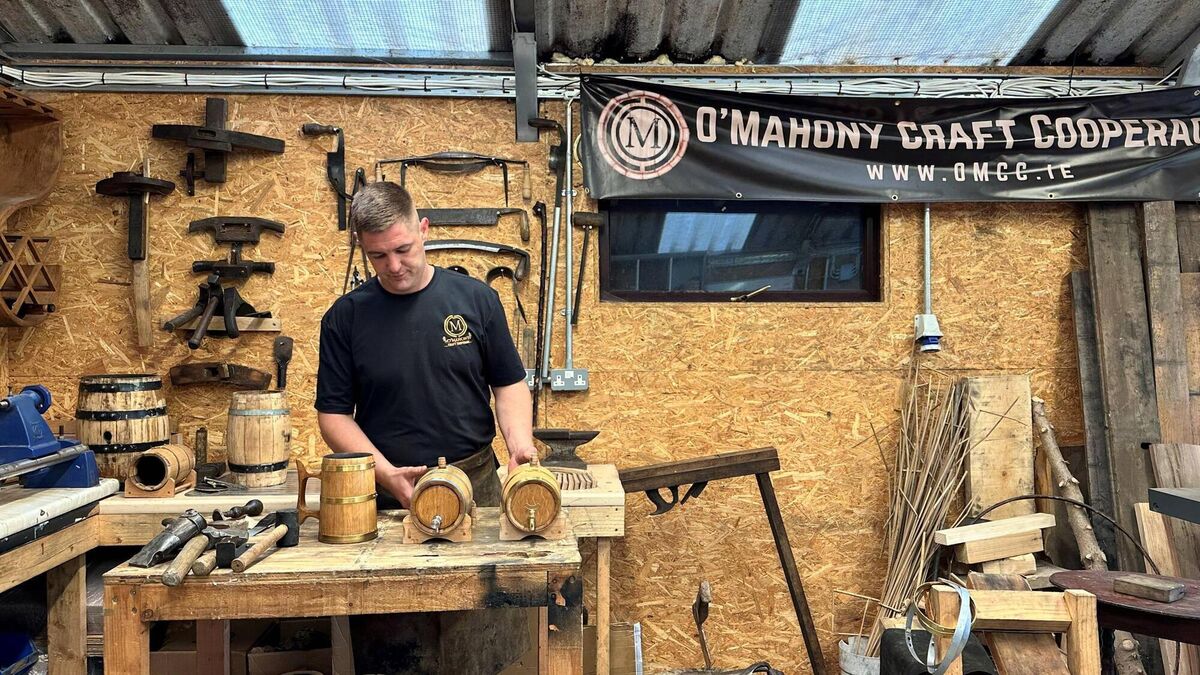
Killian’s miniaturised barrels serve a new wave of drinks appreciation by people wanting to age wines and spirits at home, or bars and restaurants looking to offer customers a unique liquid experience in the glass. Picture: Kate Ryan

In the shadow of Knockmealdown Mountains, an ancient craft is being brought back to life.
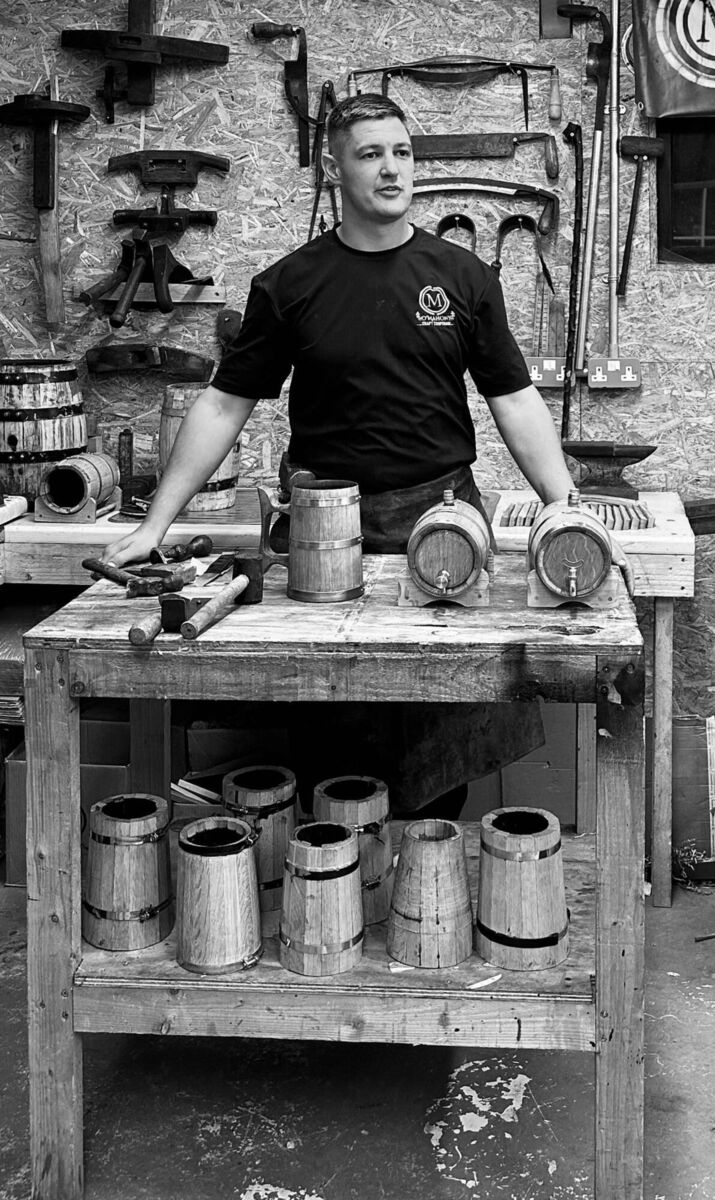
The workshop of O’Mahony Craft Cooperage is strewn with old barrels used for storing, transporting or aging foods. There’s an old butter churn, called a tumble churn, rummaged from the back of a shed, ready to be restored; the kilter still perfect despite the dusty darkness of its former home.

A herring barrel, used to store salted herrings, has a tap low down for siphoning off the fish oil once used as fuel for lamps.

Everywhere are newly hewn tankards, miniature barrels, and plunge butter churns in various stages of completion.

This is the domain of Killian O’Mahony, the first white cooperage to be established in Ireland in nearly a century.

In 2013, Killian became the first apprentice to enter the cooperage of Midleton Distillery for 40 years. By 2017, he was a qualified cooper, and he has spent the past decade repairing and restoring tens of thousands of whiskey barrels that pass through the distillery.

But this was only the start of his journey. The rest, as they say, really was history. Family history.

As he began his apprenticeship, Killian learned that his great-great-grandfather, Bartholomew (Batt) Ahern, had been the chief blacksmith at Midleton Distillery until 1932, with his son (Killian’s great-grandfather) continuing the trade. Then he learned more.

“I was given a book by Mary O’Mahony Lupton, who lives in west Texas. She gathered the O’Mahony’s history beginning with Henry O’Mahony, my great, great grand uncle who was an apprentice cooper in Skibbereen,” says Killian.

Henry fled Ireland on a boat to New York because of his association with the Land League, left with just his hammer and driver, and started hooping apple barrels in the Big Apple. He had been a white cooper making churns, tankards and pails, but spent his days dry coopering, hooping apple barrels - mundane work for a skilled white cooper, says Killian.

Killian’s miniaturised barrels serve a new wave of drinks appreciation by people wanting to age wines and spirits at home, or bars and restaurants looking to offer customers a unique liquid experience in the glass. Picture: Kate Ryan

“In the last 13 years, I’ve not just been piecing my family history together, but piecing the history of the coopering trade in the country,” he says.
Family is all to Killian, and the cooperage and smallholding he owns and shares with his family – wife, Hollie, and son, Cody.

As a licenced deer hunter, the prize of wild meat has become their main protein source.

It’s a very different lifestyle to what other 36-year-olds have, but it’s all part of a bigger plan to create a resilient life for his family, and the cooperage is central to that.

“It’s a family cooperage. The goal is to have something that can be passed down the family, generation to generation, for the next 100 years or more. I suppose a white coopering apprenticeship would be a huge historical feat; hopefully, it’ll be for somebody in the family.”

So, what is white coopering, and how is it different to any other kind of barrel making?

“You have wet coopering used in brewing and distilling to keep liquids inside the cask and the outside dry. Dry coopering is for transporting things like apples, grains, and flour, keeping the moisture outside and dryness inside.

“Then white coopering makes vessels for household use: tankards, churns, pails, tubs.”

These everyday vessels were associated with an old Irish tradition called the ‘newlywed ticket’, the precursor to the modern-day wedding or housewarming gift.

“Everybody in the family would chip in for the newlywed ticket or docket and go down to the local white coopering cooperage to get their two tankards, two gills, maybe a noggin; a wash tub, a pail, and a six, eight or ten litre domestic dash churn. It would be the full kit of everything needed for their own family,” explains Killian.

The last white cooper in Ireland was Ned Gavin, who worked up until the 1980s.

“He was the last person in Ireland famously known for it,” says Killian. “But as far as I can tell, ours is the first white cooperage in Ireland in 100 years.”

His love for white coopering came from time spent with a cooper in Scotland, Ian Andrews.

“I met him for the first time in 2013 when he was 72 years old and visited him several times over the years. He really inspired me to learn as much as I could about white or household coopering, but he passed before I learned about my family connection to the craft.”

At its zenith, Ireland had 11,000 coopers, up until the end of the 1800s when demand for them dropped as new methods for storing and transporting foodstuffs became more widespread.

Today, the coopering trade is on the rise again, fuelled by the global demand for Irish whiskey.

But white coopering has a different market; a gentler approach from the hard physicality of what Killian refers to as ‘industrial’ coopering.

Instead, white coopering is about form, function, and servicing a growing interest in traditional skills around food, in domestic settings and from chefs curious about what happens when food meets wood.

“It’s the most niche I could possibly put all my skills into,” he says, “restoring and repairing old, coopered vessels. For me, it’s about asking how can we get these vessels back into people’s houses? A large part of that was coming up with products that work and people want.”

What people want are butter churns for making their own butter, and miniature barrels for aging their own spirits and wines.

The barrels are really where Killian’s skill in design and an experienced eye for interesting retired barrels come into its own.

His miniaturised barrels serve a new wave of drinks appreciation by people wanting to age wines and spirits at home, or bars and restaurants looking to offer customers a unique liquid experience in the glass.

Killian’s handmade two-litre casks are crafted from retired distillery and winery barrels that are no longer useful for aging drinks on a commercial scale. “The distillery says the barrel cannot contribute fast enough to the spirit to be valuable in a warehouse where space is at a premium, so they sell them off,” he says.

“But what we then have, especially with American oak, is 150-year-old wood that has had two decades of seasoning where whiskey, scotch or wine has soaked into the barrel. I buy them up; I have different woods (oak, chestnut, maple) and preserve the part of the stave with all that seasoning to make our mini barrels and tankards.”

Irish whiskey has become a premium product in recent years, and consumers have been very happy to go along for the ride. That build-up of knowledge has paved the way for the next frontier in whiskey appreciation – personalisation.

“People’s eyes are opening to the fact you can turn a standard bottle of whiskey or wine into a premium bottle within days or weeks in a miniature barrel in your house. It’s giving people control of their food and their drinking experience,” explains Killian.

“I keep a standard range of our American and European oak brass and steel finish casks and tankards, but what has really been growing are custom casks.

“I made a custom cask out of French oak that had crystallisation from wine that had been in it before, which turned into a caramel after charring. He put Poitín into it and has been aging for the last six months. It’s probably one of the best whiskies in the country, and nobody knows about it!

“I have made casks for private whiskey clubs too; for example, a European or sherry-seasoned cask for their own private opening. There’s nothing stopping a bar owner buying a barrel, filling it with what they’d like, and calling it their house special whiskey, wine, or spirit and selling it by the measure.”

For Killian, the ambition is clear: for O’Mahony Craft Cooperage to be the name people think of for premium crafted casks, premium wood selection, and customisation for cask and churn.

Killian says in a time of AI, people are recognising the value of things “made by humans; made by hands” as there is a desire for connection with the objects that inhabit our daily lives. “Get in contact with your food. It changes your experience immediately,” he says. “With white coopering, I’m able to use all my experience to make a modern churn with traditional techniques to serve the modern purpose.

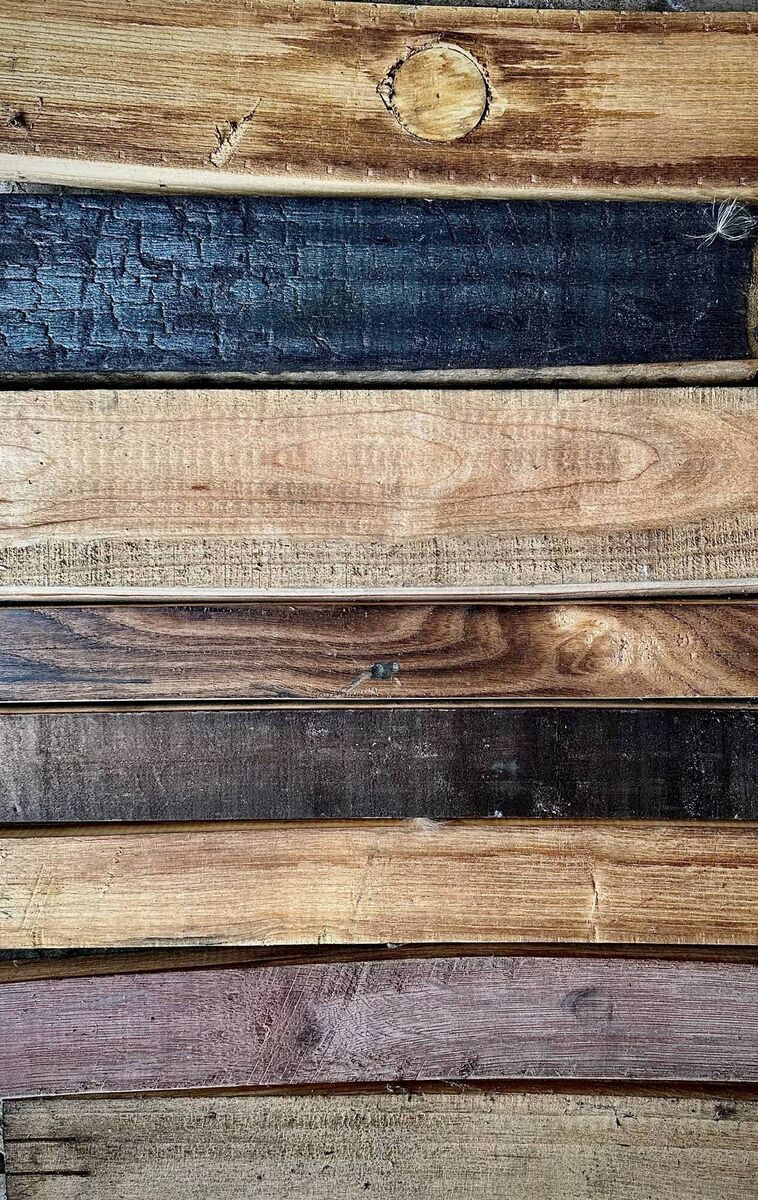
Wood staves at Killian’s cooperage. Picture: Kate Ryan

“What I wasn’t prepared for or expecting is the connection people have with butter churns, or how much people want hands-on with a plunge churn, or the practicality of a tumble churn in a commercial kitchen today,” he says.

“Bunratty Castle commissioned a tumble churn for the bean an tí that make butter. Another chef wants one so they can churn butter for their guests.”

This rise in interest in white coopering has met Killian at exactly the right time.

“The gap was minimal from when I was able to pick [this craft] up to when it’s actually being lost,” he says. “I’m seeing these people pass away; I’m hearing their stories for the last time. I have to piece them together and do something to give back to a trade I’ve been able to raise a family on and build a life from.”

While the tankard and mini barrels are mainly made from oak, the churns are made using maple. A traditional wood used for butchers’ blocks, maple is a food grade wood because of its natural antimicrobial properties, making it ideal for butter churns.

“We use oak for tankards, barrels, and anything we want to impart flavours onto. Whereas the maple, we’re not looking to impart flavours, but for it to be food safe for churning. Maple makes sure it’s food safe after you clean it,” he says.

In August, the cooperage officially launched and immediately sold out of miniature barrels. The current work plan is all commissioned vessels destined for homes around the world.

“Every conversation I have, it’s someone’s first time coming back to this. Depending on what they’re looking for or what the flavour profile is, it’s bringing us in different directions of coopering and what I can do for them.

“I’m really focused on the traditional vessel into the modern home,” says Killian. “The more people that get in contact with vessels they want repaired or their own thoughts and ideas they want to see can happen, I learn more of what the business is capable of and where we’re going. It’s not just the whiskey enthusiast or wine sommelier, but chefs, and gifting. The enjoyable jobs have been custom commissions like the herring cask, butter churns, custom casks to customer specifications and palate.

“The big message is it’s here; it’s back, and this is happening. I’m not just telling the stories and wishing anymore. The vessels are being made every day, the barrels are being recycled and upcycled into new lives, and there’s literally vessels going all over the world from a family white cooperage in East Cork. That’s wild!

“It’s not that I want a barrel in every home, but I want vessels people want and need in their home again, and to be there to provide it.”

More in this section

Person to Person: 'I'm a data scientist by day and a comedian by night..it's like having an alter ego' Person to Person: 'I'm a data scientist by day and a comedian by night..it's like having an alter ego'
How a disused church became a cultural hub in North Cork town How a disused church became a cultural hub in North Cork town
My Weekend: 'I prefer to be entertained..I'm a poor cook'  My Weekend: 'I prefer to be entertained..I'm a poor cook' 

Sponsored Content

Tesco How Tesco’s Community Fund is helping to keep a vital search and rescue team afloat
Flexible, affordable and functional: Why Irish travellers prefer a travel eSIM to outdated roaming Flexible, affordable and functional: Why Irish travellers prefer a travel eSIM to outdated roaming
St Patrick's College Cork: New facilities, new subjects, and every Leaving Cert student progressing to college  St Patrick's College Cork: New facilities, new subjects, and every Leaving Cert student progressing to college 
Contact Us Cookie Policy Privacy Policy Terms and Conditions

© Examiner Echo Group Limited

Add Echolive.ie to your home screen - easy access to Cork news, views, sport and more