‘My art has to start with a scribble, and I avoid perfectionism’, says Cork artist Odessa
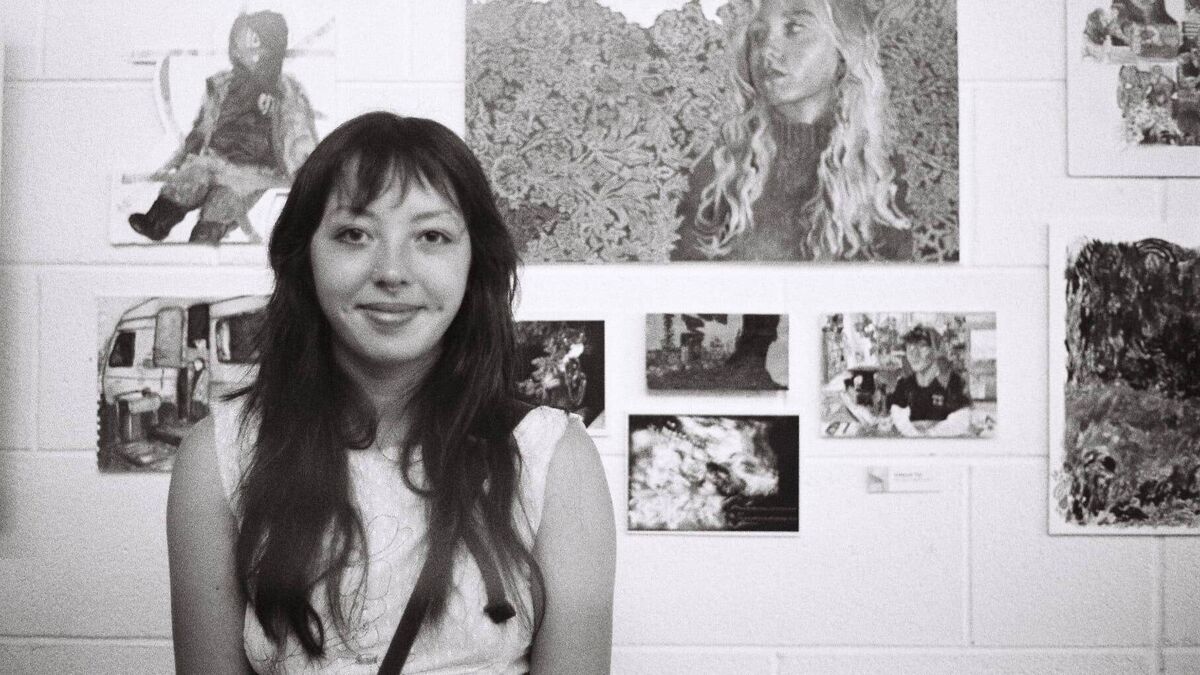
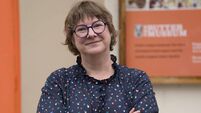
Cork artist Odessa Yip in front of some of her work
Before she stepped into the lecture halls of Trinity College Dublin, or saw her work featured in the prestigious galleries of the Royal Hibernian Academy, Odessa Yip was simply a child with a stack of blank printer paper and an unrestrained instinct to fill it.
“I would just scribble all over the page,” the Cork woman recalls, describing her earliest memory of making art.
Back then, there was no grand ambition attached to those marks - no desire for recognition, no looming pressure of an audience, just the instinctive urge to create.
While many artists learn to approach the blank page with caution, Odessa learned early on to treat it as a playground. It was a lesson fostered by her childhood childminder, Nadia, an artist who would arrive in the afternoons with a massive silver tray of German colouring pencils.
Under Nadia’s watchful eye, Odessa spent hours letting her hands move without a plan, filling pages with overlapping shapes and chaotic bursts of colour.
It was during these quiet afternoons that she realised something crucial: the physical, tactile thrill of dragging a pencil across paper was far more exciting than whether the final image looked ‘perfect’.
Later, at Cork Educate Together Secondary School, her art teacher Dawn would push this philosophy further, encouraging Odessa to see her work as something that existed entirely outside the rigid, booklet-filling confines of Leaving Certificate examinations.
Now a second-year English and Philosophy student, Odessa believes such perfectionism is a quiet poison to the creative spirit.
“You have to first scribble,” she says, “You’re not going to get anywhere if you stare at a blank page and feel like every line has to be perfect.”
I sought Odessa out as I wanted to understand how an artist preserves that child-like fearlessness in a world that constantly demands structured logic.
As someone whose own work explores biodiversity and our relationship with place, I wanted to know how she translates the fleeting, chaotic beauty of our everyday environment onto a permanent canvas.
When we sat down to talk, I expected a technical conversation about medium and execution. Instead, our discussion became a meditation on memory, attention, and the delicate art of looking at the familiar.
For Odessa, the evolution from childhood scribbles to serious artistic pursuit has been a lesson in balancing technique with raw instinct.
Her work - characterised by bold, expressive brushstrokes, rich domestic settings, and surreal layers of contrasting colour - draws inspiration from the intimate, domestic warmth of artists like Pierre Bonnard and the psychological intensity of figurative portraiture.
As an artist matures, the materials inevitably change. The stakes become higher, the tools more expensive, and the critical voice in one’s head grows louder.
Yet Odessa maintains that the core impulse must remain remarkably similar to the child drawing on cheap printer paper - an act performed for no other reason than that it feels entirely necessary.
In a culture obsessed with utility, we often discuss art in terms of outcomes. We ask if a painting will hang in a gallery, whether a book will be published, or whether an audience will approve. We rarely ask why the hand was moved to create in the first place.
For Odessa, the answer lies in the excitement of the message itself and the purity of the initial impulse, rather than the promise of recognition.
“I know I’m making good art when I’m excited about the message itself,” she explains. “If I’m making something because I want a specific person to like it, then I know it’s bad.”
It is a standard she holds herself to fiercely. believing that audiences possess a radar for insincerity.
When art begins as an attempt to impress rather than express, the deception lingers on the canvas. “If you’re making art for the wrong reasons, it comes out in the art,” says Odessa.
This devotion to the genuine leads her to find inspiration in places others might dismiss as trivial.
Asked where her ideas begin, she does not speak of grand galleries or distant landscapes. Instead, she tells me of a plant on a shelf in her father’s basement in Cork, where she spends her university holidays.
She noticed it one afternoon, illuminated by a particular quality of light, and felt an immediate, urgent desire to draw it.
To the casual observer, it was merely a houseplant; to Odessa, it was a moment demanding preservation.
Being an artist, she suggests, is not a matter of seeking out the extraordinary, but of seeing familiar things with a heightened sense of devotion.
“I think maybe being an artist is having that turned on all the time,” she says. “You’re walking around and you’re like, ‘That’s beautiful’. And you don’t need to explain why.”
There is a quiet radicalism in this way of moving through the world.
We live in an age of constant stimulation, where our attention is bought, sold, and fragmented. To stop and look at a common leaf, or the way shadow falls across a wooden floor, is a small act of rebellion. It is a philosophy that shares a common root with environmentalism.
Environmentalism, at its core, is also an act of noticing. One might find it hard to mourn the loss of a wildflower if you have never learned its name; one cannot protect a landscape they have stopped truly seeing.
Both art and environmentalism demand that we refuse to look away.
For Odessa, this refusal to look away is driven by a desire to preserve. At one point, she describes herself, almost accidentally, as “a hoarder of memories”.
In today’s digital landscape, we are constantly bombarded by transient data; we use our phones to snap thousands of photos, and store them in cloud servers that feel increasingly temporary and disconnected from our actual senses. Painting, for Odessa, is a rebellion against this digital impermanence.
We paint, we write, and we photograph because we are terrified of the passage of time, turning to the physical permanence of the gallery or the museum to save what big tech cannot.
This was particularly true when she first began experimenting with oil paints. After winning third place in the national This Is Art competition with a portrait of her father, she used her €300 prize voucher at Vibes and Scribes in Cork to purchase her very first set of Winsor & Newton oils.
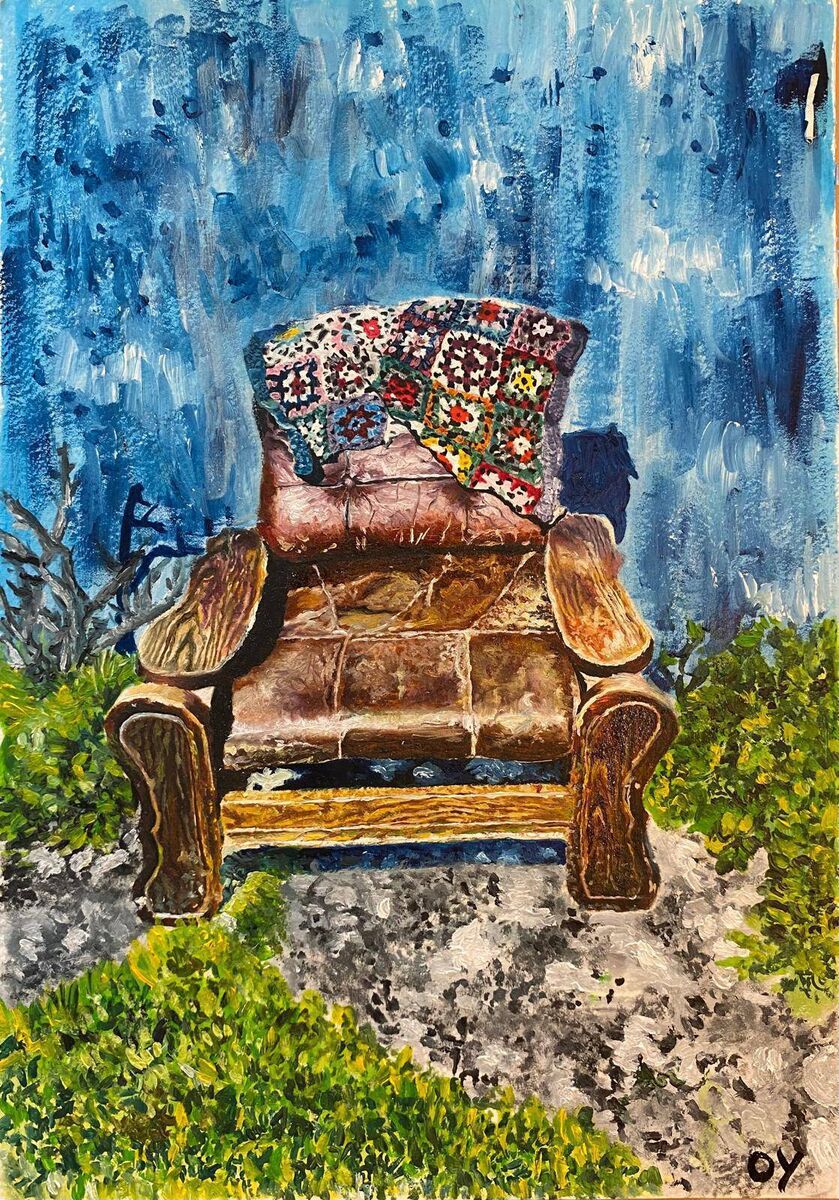
Her first major project with the medium was a painting of an empty leather chair belonging to her late grandfather, Dado, who lived on Inisheer in Galway Bay. The painting became a physical repository for a memory that was slipping away - a way to freeze a loved one’s presence in the world through the rich texture of oil paint.
This deeply human relationship with memory is precisely why Odessa remains highly sceptical of the modern rise of artificial intelligence in creative fields, though her philosophical training prevents her from offering easy, dogmatic rejections.
She is interested in the blurred lines of authorship - pointing to an exhibition where an artist painted AI-generated images onto massive canvases. Yet she always returns to the question of lived experience.
A machine can mimic the brushstroke, but it cannot possess the memory of her father’s basement, the grief of a lost relative on Inisheer, or the sudden, electric excitement of a quiet afternoon. The machine can produce, but it cannot notice.
This tension between technology and human experience brings us to the question of whether art is inherently political.
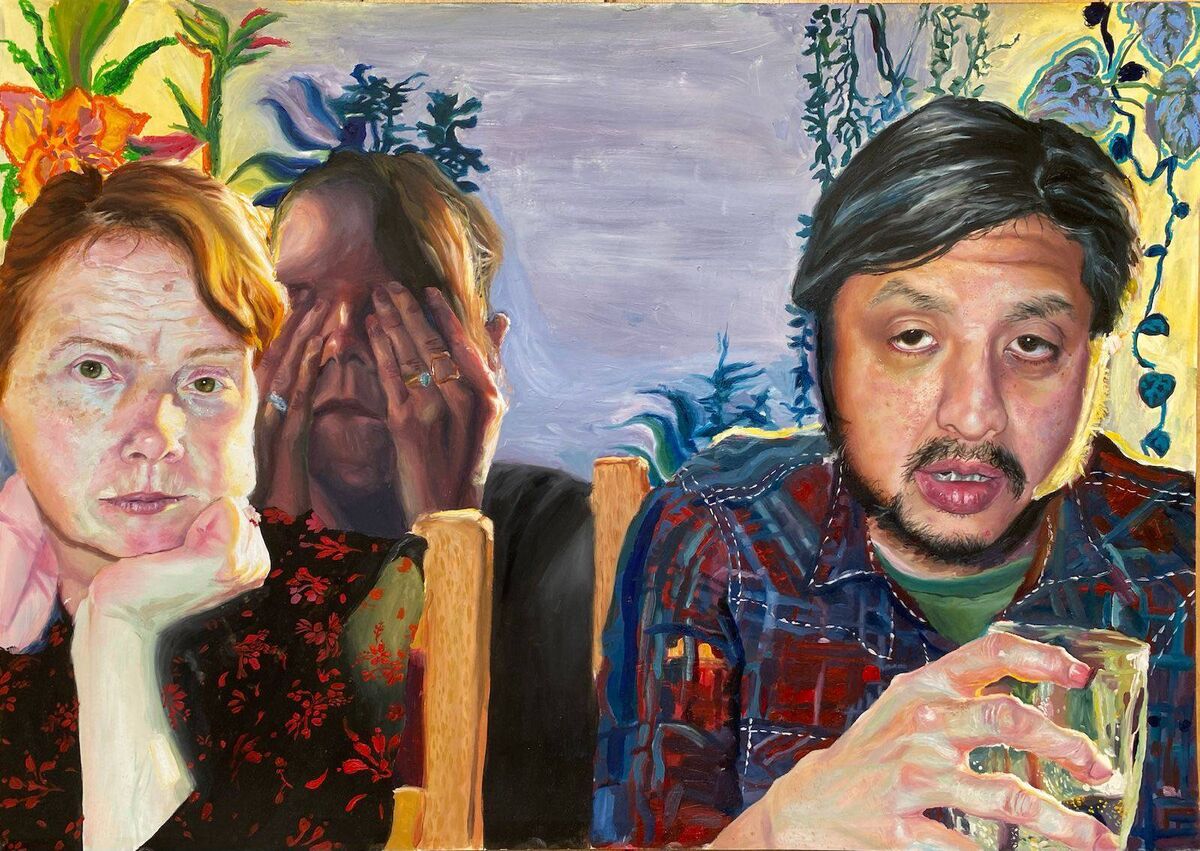
Odessa’s work is deeply contextual. An olive branch painted in one setting is merely a study of nature; painted in another - perhaps woven through the intricate, wallpaper-like patterns of her striking portraits - it becomes a symbol of identity and survival.
Meaning, she suggests, is not a static property locked inside the frame. It is a fluid thing, born in the space between the artist’s intention, the physical reality of the work, and the eyes of the beholder.
This fluid sense of identity is central to her current work.
Before our conversation ended, I asked Odessa how the transition from Cork to the bustling streets of Dublin had changed her. She spoke not of artistic triumph, but of the raw, vulnerable reality of leaving home.
Arriving in Dublin, everything felt cold and blank. But slowly, the blankness began to yield, giving way to a new sense of place. Friendships formed, routines took root, and the unfamiliar streets began to feel lived-in.
This transition has become the subject of her most ambitious project to date, sparked by her daily ten-minute walk from Trinity Halls down the straight, tree-lined road of Milltown toward the Luas stop. Looking at the massive red brick houses of Dublin 6, she realized how beautifully her own life had blossomed from that initial, terrifying blankness.
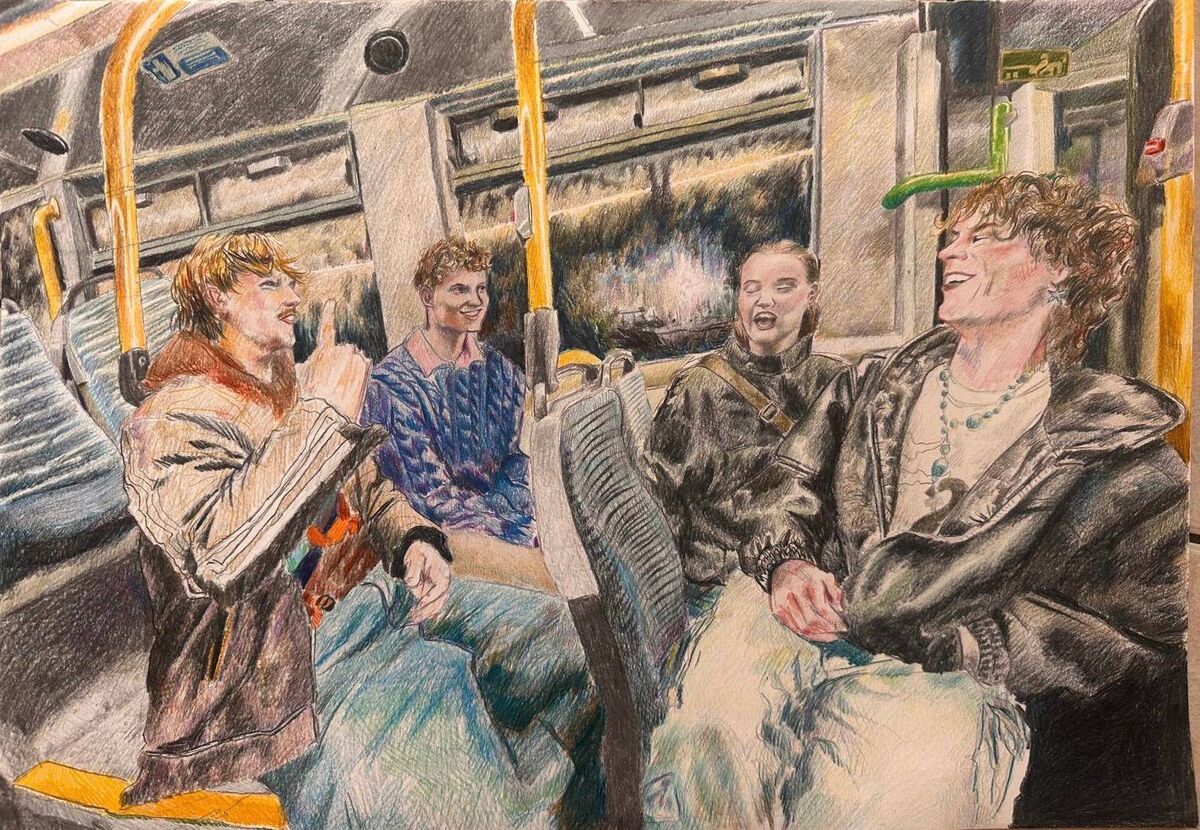
Through complex, layered portraiture, Odessa is exploring the emotional geography of belonging. Her paintings - capturing figures in mid-conversation or dynamic, surreal layers of colour - suggest that the self is not a finished monument, but a canvas continually painted over by the people we meet and the places we inhabit.
This journey of adaptation is an echo of our entire discussion. We begin with a blank page. We step into the unfamiliar rooms of our lives, unsure of what waits inside. But then, we live.
The page begins to fill, not with premeditated perfection, but with the beautiful, messy scribbles of our experiences.
We preserve the people, the places, and the quiet basement plants that shape us, not because they are grand, but because they are ours. The rest is simply our attempt to remember.




 App?
App?


