Books: Cork professor’s debut novel explores our attitude to death
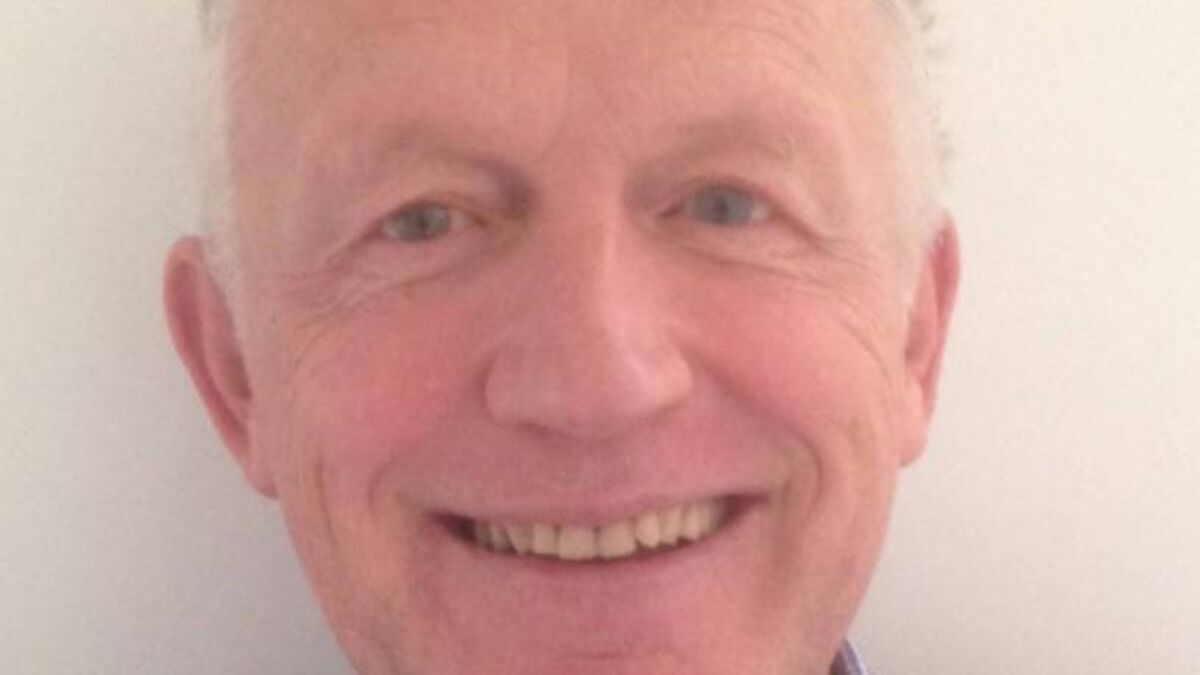
Cork author Ted Dinan, Emeritus Professor of Psychiatry at UCC
As a doctor, I have always been interested in and saddened by death.
Over the years, I saw many patients die, some surrounded by relatives and some on their own.
Religion does provide succour, but for many, death remains a frightening event.
There is nothing to suggest that religious beliefs minimise grief. It is truly impossible to contemplate a world in which we no longer play a role. This is the complex analysis at the heart of my first novel, called It Always Ends.
Is there an afterlife, or should we grasp what we have with vigour as nothing exists beyond the grave?
There is no definitive answer, though many of us believe we have!
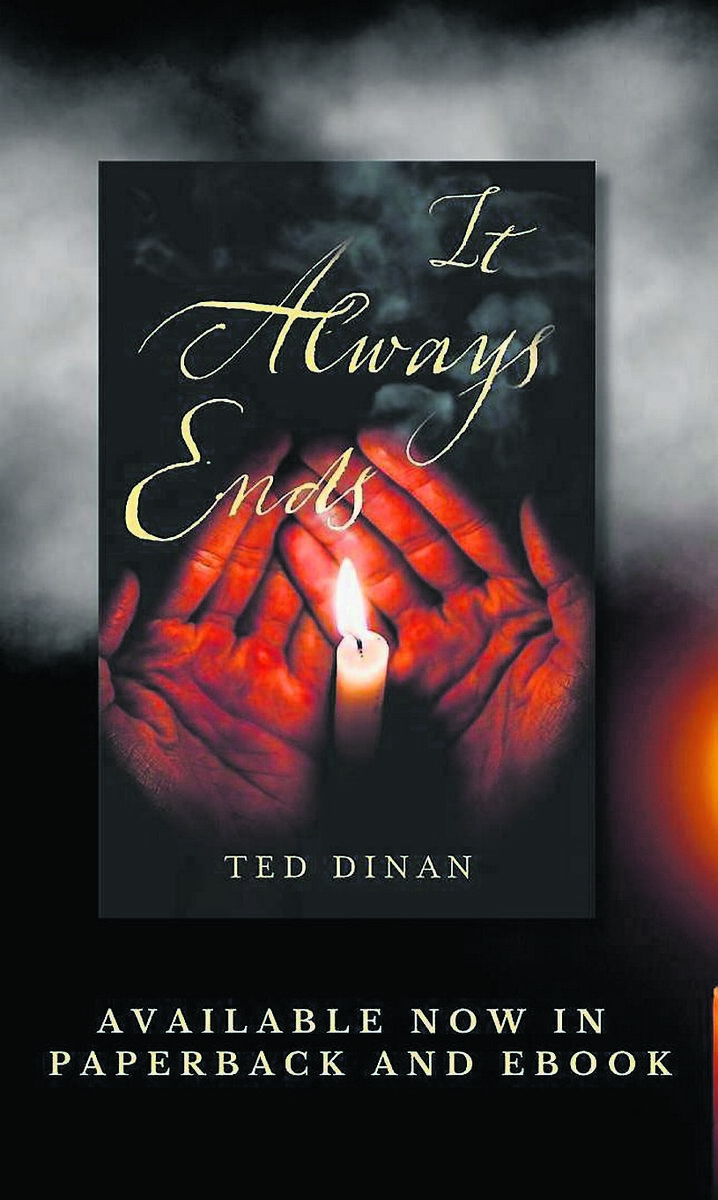
It Always Ends is a literary novel built around the final stretch of a man’s life after a catastrophic stroke leaves him totally paralysed and unable to communicate.
When Kevin, a successful 60-year-old stockbroker, suffers a devastating brain bleed, he is left immobilised and facing the certainty of death.
Unable to communicate, he observes his family, doctors, and nurses, who believe he is incapable of perception and may be brain dead.
He is forced into an uncompromising intimacy with his long-held atheistic belief system and with his own past: a marriage shaped as much by silence as by love, a long-concealed affair, and a moral failing in business that threatens to undo everything he has built.
As his body fails, Kevin’s interior life intensifies, circling questions of responsibility, belief, and whether meaning survives when ambition and control fall away
While he lies in hospital and his wife and two adult children wait for him to die, the story reframes what his family thinks they know about him: his recent life has been “complex,” and the family’s grief is compounded by revelations that suggest he “was not the man they thought they knew”.
Kevin’s wife experiences a complex fusion of grief and anger. She knows his views on death and the absence of an after-life, but nonetheless agrees that a priest provide him with the last sacraments.
For her, Catholicism has always provided consolation, and she has never questioned its beliefs.
Kevin is regarded by friends and family as a financial wizard. He does read financial journals but has always been interested in science and philosophy.
Coming from a poor background with an alcoholic father, objectively, he has made it, with a pretty middle-class wife and two successful children. An education funded by scholarships provided the opportunity.
Bizarrely, he has turned his back on his past, believing it will stultify advancement. His parents are dead, but none of his siblings are at his bedside. He cut off contact a long time ago because they remained working-class.
In the story, Kevin was a man in a hurry who believed he had one life to lead, and his background would not be allowed to encroach on his development.
The novel is heavily driven by ideas. Facing the prospect of death, the protagonist’s existential outlook, including his sense that life is absurd and without meaning, together with his expectation of non-existence after death, is tested in a way it has never been.

The book explicitly contrasts existential and religious ways of understanding dying, with the protagonist considering (but rejecting) belief in God.
Religion has many functions, but unquestionably, it provides believers with some tranquillity when a loved one, or they themselves, are faced with death.
This is true of all religions, both current monotheistic and older polytheistic beliefs in a deity.
Kevin views the world as absurd, and whatever happens is neither pre-planned nor goal-oriented. Life is dictated by decisions, and is not decided beforehand.
He is bewildered by the fact that evil people often lead happy lives while those who lead good lives often suffer greatly.
After death, only worms will benefit, and he will no longer exist. That evil will be punished in the next world, he views with scorn.
His demise in It Always Ends will have no fairy-tale ending. He is on the road to nowhere. Only his family’s view of him is relevant. Friends and acquaintances will quickly forget him.
The only sure event after birth is death. We live in a world where longevity and the desire for longer life spans dominate science and, in some instances, have replaced religion.
It is currently one of the most heavily invested areas for venture capital, especially funding emanating from Silicon Valley.
Amazon boss Jeff Bezos reportedly invested a large sum of money in such a company.
Whether we significantly extend life or not, we will all die, billionaires and paupers, end alike.
What awaits us is the key issue in It Always Ends. Kevin finds that his 60 years of striving for financial success will be of little value where he is headed.
This is a character-led novel, concerned less with plot than with ideas, in which an existential belief system permeates.
It will hopefully appeal to readers of reflective literary fiction in the tradition of Julian Barnes, Albert Camus and Ian McEwan, where emotional precision and moral ambiguity take precedence over resolution.
After medical school in Cork, I interned at the North Infirmary Hospital, which is now closed.
Later on, I became Professor and Head of Clinical Neuroscience at St Bartholomew’s Hospital in London before returning to Cork as Professor of Psychiatry.
It Always Ends is published by Trubador Press and is available from Amazon and most book stores.

App?