Women's Little Christmas: What are the origins and how is it marked in Cork? 

Ahead of Women’s Little Christmas, folklorist SHANE LEHANE looks at the origins of the tradition and how it is marked in Cork.
Women's Little Christmas: What are the origins and how is it marked in Cork? 

In addition to such usual endless everyday tasks, it fell to the women to go the extra step and make Christmas time special, says Shane Lehane. Pictured here are women at the Coal Quay (Cornmarket Street), Cork in December 1954 

The celebrations and activities of Oíche Nollaig na mBan, ‘Women’s Little Christmas’, go back to when the 12 days of Christmas, with each day corresponding to the 12 months of the year, was set down in the Council of Tours as early as 567.
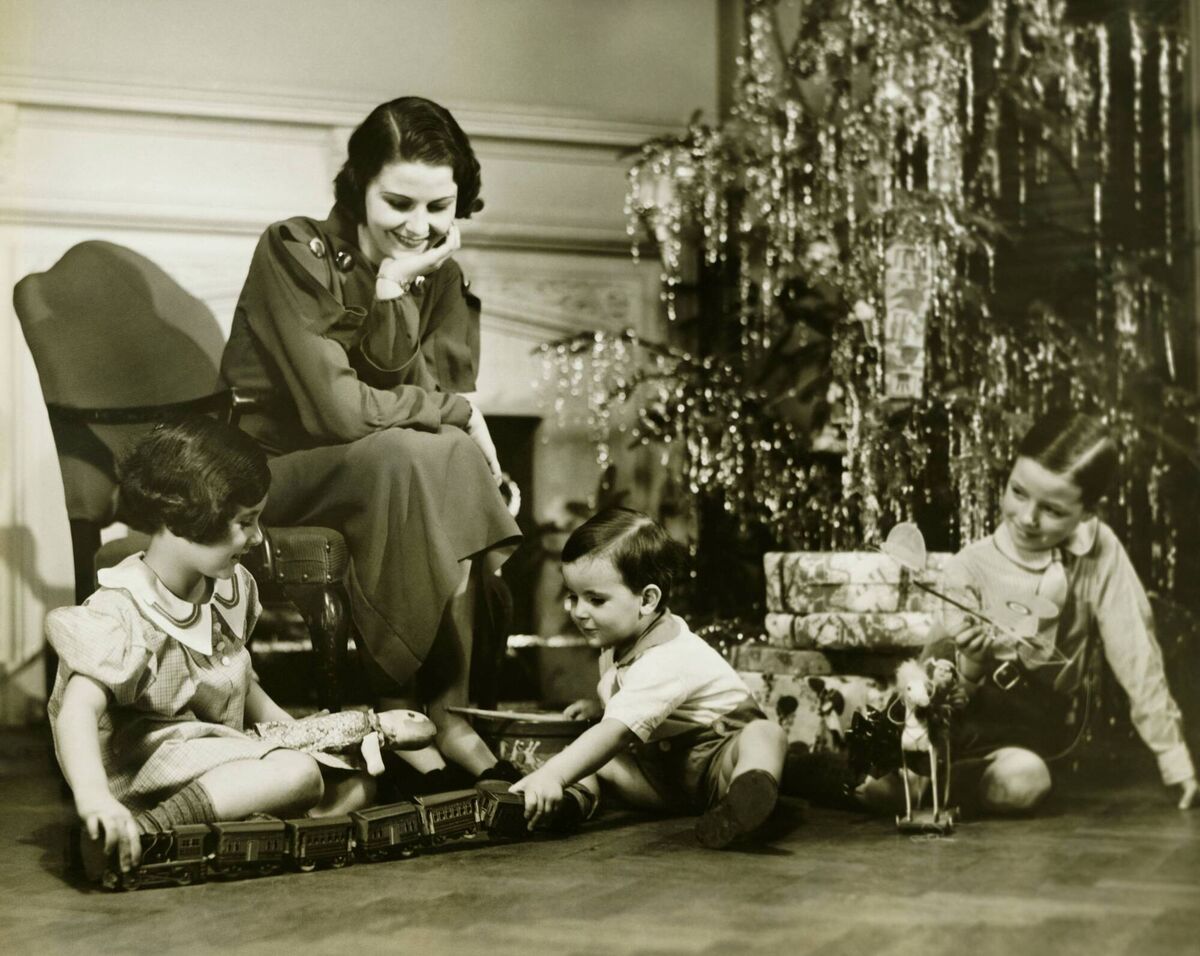
It was officially designated that no one was to work over this sacred period and as the last hurrah, the very last night of carousing and amusement, ‘Twelfth Night’, was celebrated as much, if not more so, than Christmas Day itself.

One has only to think back to Shakespeare and the sense of fun and frolic in his play set on this night.

The 12 days ran from Christmas Day on December 25 through to January 5, and this was the official twelfth night, the eve of Epiphany.

January 6 is the Feast of the Epiphany, marked by the arrival of the Magi, the wise men or kings, at the nativity after following the star from the East. Along with the movable feast days of Shrove Tuesday and Whit Sunday, in the Middle Ages, Epiphany was the other major day of Christian festivity.

Even though Twelfth Night is the night of January 5, the eve of Epiphany, most now celebrate it on the 6th.

A further confusion in respect of dates came when there was a change from the Julian to the Gregorian calendar in September, 1752, which abstracted 11 days from the year. There was an older generation who were too set in their ways and continued to mark time with their old calendar. They had an extra 11 days in their reckoning and their Christmas Day , known as ‘Old Christmas Day’, ‘Small Christmas’ and ‘Little Christmas’, became conflated with Twelfth Night and the eve of Epiphany.

In Ireland of the 19th and early 20th century, the last night of the Christmas period was a special night for the women and one where they took time out after Christmas.

In Ireland, this final day of the Christmas festivities, whether celebrated on January 5 or 6, is known as Nollaig Beag or Nollaig na mBan - ‘Women’s Little Christmas’.
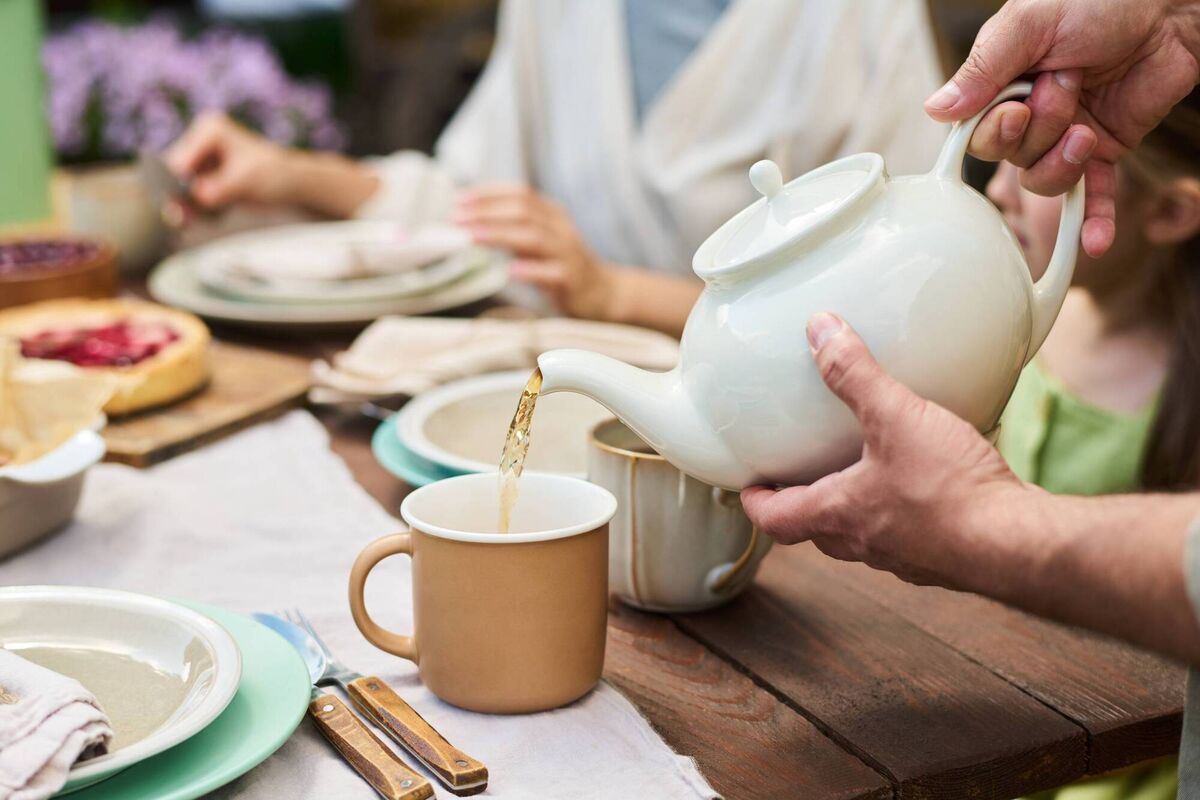
In Ireland of the 19th and early 20th century, the last night of the Christmas period was a special night for the women and one where they took time out from their endless chores and hard work, and spent some time in each other’s company.

A poem by John Millington Synge came into my head when I was thinking of the endless litany of household work that fell to the women. On the Blasket Islands, he wrote of a newly married girl, Jude ;

‘You’ve plucked a curlew, drawn a hen, Washed the shirts of seven men. You’ve stuffed my pillow, stretched the sheet. And filled the pan to wash your feet, You’ve cooped the pullets, wound the clock, And rinsed the young men’s drinking crock’.

In addition to such usual endless everyday tasks, it fell to the women to go the extra step and make Christmas time special.

They would have scrimped and scraped, saving the egg money and the profit from the live market, selling turkeys and geese on December 8 to make sure there were provisions for the Christmas.

It was the women who would have sourced the expensive ingredients to make the rich puddings and cakes that characterised the festivities. Many households made three puddings, one for Christmas Day, one for the New Year, and a small pudding reserved for the women’s special gathering on Women’s Little Christmas. In the countryside, women would go from house to house, visiting female relatives and neighbours, where they would partake of tea, the great luxury of its day, along with cake especially kept for the occasion.

In a number of households, the festive occasion of Nollaig na mBan was tempered by the ritual of ‘Twelve Candle Night’. The custom was to take 12 rushlights and fix them in a cake made of ash and cow dung. In later years, people would cut up the ordinary penny candles into 12 pieces and place them on a plate. Each person in the household would set theirs lighting and watched carefully to see whose would go out first as this would indicate who would be first to die. Whoever’s candle burnt the longest would live the longest.

In the countryside, women would go from house to house, visiting female relatives and neighbours, where they would partake of tea, says Shane.

For some, it was a solemn affair, reciting the rosary while the candles burned. Others looked at it as a sort of parlour game and no doubt it was in the minds of women who got together on this night as the next day marked the beginning of the courting and match-making period.

The day to be married in Ireland was Shrove Tuesday, and starting at Epiphany, the narrow window of opportunity opened up to turn romantic understandings and courtships into official arrangements. With the new year ahead, this was the traditional time when the parents would sign over the farm to the eldest son.

Speculations on potential unions with associated encouragements and gossip would have been the focus of much mirth and interest on the night of Women’s Little Christmas. Whispers of dowries, fortunes and the qualities - or lack of them - of different male suitors were openly discussed without the distraction of men.

A vibrant communing of women in such a gathering was something of terror to some men. When I mentioned Nollaig na mBan to one Kerry man recently, he replied that some of the older lads used to refer to it as Nollaig gan mhaith - ‘No Good Christmas’.

One evening last week, I was driving home westward on the Inniscarra road when I was momentarily dazzled by a flare of deep red sunlight as it broke out from behind a foreboding dark rain cloud. I had to grind the car to a halt. The explosion of burning red light from the low, solstice-time setting sun framed by black storm clouds was like some vision of our primordial beginning. Such a startling vista had me transfixed.

As I sat there, I glanced to my right and I found I was face to face with a small limestone plaque on the garden wall of a small house that was overgrown with briar and bramble. The plaque was there to mark it as the one-time home of the great poet, Seán Ó Riordáin, and this ignited some forgotten corner of my schoolboy brain.

From nowhere, I found myself mouthing the words of his poem Oiche Nollaig na mBan:

Bhí fuinneamh sa stoirm a éalaigh aréir, Aréir oíche Nollaig na mBan, As gealt-teach iargúlta tá laistiar den ré Is do scréach tríd an spéir chughainn ’na gealt

There was mad energy in the storm last night, Last night, the eve of Women’s Little Christmas, It broke loose from some out-of-the-way madhouse that’s behind the moon, And came screeching through the sky like a lunatic

Ó Riordáin’s poem speaks of harnessing the power of the tumultuous storm with its marked, feral female energy. He wishes its presence at the moment of his mortality to quell the anxiety and banality of inevitable death.

Here, at this darkest time of the year, we acknowledge a point when we move from death to life, from the wild and chaotic to the tame and ordered.

From here on in, there will be a steady increase in light and warmth and fertility and the celebration of women at the very heart of this moment of rebirth and renewal is an instinctual primal reflex.

Read More

'I took over a pub, and turned it into a shop and coffee business'

More in this section

The Village Pubs of Cork: Pandemic forced us to serve food..it was a game-changer The Village Pubs of Cork: Pandemic forced us to serve food..it was a game-changer
These food trends will be huge in 2026 What food trends can we expect in 2026?
Big KidzZone Christmas Quiz (Aged 8 to 12) - chance to win a voucher The Echo's Big Christmas Quiz 2025 (8 to 12-year-olds)

Sponsored Content

Top tips to protect Ireland's plant health Top tips to protect Ireland's plant health
River Boyne in County Meath, Ireland. Water matters: protecting Ireland’s most precious resource
Turning AI ambition into action: Dell Technologies leads the way Turning AI ambition into action: Dell Technologies leads the way
Contact Us Cookie Policy Privacy Policy Terms and Conditions

© Examiner Echo Group Limited

Add Echolive.ie to your home screen - easy access to Cork news, views, sport and more