Books: Piper’s Hill, the Muddy Field.. lifting the lid on place names in Cork
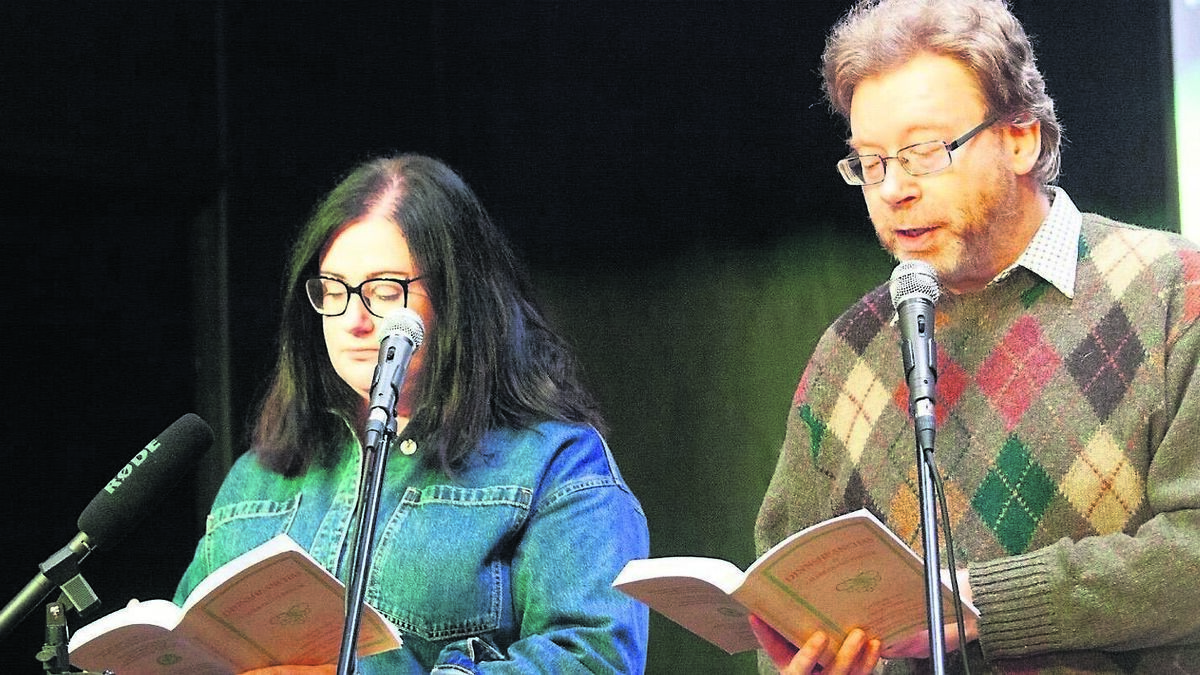
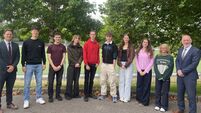
Miriam Spillane, who recited one of her own poems at the launch of the book, and Gordan O’Ceadagáin, who compiled and edited the book
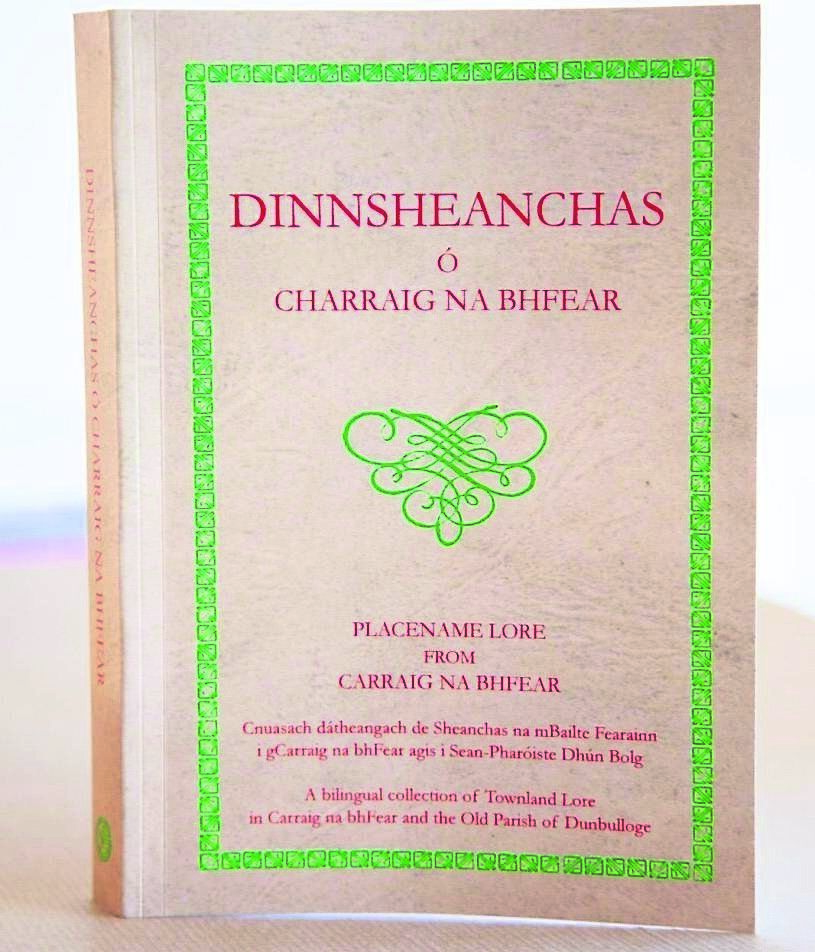
The Carraig na bhFear History and Heritage Group has launched an important bilingual book.
The title is Dinnsheanchas: Placename Lore From Carraig na bhFear. The local pronounciation is ‘Dingsheanchas’, which means place name lore.
Place name lore is a genre of early Irish literature that recounts the origins and meanings of place names.
Historically, provinces like Munster were Ireland’s largest divisions, followed by counties, and these were largely established after the Anglo-Norman invasion. Within counties, baronies indicated earlier Gaelic territories.
Carraig na bhFear is in the Barony of Barrymore, which was once an Anglo-Norman stronghold.
The civil Parish, a unit originating from medieval church parishes, though still retaining a religious role, took on civil functions such as recording births and deaths, and education, but importantly (from 1884) the GAA strengthened parish identity.
The townland within the parish is the smallest geographical unit. There are 6,000 in County Cork alone and this book focuses on 29. Each townland name is a historical source in its own right.
Many are descriptive markers of geographical features such as hills and rivers, but also involve mythological figures, heroic deeds which imbue the landscape with layers of history.
History is a study of the past based on verifiable evidence and archaeological finds.
Lore is based on local tales, legends, and anecdotes passed on orally through the generations. Lore gives us an insight into the ordinary lives of our ancestors.
In this book, we discover that pattern days were held in many townlands before the practice declined during the Great Famine.
A pattern day was mainly a religious festival dedicated to a local saint, but it was also an important social gathering for communities, often with food, music, hurling games, merriment, and fun.
One particular festival was famous for its uilleann piping, and this area is called Piper’s Hill in the Townland of Gortnalahee (the muddy field).
It’s no surprise that the field was muddy as a result of all that activity!
We discover where the archaeological sites are to be found: the standing stones, the ringforts, the holy wells and a souterrain that still contains two Ogham stones.
We now know the name of every stream and river, where it rises and in what direction it flows.
We sadly discover where there were once little villages or a collection of hamlets, and where nothing exists today. The houses were likely cleared during the settler plantation, or they suffered the effects of the Great Famine.
We know where to find the ‘Cloch an Ghréasaí, upon which sits a little shoemaker whose ‘tap, tap, tap’ can still be heard provided, of course, you are there at the right time!
A folktale records the whereabouts of ‘Maistín Meadow’ where maistiní (werewolves) guard a cave full of gold.
The poets of Carraig na bhFear are central to the unique and extraordinary history of the area during the 18th and 19th centuries.
During the period of the Penal laws, when the Irish language and culture was suppressed, the poets and scribes of the area worked often in secret, copying manuscripts and composing poems in vast numbers.
They were the guardians of Ireland’s Gaelic literature.
This book informs us where these great poets were born, how they lived, where they established hedge schools, and where they are buried.
From Liam an Dúna to Sean na Raithíneach, to the O’Longáins and to the great Torna.
When Dinnsheanchas: Placename Lore From Carraig na bhFear was launched last month, the chairperson of the History and Heritage Group, Cliona Hatano, introduced Gordan O’Ceadagáin, who delivered the presentation.
Gordan compiled and edited the book. He is a student of ancient Gaelic manuscripts which he translates to ensure they are accessible for future generations and are a source for his own writings.
He is also a dedicated local historian whose work focuses on the preservation of Co Cork’s cultural heritage and lore.
His other major bilingual publication is Béaloideas ó Carraig na bhFear.
Carraig na bhFear has a chain of Gaelic poets stretching back to the 1600s.
Torna refers to it as the ‘slabhra filí’, and that slabhra is not broken as a wonderful poem, Procession, by Miriam Spillane, evoked memories for all those present of walking through the village behind the banner of their townland at the Corpus Christie procession.
The launch evening ended on a perfect note when Claire Cunningham gave a beautifully haunting rendition of a poem by Torna, Mo Thalamh Beag Dúchais Féin (My own Little Homeland) which she sang in the sean-nós style.
This poem expresses Torna’s deep love for his own townland and the glen in Glaise Buí where he was born and lived when he returned to Cork to take up the position of first professor of Irish in UCC.
This book is a collection of the myths, the legends, the lore and the topographical features of the place where we live – “By knowing these stories, we can read our landscape like a vast, living storybook and we are living inside the pages of that story book”.
Alan Moore, an English author, urges us to “find out about places and make them burn with meaning and significance, and you will find that the people in them will also burn with meaning and significance”.
Dinnsheanchas: Placename Lore From Carraig na bhFear is for sale in the local shops for €20 and it would be a wonderful Christmas gift for those who have an association with Carraig na bhFear.



 App?
App?


