Cork pupils hoping for success at BT Young Scientist Awards
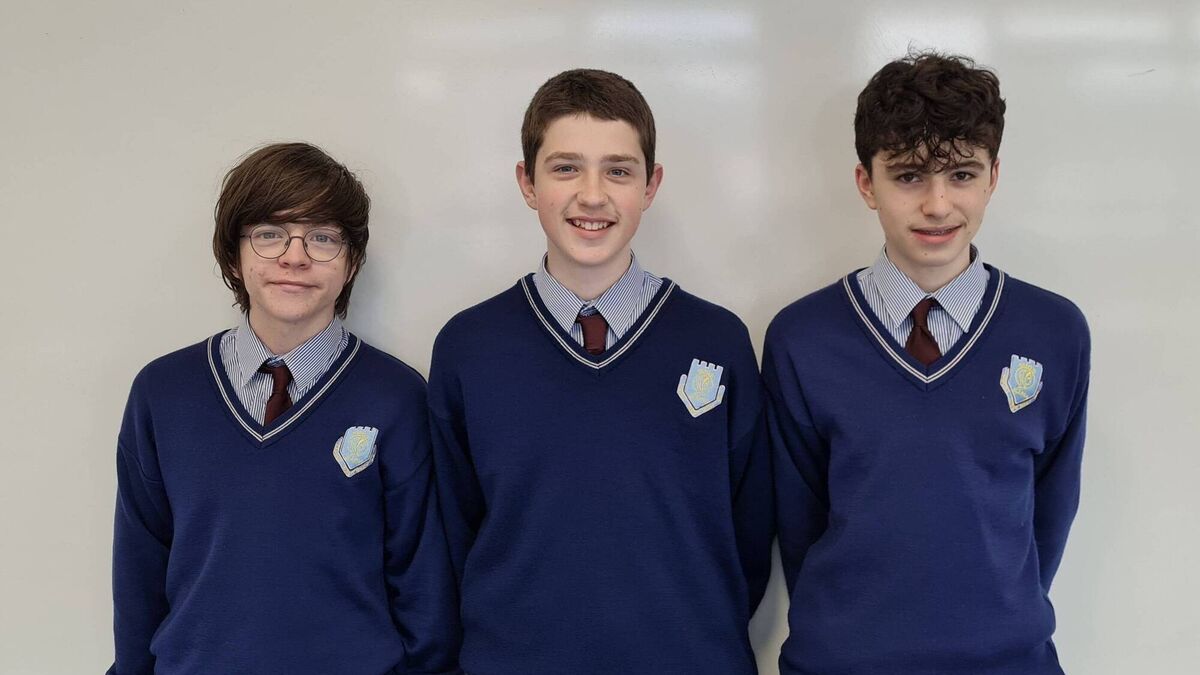
Pupils from Scoil Mhuire gan Smal, Blarney, Conor Walsh, Malachy Burns, Zach O’Leary. Their Young Scientist project is called ‘Connected Roads’.
THE 60th BT Young Scientist and Technology Exhibition (BTYSTE) takes place at the RDS, Dublin from January 11-13.
It will showcase 550 projects from young researchers and innovators from around Ireland, with Cork schools strongly represented. There are over 200 prizes to be won and a prize fund of €50,000.
The overall award, worth €7,500, will see the winner(s) go on to represent Ireland at the prestigious European Union Contest for Young Scientists which will take place in the European City of Science 2004 in Katowice, Poland. The RDS exhibition will include special acts, exploring many different areas of STEM, from outer space to how our brain really works.
Eabha O’Donovan, a fourth year student at Skibbereen Community School, along with class mates Emily O’Donovan and Aoife O’Driscoll, came up with a project called ‘The Elderly Forgotten’. It looks at the digital divide that exists when it comes to older people and technology.
“We all have grandparents living locally that we’re close to,” says Eabha. “We notice how they struggle with technology. That’s how the idea came about.
“While the three of us have grown up with technology, we want to highlight the divide that exists between older people compared to our generation. We sent out surveys, visiting places where older people go such as the bridge club, the nursing home and hospital.”
The main finding of the project is that “over half of the people we surveyed have never gone to a class to help them with skills. We also interviewed eight older people. They’re not angry that the world has gone online. They’re happy with the knowledge they have. Most of them say their family and friends help them with technology. But most of them said they’d love if more classes were available that would be informal where they could ask questions. That’s what the women said. The men are kind of content with the way things are. They don’t want to learn too much more.”
Aged 75 and over, the majority of the interviewees are able to access things like rip.ie and the weather forecast.
Eabha says the aim of the project is to raise awareness. The team hopes that more groups will be set up that older people can feel invited to and that these sessions will be informal. The elders definitely don’t want a classroom setting, triggering negative school memories.
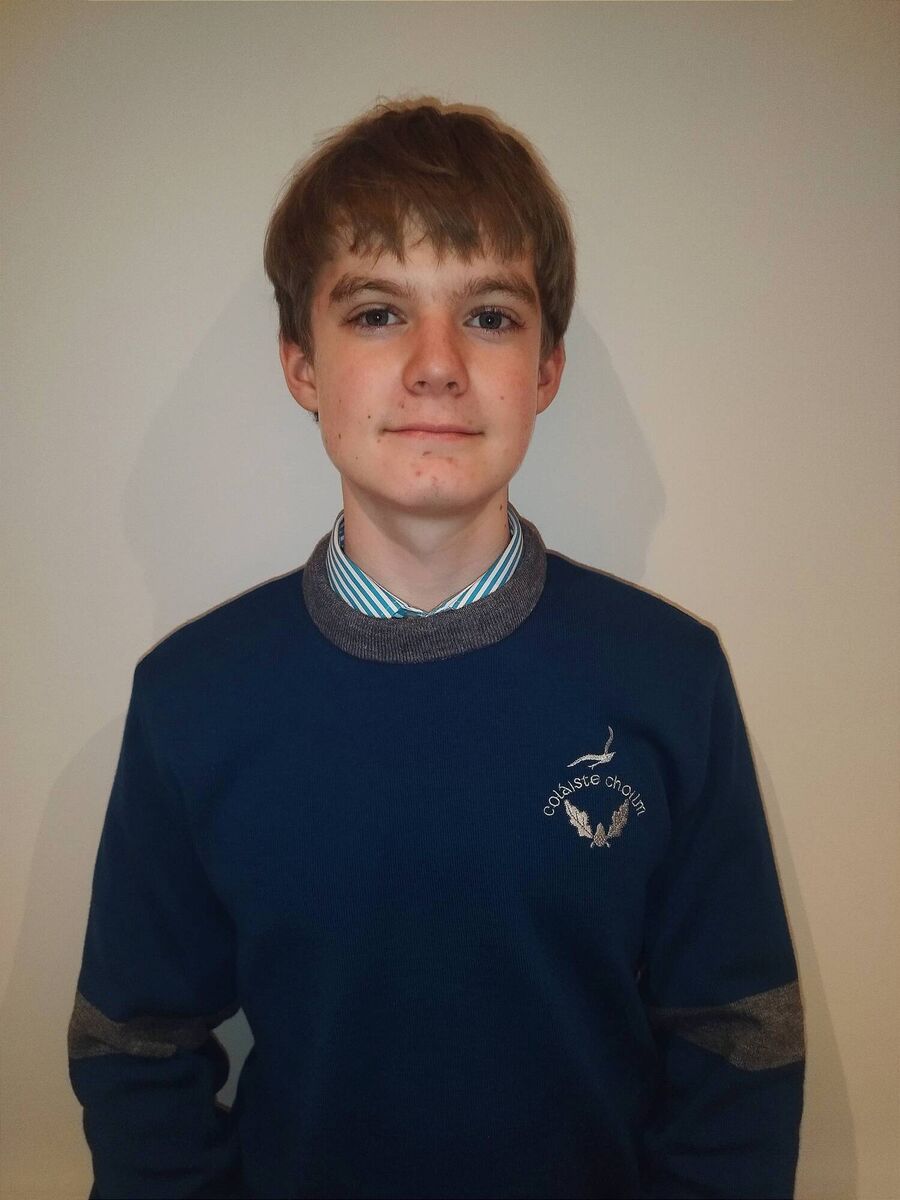
Cillian O’Toole is a Transition Year student at Colaiste Choilm in Ballincollig. His project has the title of ‘IoT Defender – A Device to Prevent Botnet DDoS Attacks using IoT devices’. This project is based on the cyber security risks that the large uptake in smart or IoT (Internet of Things) devices in people’s homes can lead to.
“Smart technology and IoT are becoming increasingly popular,” says Cillian. “Many homes now have smart technology such as their heating, doorbell, television or even fridge. Some IoT devices can be vulnerable to being used in large DDoS (Distributed Denial of Services) attacks, where thousands of different devices repeatedly send messages to a targeted server, overloading it and taking it down.”
Cillian says that, in the last year, there has been a five-fold increase reported in these types of ‘botnet’ attacks.
“A botnet is a large group of devices being used to cyber attack something where, typically, the owners of the devices don’t know. My project is a piece of software that can analyse the messages being sent by the IoT devices and see if there is an abnormal amount which is an indication that the devices are being used maliciously. The owner of the devices can be let known that their devices are possibly being hacked and used maliciously so they can take action against it.”
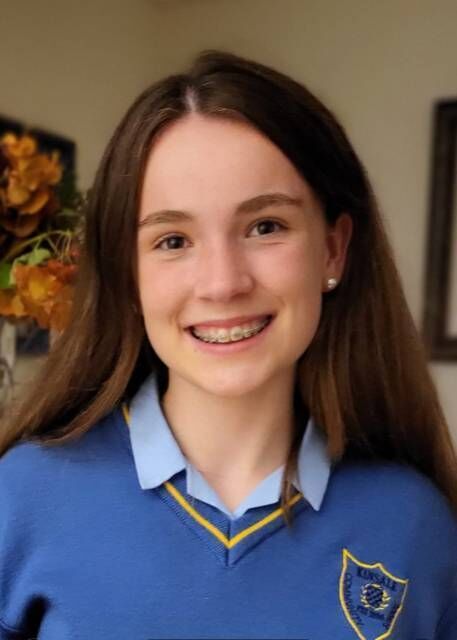
Emily Bertoletti, a second year student at Kinsale Community School, has developed a project on her own. It’s entitled ‘The effects of health and wellbeing of climate change awareness among people living in Ireland and the level of engagement with climate action’.
She explained: “I’m trying to find out if people are aware how climate change is going to affect their health and mental wellbeing over the next few years, and how worried they are about it, and what they’re doing about it. I came up with the idea after a few weeks at the end of September when it was raining every day.”
With sports training cancelled, Emily felt very much home alone all day on days off school. She knew it wasn’t normal to see so much rain.
“It obviously has to do with climate change. With every degree that the climate goes up, there’s more moisture in the air so it’s going to rain a lot more. The weather was definitely affecting my wellbeing and the environment.
“I did a survey. I saw that some people can get quite stressed and overwhelmed thinking about climate change. They worry about their safety because there has been a lot of flooding lately. One of my friends had to live with her granny for a while because her house in Riverstick was flooded. Her things were destroyed. She’s back home now but she’s worried it might happen again.”
Climate change doesn’t stop Emily and her peers from enjoying life. But they are proactive in some ways, swapping clothes with each other instead of buying new outfits. They also try to stay away from clothes manufacturers that exploit their workers.
Conor Walsh, Zach O’Leary and Malachy Burns are second year students at Scoil Mhuire Gan Smál in Blarney. The title of their project is ‘Connected Roads’. Their project involved creating a device that can be put into ordinary cars, making for safer roads and fewer accidents. Autonomous cars (self driving cars) can detect danger in a way that non-autonomous cars can’t. But the device compensates for that.
Conor describes the device as “a very small computer, a GPS unit that shows the position of anything everywhere in the world. When it’s connected to the internet, all information goes to the cloud. Anyone can access it once they have permission. We are trying to get a prototype working. We might contact the Road Safety Authority about it or possibly a small car manufacturer.”
The project is timely, says teacher Colm Kiely, given the increase in road accidents in 2023.
“The project is about demonstrating prototypes. The students are using small dinky cars enabled with these computers. They show that they can communicate with each other automatically without the driver’s input. The boys feel that autonomous cars will be on the roads in the next ten to 12 years.”
Autonomous cars are very safe, despite the idea of them being somewhat scary.
“One in five cars in New York is said to be self-driving,” says Conor. “While that could be an exaggeration, it shows the extent of how quickly things are moving.”
Malachy says that an autonomous car costs about the same as an electric car.
“We think that just having an emphasis on autonomous cars isn’t the only thing you need. You also need a way of seeing everything else on the road without physically being able to see it. That’s what the device aims to do.”
The BT Young Scientist & Technology Exhibition is designed to raise schools’ engagement in the critical subjects of science, technology, engineering and Maths (STEM.) For more information, visit www.btyounscientist.com.
Special acts at the BTYSTE 2024 include:
Limitless – with Mark the Science Guy: Discover a world of limitless possibilities and embark on an exciting scientific expedition with climate scientist and broadcaster, Mark Langtry, aka ‘The Science Guy’, exploring the extremes of our planet.
Mark first started sharing his love of science with the BT Young Scientist community in 2020 and is delighted to be returning again this year for an all-new show.
This high energy, interactive show will kickstart you into action, help you feel powerful about your future, and inspire you to make a positive impact on our world!
3D Theatre - Our Space Adventure: Challenges for the next 60 years. The past 60 years has seen unprecedented growth in space, and this 3D presentation will highlight the many challenges humanity must overcome to build and sustain this next stage of human space travel over the coming 60 years.
Juanita’s Big Problem: This year, Ireland’s leading clown performer Angelica Santander (‘Juanita the Clown’) will perform an interactivity circus show about plastic pollution.
Juanita the Clown has been collecting her rubbish for a whole year. But what can she do with her mountain of plastic? Where will it end up? What can we do to stop it? Can she throw it away? Where does all that plastic we recycle go? She has so many questions – and needs your help to find solutions.
Together with her audience, climate-conscious Juanita lifts the lid on our recycling bins and invites you to be part of her quest for a plastic-free world.
Your Big Beautiful Biased Brain - James Soper: Your brain is the most amazing machine in the universe, but it doesn’t work the way you think it does.
Mind-bending illusions, a beautiful multimedia presentation and lots of audience interaction add up to a show that will make you a better student, a more confident person and will - quite literally - turn your world upside down.
The BTYSTE is one of the country’s best attended events each year and it showcases 550 brilliant projects from young researchers and innovators from across Ireland. For those finalists, there are over 200 prizes to be won and a prize fund of €50,000. The winner(s) go on to represent Ireland at the prestigious European Union Contest for Young Scientists (EUCYS), which will take place in the European City of Science 2024 - Katowice, Poland.
The Primary Science Fair takes place on the Thursday and Friday of exhibition week, and allows third to sixth class students the opportunity to explore the wonders of science.
The Exhibition Hall at the RDS will be home to 50 amazing stands from brilliant partners including the Department of Education, Analog Devices, Amgen, Stripe and RTÉ.
Mari Cahalane, Head of BTYSTE, BT Ireland, said: “Now that the line-up for the special acts for the exhibition has been revealed, I would highly encourage people to book tickets and not miss out, as there’s something for everyone at the BTYSTE 2024.”
Tickets for the event cost €10 for children, €15 for adults, and €35 for a family ticket. Ticket prices for students, senior citizens, and those who require additional financial supports will continue to be provided at a discounted rate. Visit https://ticketing.btyoungscientist.com/.
41301379




 App?
App?


