Enjoying the magic and mystery of colcannon
The dish Colcannon has long been associated with Halloween or Samhain - one of the most important Celtic festivals of the year. KATE RYAN looks at the history of the dish and shares her recipe
Enjoying the magic and mystery of colcannon

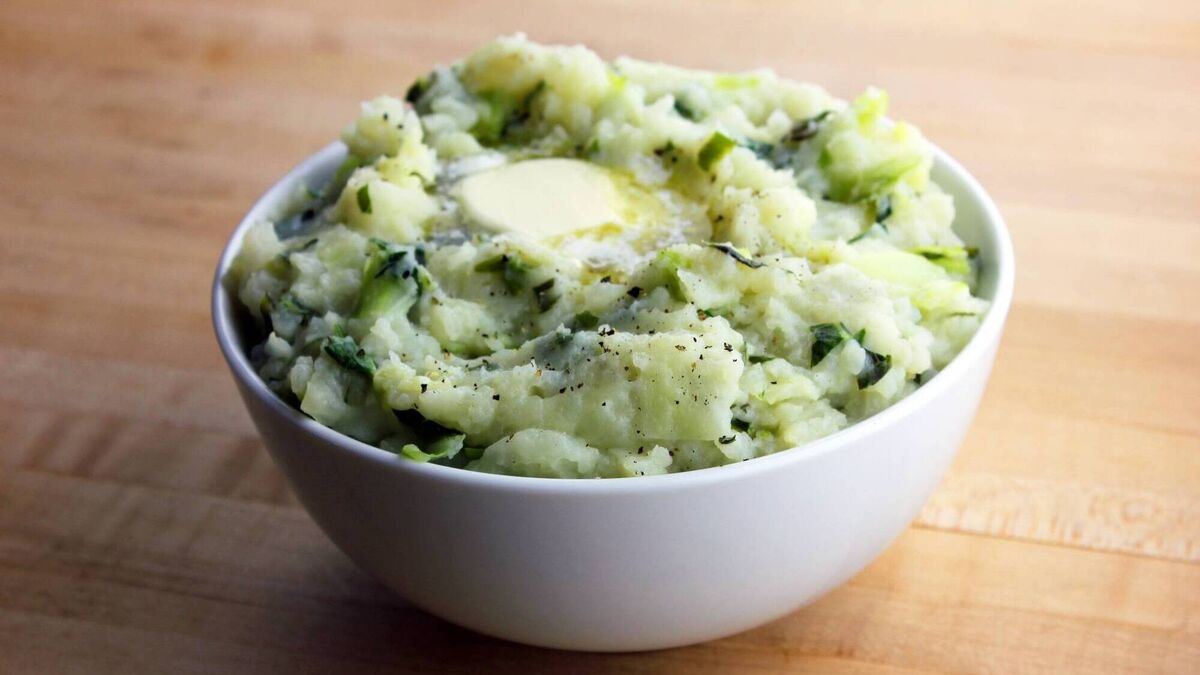
A bowl of colcannon with a pat of butter. Picture: Stock

THE only thing that people seem to agree on when it comes to Colcannon is that it contains mashed potatoes!

A dish that is part of the repertoire of Irish traditional foods, colcannon is most often associated with Halloween or Samhain, and, as one of the most important festival events in the Celtic calendar, this simple dish of potatoes, cabbage and butter comes with a hefty portion of symbolism, folklore and contention.

There is no one way to make colcannon. Recipes vary from region to region, county to county. In Wexford, parsnips are considered essential for a richer, sweeter-flavoured colcannon. Some people say curly kale makes a traditional colcannon while others say kale was for the cattle and cattle alone.

The word colcannon in its Irish form is cál ceannann, which, Northern Irish cookery author Trish Deseine, says means “white-headed cabbage” yet many prefer to use the rich green leaves of a savoy cabbage, lending the finished pot a more enticing and colourful oomph. Restaurateur and author Dr JP McMahon posits the word for colcannon as originating in Wales – cawl cennin - the name of a Welsh leek soup.

Some colcannon recipes call for scallions whereas others dismiss this suggestion as being unseasonal, insisting onion tops, leeks or chives a more seasonal, therefore authentic, choice. Say that to the spring onions still going strong in my garden!

Others insist on no meat, some say bacon is essential for added flavour; some say yes to carrots while others are derided for confusing colcannon with Dublin coddle – a dish that, to my eyes, couldn’t be more different.

Colcannon is a food of ordinary people, so it’s most likely the dish was made with whatever vegetables were available at the time from small kitchen-garden vegetable plots surrounding their home. Recipe variations were heavily influenced by what was available and good; the addition of parsnips in Wexford would have always been better after a frost to sweeten the roots, for instance.

Its simple preparation speaks to a dish eaten by country-folk, cooked as it is in a single deep pot - in times past, a cauldron maybe, most definitely over an open fire.

As with all such cookery, it’s about efficiency – one-pot-cooking requires less fuel; something worth bearing in mind given the times we are living through today.

What we do know is that this is a dish that is made for autumn when the best floury spuds are in season and tasting delicious. Many of our most cherished dishes are those where floury spuds and creamy, buttery dairy goodness combine and, more than oysters and Guinness or bacon and cabbage, is a taste of the very best of Irish food.

Samhain was an important festival and feasting event in the old Celtic year. It is said to celebrate liminal time when the veil between the worlds of the living and the supernatural are at their thinnest.

The festival celebrates this, and the old traditions and observances are all about embracing the world of the ‘others’, and as such it is seen as an opportune time to make wishes and indulge in foretelling rituals.

Marriage, for both women and men, and wealth were the most popular and important aspirations for invoking the assistance of the other world, and often, food was the way such foretelling’s were revealed.

Colcannon is one such food. After the dish was made, trinkets were hidden inside waiting to be uncovered. A plain gold ring foretold marriage within a year; a sixpence signalled wealth; a thimble for a spinster and a button for a bachelor. While no doubt this tradition still abounds in some households, it is probably better and far more comforting to eat colcannon without the added jeopardy of hidden, fortune-telling, trinkets!

Alternatively, should you have an old pair of tights you no longer need, try this tradition as noted in culinary historian Regina Sexton’s book, A Little History of Irish Food: “Young girls [placed] the first and last spoons of Colcannon into one of their stockings, which they then hung on the back of the door. The first man through the door is taken to be their future husband.”

I prefer my colcannon to be presented in a bowl – I’ll save the tights for the colder winter days! With so many recipes, the one you make yourself is always going to be the best, and this is how I cook mine.

Quantities vary depending on how many you’re feeding, but any left over can be chilled and formed into potato cakes and served with bacon and eggs the following morning.

In well-salted water, I boil 2kg of potatoes in their skin for extra flavour and nutrients. Remove from the pot when cook and allow to steam, set the potato water aside.

Meanwhile, top and tail a leek retaining as much of the green top as possible. Cut in half lengthways and slice thinly. Add to a saucepan along with 250ml of fresh cream and 75g of butter, and being careful not to boil the cream, warm through to soften the leek.

Roll up leaves of savoy cabbage and slice thinly. Bring the potato water back up to low boil, add the cabbage and cook gently until soft. Drain and set aside.

Remove the potato skins and roughly mash, then slowly add the softened leek and cream mixture to the potatoes, stirring vigorously with a wooden spoon (don’t ask me why, but I’ve found a wooden spoon is essential to achieving creamy mash).

Squeeze out any remaining water from the cabbage leaves and add to the mash and mix through well. At this point I check for seasoning and add more salt if needed and plenty of black pepper. I also like to add some freshly chopped parsley and chives. If the mix needs more butter, add more.

Spoon into a warmed bowl and top with even more knobs of butter so it begins to pool and “lake” in the potato-y gullies.


While making your colcannon this Samhain, sing this 19th century folk song, The Auld Skillet Pot:

Did you ever eat colcannon,

When ‘twas made with yellow cream

And the Kale and Praties blended

Like a picture in a dream?

Did you ever scoop a hole on top

To hold the melting lake

Of the clover-flavoured butter

That your mother used to make?

Read More

Cork-based food writer picks up national award for The Echo

More in this section

Take part in our Big KidzZone Christmas Quiz and you could win a voucher The Echo's Big Christmas Quiz 2025 (Under 8s)
'I've made so many friends here': A visit to Cork bridge club at heart of local community 'I've made so many friends here': A visit to Cork bridge club at heart of local community
The Village Pubs of Cork: ‘We have film nights, a fiver a pint, popcorn too... they’re brilliant’ The Village Pubs of Cork: ‘We have film nights, a fiver a pint, popcorn too... they’re brilliant’

Sponsored Content

River Boyne in County Meath, Ireland. Water matters: protecting Ireland’s most precious resource
Turning AI ambition into action: Dell Technologies leads the way Turning AI ambition into action: Dell Technologies leads the way
Delicious desserts and exclusive pours, perfect for Christmas Delicious desserts and exclusive pours, perfect for Christmas
Contact Us Cookie Policy Privacy Policy Terms and Conditions

© Examiner Echo Group Limited

Add Echolive.ie to your home screen - easy access to Cork news, views, sport and more