Army chief says suicide bombers behind deadly Philippine attacks
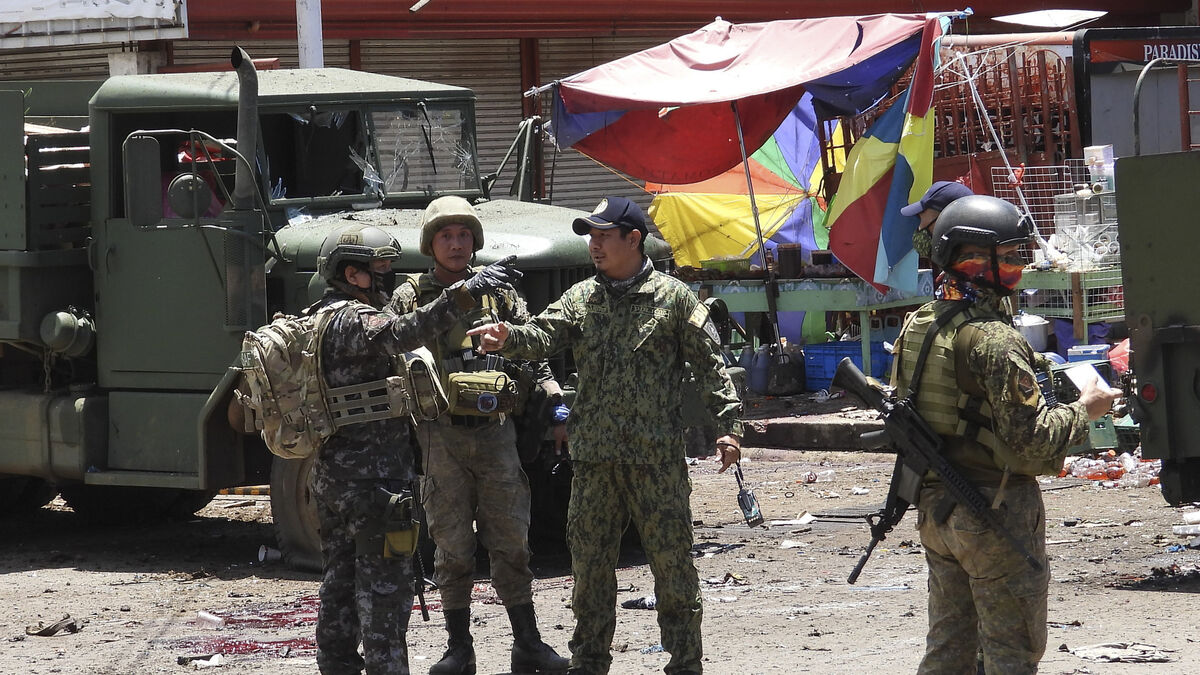
The Philippine army chief has said that two Islamic militants who blew themselves up were responsible for the bombings that killed at least 14 people and wounded 75 more on Monday.
Military officials initially said that the first of two powerful explosions that rocked Jolo town in the southern province of Sulu was caused by a bomb rigged in a motorcycle, while the second blast was a woman suicide bomber.
Army commanding general Cirilito Sobejana, however, said an initial investigation, along with witnesses’ accounts and security camera footage, showed that the first explosion was also set off by a suicide attacker.
“It’s been validated,” Mr Sobejana told reporters.
The military is trying to determine if the two suicide bombers behind the explosions were the widows of Abu Sayyaf militants Talha Jumsah and Norman Lasuca, Mr Sobejana said.
Jumsah, also known as Abu Talha, was a little known but key commander who bridged the Abu Sayyaf with the Islamic State group and plotted suicide attacks before he was killed by troops last year.

Lasuca died in a suicide attack on a Sulu army camp last year.
The country’s southern region has been the scene of decades of Muslim separatist unrest in the largely Roman Catholic nation.
The bombings on Monday were the latest suicide attacks in the predominantly Muslim province of Jolo, including the deadly January 2019 bombing of a Roman Catholic cathedral believed to have been carried out by an Indonesian couple.
Most of the victims were caught in the first blast, near two parked army trucks in front of a grocery store and computer shop in a downtown plaza where the cathedral is located.
The second blast involved the attacker blowing up near a group of soldiers and police, killing one solider and one police commando and wounding several others, a military report said.
There was no immediate claim of responsibility for the attacks, but the military blamed an Abu Sayyaf militant commander, Mundi Sawadjaan, who has been linked to suicide bombings in recent years in Sulu.
The military has been waging a years-long offensive against the Abu Sayyaf, a small but violent group listed by the United States and the Philippines as a terrorist group.
Its armed fighters have dwindled in number to a few hundred in recent years due to battle setbacks, infighting and surrenders. But they remain a national and regional security threat.







 App?
App?