Thousands sleep in open after Greek refugee camp burns down
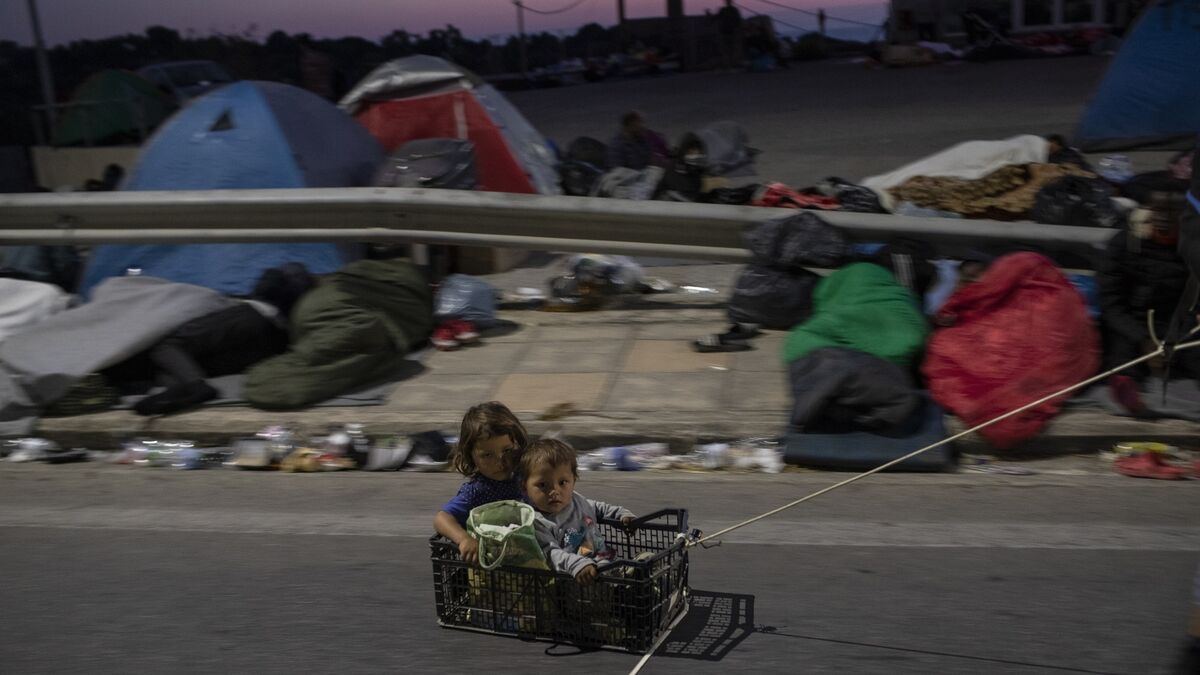
Thousands of refugees and migrants have spent a third night in the open on the Greek island of Lesbos after two successive nights of fires in the notoriously overcrowded Moria camp left them homeless.
Some awoke after sleeping by the side of the road, having cut down reeds and used salvaged blankets to make rudimentary shelters to protect them from the night-time chill and the scorching day-time sun.
Others used tents or had just sleeping bags to protect them from the elements.
Greek authorities have said the fires on Tuesday and Wednesday evening were deliberately set by some of the camp’s residents, angered by isolation orders issued to prevent the spread of the coronavirus after 35 residents were found to have been infected.

The camp had already been placed in lockdown until mid-September, after the first case had been detected – a Somali man who had been granted asylum and had left the camp, but who had returned to Moria from Athens.
Aid organisations have long warned about the dire conditions in the camp, which has a capacity of just over 2,750 people but was housing more than 12,500 inside and in a spillover tent city that sprang up in an adjacent olive grove.
The situation has led to spiralling tension, both among migrants and refugees inside the camp and with local residents who have long called for Moria to be shut down.
Tuesday night’s fire left around 3,500 of the camp’s inhabitants homeless, Greek migration officials said.
Tents were flown in and a ferry and two navy ships were to provide emergency accommodation. But the remnants of the camp were burned down on Wednesday night, leaving the remaining inhabitants with nowhere to stay.

On Wednesday, government spokesman Stelios Petsas stressed that none of the camp’s residents, except for 406 unaccompanied teenagers and children who had been living there, would be allowed to leave the island.
The unaccompanied minors were flown to the mainland and temporarily housed in hotels on Wednesday night.
“Some people do not respect the country that is hosting them, and they strive to prove they are not looking for a passport to a better life,” Mr Petsas said, stressing the fires had been deliberately set and had left thousands of families homeless.
Moria houses people from Africa, Asia and the Middle East who arrived on the island from the nearby Turkish coast fleeing poverty or conflict in their homeland.
Under a 2016 deal between the European Union and Turkey, those arriving on Greek islands would remain there pending either their successful asylum application, or deportation back to Turkey.
However, a backlog in asylum applications, combined with continued arrivals and few deportations, led to massive overcrowding in Moria and other camps on eastern Aegean islands.





 App?
App?