Alexei Navalny released from German hospital
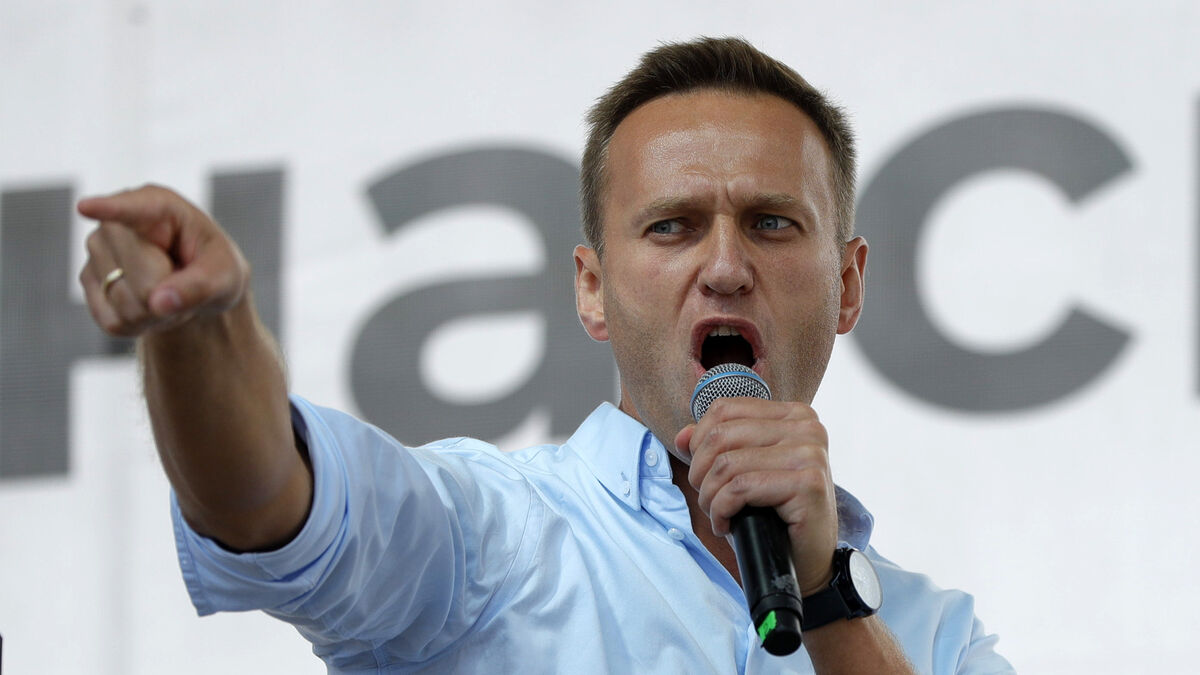
The German hospital treating Russian opposition leader Alexei Navalny for poisoning said his condition had improved enough for him to be released.
Mr Navalny spent 32 days in treatment in Berlin’s Charite hospital, 24 of which were in intensive care, before doctors deemed his “condition had improved sufficiently for him to be discharged from acute inpatient care”.
The hospital said that based on Mr Navalny’s progress, treating physicians believe that “complete recovery is possible” but added that it “remains too early to gauge the potential long-term effects of his severe poisoning”.
Mr Navalny, the most visible opponent of Russian President Vladimir Putin, was flown to Germany two days after falling ill on August 20 on a domestic flight in Russia.

German chemical weapons experts have determined the 44-year-old was poisoned with the Soviet-era nerve agent Novichok – findings corroborated by labs in France and Sweden.
During his convalescence, Mr Navalny has in recent days been posting regular photos from the hospital on Instagram, first showing him sitting up in his bed surrounded by his family, then up and about in the building.
In a wry post on Tuesday night accompanied by a close-up photo, he scoffed at reported comments by Mr Putin suggesting he might have intentionally taken poison himself.
“Good theory, I believe it deserves the most careful attention,” Mr Navalny wrote in Russian.
“Cooked Novichok in the kitchen. Took a sip from a flask on the plane. Fell into a coma.”
He sarcastically said that then the “ultimate aim of my cunning plan” was to die in Siberia, where the cause of death would be “lived long enough”.
“But Putin outmanoeuvred me. You can’t fool him,” Mr Navalny wrote.

“As a result, I lay in a coma for 18 days like a fool, but didn’t get my way. The provocation failed!”
The nerve agent used in the attack was the same class of Soviet-era agent that Britain said was used on former Russian spy Sergei Skripal and his daughter in Salisbury, England, in 2018, and Chancellor Angela Merkel and other world leaders have called for Russia to fully investigate.
Mr Navalny was kept in an induced coma for more than two weeks as he was treated with an antidote.
Members of his team accused the Kremlin of involvement in the poisoning, claims that Russian officials have vehemently denied.
Russia has bristled at the demands for an investigation, saying it needs Germany to share medical data or compare notes with the Russian doctors who said they found no trace of poison in his system while he was at a hospital in the Siberian city of Omsk.
Germany has noted that Mr Navalny was in Russian treatment for 48 hours, and that Russia has its own data.
It has also enlisted the Hague-based Organisation for the Prohibition of Chemical Weapons (OPCW) for technical assistance in the case.

Last week, the international agency said its experts had “independently collected biomedical samples from Mr Navalny for analysis by OPCW designated laboratories”.
Results have not yet been announced.
The Charite statement was released in consultation with Mr Navalny and his wife, and the hospital would not comment further on whether he would continue to receive outpatient care there.
Mr Navalny’s team has said he eventually plans to return to Russia, but had no immediate statement after his release from the hospital.





 App?
App?