Venice remains dry as flood barriers pass first emergency
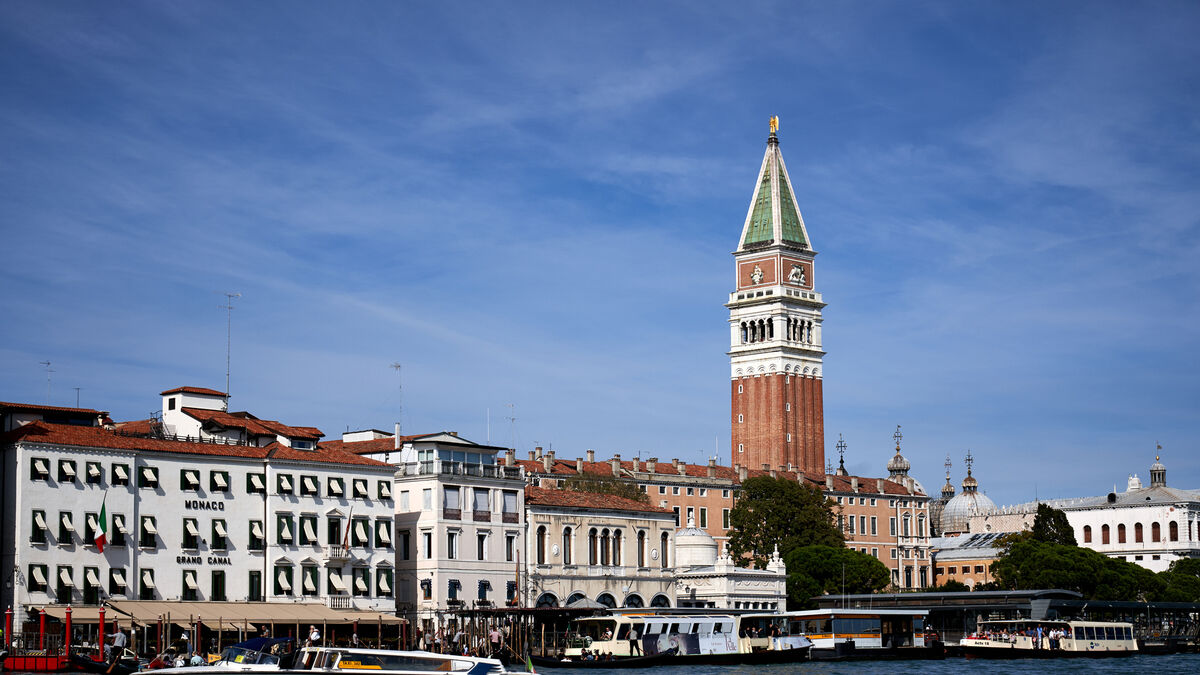
Underwater barriers in Venice have passed their first emergency with flying colours, protecting the Italian lagoon city from a tide that peaked at 130cm, a level that would normally inundate about half of the city.
St Mark’s Square, one of the lowest points in the city, remained dry as tourists criss-crossed the space, ignoring the raised walkways put in place each autumn against the notorious high tides.
Mayor Luigi Brugnaro’s voice broke with emotion as he surveyed the controversial and long-delayed barriers from a boat, saying: “We are satisfied.”
++ A #Venezia il #Mose in azione++
— Luigi Brugnaro (@LuigiBrugnaro) October 3, 2020
🔴 Alle 09.52 completato l’innalzamento di tutte le paratoie #acquaalta #3ottobre @comunevenezia @CMVenezia pic.twitter.com/ZZmDyRQwd2
He later toasted the success standing on dry ground in Pellestrina, a lagoon island that is often one of the first to flood.
It took about 100 technicians around an hour and a quarter to get all 78 barriers into place, said Giuseppe Fiengo, the government commissioner put in charge of the project following a corruption scandal.
“It is a great moment. This is thanks to everyone in the technical area who worked very tiring shifts as this is the first time under these conditions,” he said, adding that a single team of 18 people should be able to raise the barriers in future.
Authorities accelerated deployment of the system after the city was inundated with the worst tides in 53 years last November. An increased frequency of high water brought on by climate change has added urgency to the completion of the project.

While the 78 barriers have all been installed, some infrastructure is still being completed.
Eventually, the system will be deployed when tides of 110cm are forecast, but while work is still under way the project’s commissioners have set a threshold of 130cm.
In view of the forecast, port authorities had temporarily banned shipping traffic through the three access points where the barriers are installed.
The system of movable underwater barriers, dubbed Moses, has been beset by corruption, cost overruns and delays.
Projected at 1.8 billion euros (£1.6 billion) and meant to be completed by 2011, the project has so far cost 5.5 billion euros (£5 billion) and is running more than a decade behind schedule.




 App?
App?