Ambulance strike: What does it mean for patients and what happens next?
By Claudia Savage and Cillian Sherlock Press Association
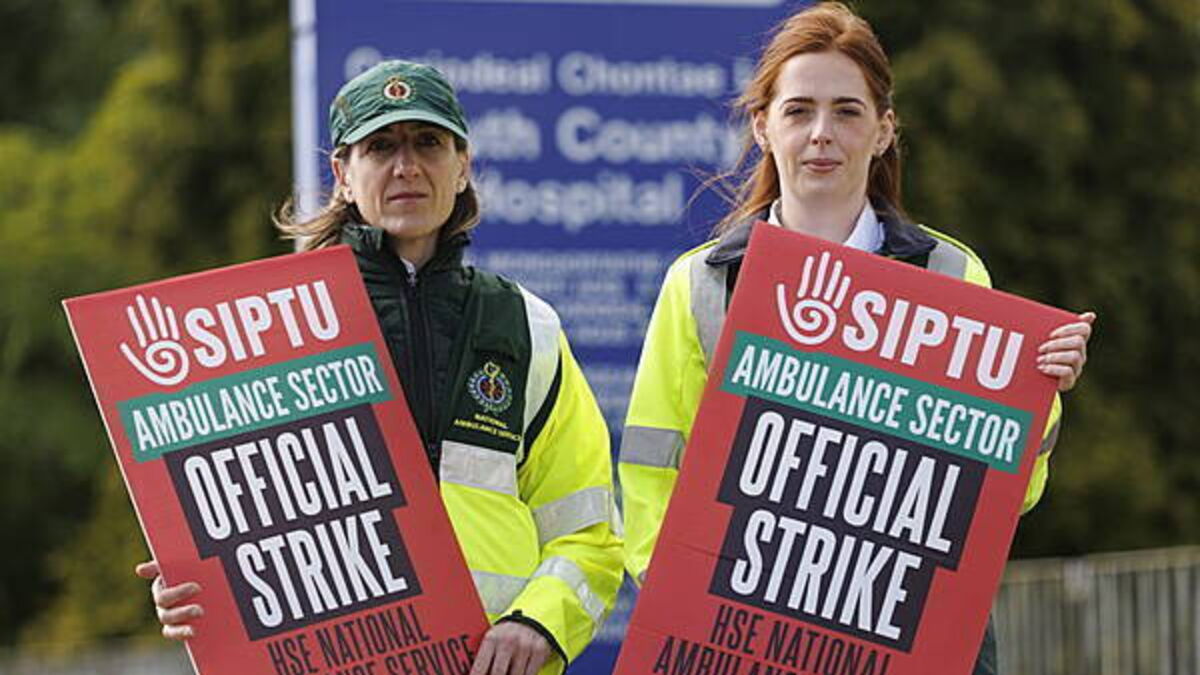
Ambulance workers on picket lines across Ireland have said they are “prepared for the long haul” if no action is seen on pay.
The Department of Health has said it is “regrettable” the strike has gone ahead and that the industrial action would have a significant impact on service capacity.
– What’s happening?
From 8am Tuesday, ambulance workers are carrying out a 24-hour strike.
The strike involved pickets at ambulance depots that began at 8am, including at Davitt Road in Dublin South Central and in Dundalk.
– Who is involved?
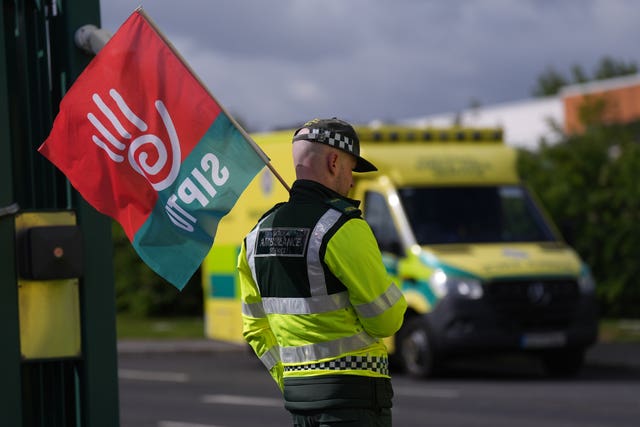
2,000 emergency medical technicians (EMT), paramedics, advanced paramedics, paramedic specialists and paramedic supervisors from the Siptu and Unite union at the National Ambulance Service are involved in the work stoppage, which followed work-to-rule action on Monday.
– Why?
The Unions have said a 5% increase recommended under the benchmarking II process has not been delivered.
They also highlight that qualifications, clinical responsibilities and operational duties of ambulance staff have expanded significantly in recent years, and that a 2020 roles and responsibilities review recommended enhanced pay scales to reflect this.
Union leaders said that since 2011, EMTs and paramedics have increased their responsibility for administering medications by 89% and 83%, respectively.
– Are ambulances running at all?
The HSE has warned there “will be delays responding to non-life-threatening calls for ambulances” on Tuesday into Wednesday.
Unions have agreed contingency plans with the HSE to ensure that patient safety is prioritised during the dispute.
The 999 phone service is fully operational and under the contingency plan, priority will be given to patients facing emergencies such as cardiac or respiratory arrest, and those experiencing serious trauma such as that arising from road traffic accidents.
– What is the Government position?
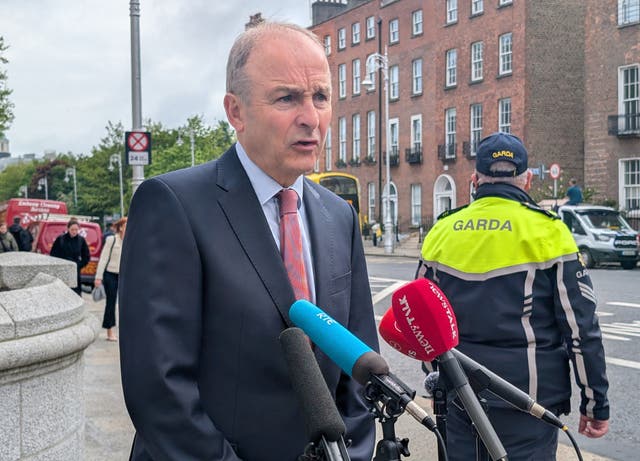
Taoiseach Micheál Martin said: “It is not satisfactory for patients or the people generally that a first-responder service should be mired in industrial action of this kind.”
He urged unions to re-engage in dialogue, adding: “It is the only way this will get resolved.”
Sinn Féin leader Mary Lou McDonald said the Government has “left the ambulance system stretched to breaking point” with “overworked paramedics under extreme pressure”.
– What’s next?
Government figures have urged the union representatives to re-engage with State industrial relation mechanisms.
For the unions’ part, they say that there will be further work stoppages for May 19th and 26th – with additional action planned during June if the dispute is not resolved.