Two married women cleared to challenge refusal of their daughter's citizenship bid
High Court Reporter
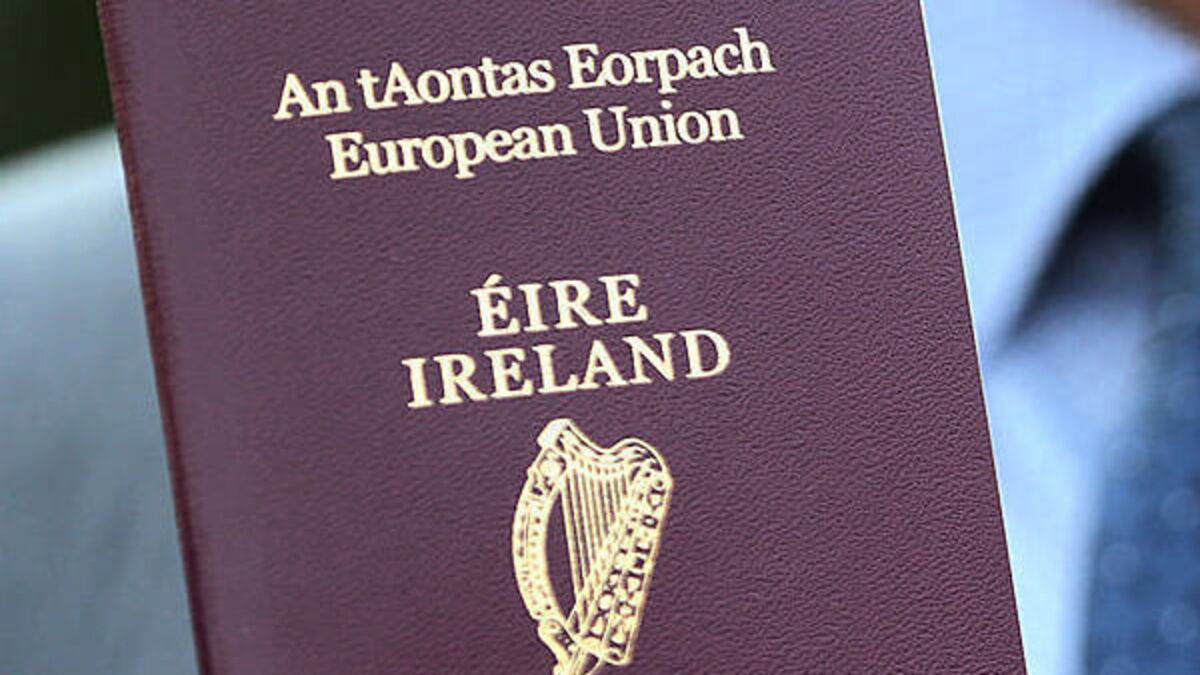
Two women who married one another are to challenge a decision by the State to refuse an Irish passport for their daughter, who was conceived through IVF in the UK.
The couple, who cannot be named by court order, submit they were married in Ireland in 2018.
One of the women is an Irish national, and her wife is from New Zealand.
Through an IVF procedure, the couple had a child in 2024, with the woman from New Zealand giving birth to the baby girl.
The couple now live outside of Ireland in an EU country.
The birthing mother was granted a passport for the girl from New Zealand authorities, but their Irish counterparts refused the infant a passport here.
At the High Court on Monday, Judge Mary Rose Gearty granted permission to barrister William McLoughlin for the women, to challenge the November 2025 refusal made by the Minister for Foreign Affairs.
McLoughlin is bringing the case on behalf of the Irish woman and the child against the respondents: the Minister, the Attorney General and Ireland.
The woman submits in court documents that she is an Irish citizen in a lawful same-sex marriage conducted in Ireland and is the legal parent to the child.
She said she is named on the child's UK birth cert but her "parentage, parental rights and family status are not recognised" by the Irish State.
McLoughlin is seeking a declaration from the court that the Irish woman is the legal parent of the child under Irish law.
Counsel is also seeking that the Irish Nationality and Citizenship Act 1956, under which the refusal was made, is "unconstitutional", under Articles 40.1, 40.4, 41 and 41A of the Constitution in the circumstances presented.
A declaration is also sought by counsel that the 1956 Act underpinning the decision is incompatible with the European Convention on Human Rights.
It is submitted to the court that neither the applicant nor her wife knows the identity of the sperm donor, but that the child is entitled to trace the donor under domestic legislation upon reaching the age of majority.
It is claimed by the Irish woman that her wife carried and birthed the child, and both the applicant and her wife are named as parents on the birth cert.
While the child obtained New Zealand citizenship, it is submitted, the Irish respondents determined that “the applicant is not a ‘mother’, ‘father’ or ‘parent’ under the 1956 Act, “despite the applicant being named on the birth certificate as a ‘legal parent’ to the child”.
It is submitted that The Passport Office by email, dated November 3rd, 2025, responded to the application stating that under Irish law, the parents of a child born outside of the State “are, broadly considered to be the child’s birth mother, married to the man, who is the child’s genetic father, and a presumption of paternity applies in respect of her husband, or the child’s adoptive parents”.
The response also says, it is submitted, that “citizenship by descent is provided for in the Act, which provides that a person is an Irish citizen from birth, if at the time of his or her birth either parent was an Irish citizen, or would, if alive, have been an Irish citizen”.
It further states: “Applying the law… and having carefully considered all of the information, there would be no apparent basis to conclude that [the child] is entitled to Irish citizenship at the time of the child’s birth.”
Judge Gearty granted leave for judicial review on the matter and adjourned it to May 12th.