What does a Claddagh ring symbolise? And how should you be wearing it?
Eva Osborne
The Claddagh ring is a timeless piece of jewellery with fascinating Irish roots.
Depending on which finger it is on, and whether it is facing inwards or outwards, a person may be labelling themselves as single, taken, or engaged.
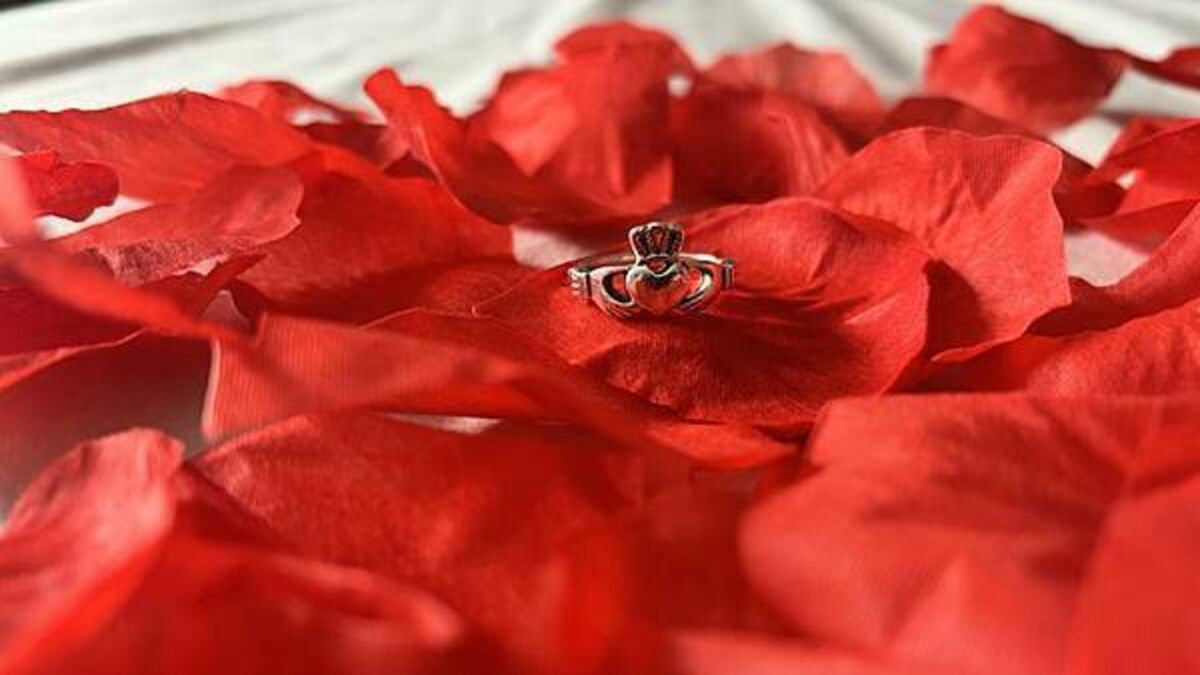
Each element of the ring's design means something. The heart represents love, the hands represent friendship, and the crown represents loyalty.
The Claddagh ring design is most often credited to a goldsmith from the village of Claddagh in Co Galway - Richard Joyce.
According to The Irish Emigration Museum (EPIC), the oldest known Claddagh ring, dating back to the 1700s, is attributed to Joyce and is housed in the Galway City Museum.

The story goes that Joyce was kidnapped by Algerian corsairs and sold into slavery in the late 1600s, where he learned his craft from a wealthy goldsmith.
He remained in captivity for 14 years until his release was secured under an agreement brokered by King William III in 1689. Despite an offer from his former master to remain and marry his daughter, Joyce returned home to Galway.
Before his capture, Joyce had been engaged to a local girl. Upon his return, they were reunited and married, with the Claddagh ring serving as their wedding bands, EPIC said.
How to wear a Claddagh ring
The way you wear your Claddagh ring conveys your relationship status.
According to EPIC, and the majority of Claddagh ring wearers, the guide is as follows:
- Right hand, heart facing outward - You are open to love or not in a relationship
- Right hand, heart facing inward - Your heart is taken; you are in a relationship
- Left hand, heart facing outward - You are engaged
- Left hand, heart facing inward - You are married