DNA advances could impact Connemara schoolgirl murder conviction, expert says
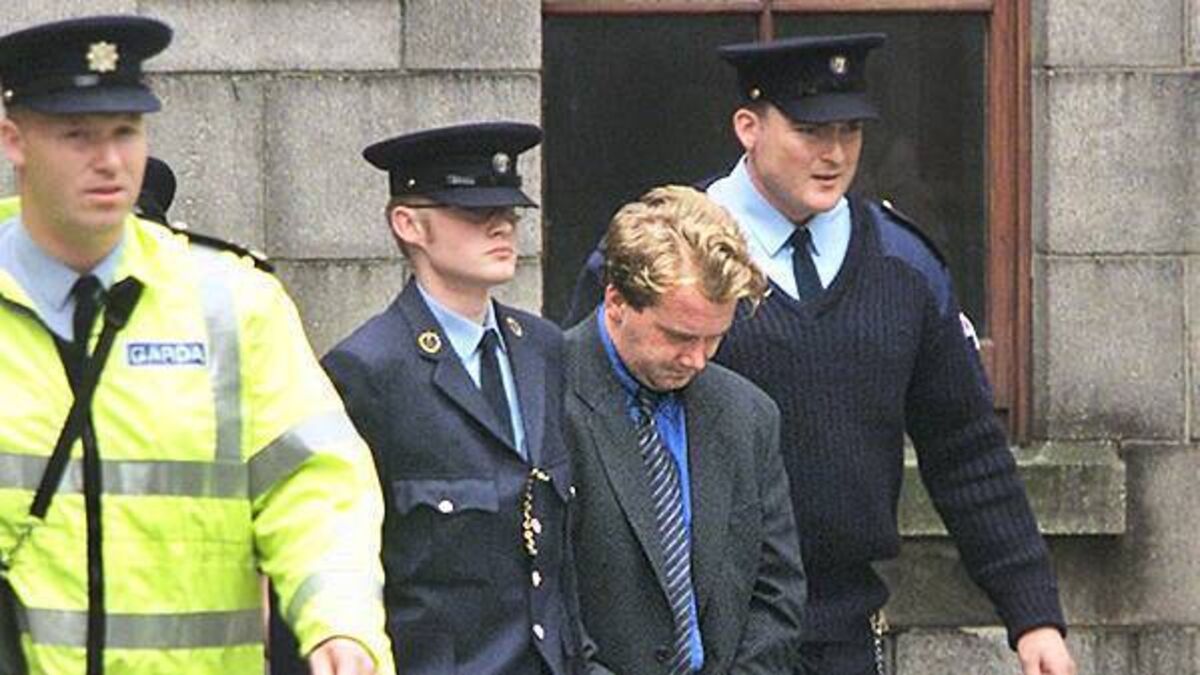
Fiona Magennis
A defence expert witness in the case of a 51-year-old man who claims his conviction for the rape and murder of a Connemara schoolgirl was a miscarriage of justice has said DNA analysis was “very much in its infancy” at the time of his trial and technological advances in the intervening years have been “huge”.
John McDonagh was 27 when he was convicted in 2001 by a Central Criminal Court jury of the rape and murder of Siobhan Hynes (17), of Sconse, Lettermore, Connemara.
Hynes was found dead at Tismeàin beach in the townland of Keeraunbeg in the early hours of December 6th, 1998.
McDonagh, formerly of The Demesne, Keeraunbeg, Carraroe, had pleaded not guilty but was convicted following three days of jury deliberations and sentenced to life imprisonment.
He is now seeking to utilise advances in technology and developments in expert knowledge to try to establish that his conviction was unsafe and demonstrate that there has been a miscarriage of justice in his case.
He has made a novel application to have certain trial exhibits undergo forensic testing and examination, arguing that fibres on Hyne’s person had “not received adequate attention”.
Dr Louise McKenna, of the State Forensic Science Laboratory, found "numerous" fibres on the jumper McDonagh wore that night which matched Ms Hynes's petrol-blue polyester fleece jacket and wine acrylic jumper. She also found fibres on the front and back of his jumper which matched fibres from Hynes's black socks.
Fibres from the fleece and the wine jumper were also found in the front passenger seat of McDonagh's car, and fibres from his red fluffy car-seat cover matched two red fibres found on Hynes's clothes.
McKenna said the fibres lent "very strong support to the proposition that Siobhan Hynes was in contact with John McDonagh's jumper and strong support for her being in his car."
McDonagh is now seeking to utilise advances in technology and developments in expert knowledge to try to establish that his conviction was unsafe and demonstrate that there has been a miscarriage of justice in his case.
In opening the appeal last December, Michael O’Higgins SC, for McDonagh, said that the “meat and veg of the case is in the affidavits of the experts”.
The case was adjourned following two days of submissions after the three-judge court said they wished to hear evidence from the expert witnesses in the case.
During cross-examination on Tuesday, the third day of the appeal hearing, forensic expert for McDonagh Clare Jarman told counsel for the State Paul Carroll that while DNA testing was still useful at the time of the trial, it was “very much in its infancy”.
She said the advancements in the 20 years since had been significant, although she agreed the “basic science” remained the same.
Jarman said modern technology is more sensitive and current extraction methods are better able to clean samples and remove contaminants.
She told the court that acid phosphatase (AP) testing is used to identify the possible presence of seminal fluid.
In relation to clothing, she said the detectability of such material depended on whether the fluid was dry or wet when immersed in water. She said spermatozoa can sometimes remain, but identifying which areas of clothing to target can be difficult.
Jarman agreed that AP testing has been used “for decades and decades” and that immersion in water may cause the substance to be lost or degraded.
Carroll said the evidence in the case was that Hynes’ body had been left in a tidal area. He said Dr Dorothy Ramsbottom of Forensic Science Ireland, who prepared a report for the Director of Public Prosecutions, had noted that the facts of the case indicated a low likelihood of finding bodily or seminal fluid.
Jarman agreed that immersion in water would reduce the presence of acid phosphatase but said she could not say whether it would eliminate it entirely.
She told counsel the action of waves and seawater would have a more negative effect on evidence than distilled water.
Jarman also addressed Y-STR testing, describing it as useful in isolating male DNA in samples overwhelmed by female DNA.
She said immersion in water was a “huge factor” affecting detectability.
Jarman confirmed to Mr O’Higgins in re-examination that six cotton buds were taken at the time and split, creating 12 potential test portions. She said only part of one had been tested, meaning 11 portions had not been examined. She said modern testing would involve combining extracts from all portions.
Ramsbottom later told the court that Y-STR profiling was not used in Ireland until 2016. She described the possibility of DNA surviving under fingernails as “possible but highly unlikely” and said testers at the time had carried out a pre-assessment to maximise evidential value.
She said in this case, testers looked at the fingernail scrapings even though the victim was in the water for up to 14 hours and there would have been a “very low likelihood” of finding anything under her nails. She said in this case there was a match to the victim’s own DNA.
Expert evidence was also heard from fibre specialists. Tiernan Coyle said he was unable to confirm the analytical findings in the case file and could not yet express an opinion on contact evidence.
Coyle said important developments have been made in microscopes over the past 25 years and this represented a significant advance in technology.
Amanda Lennon, a prosecution fibre expert, said while technology had advanced, the principles remained the same and further testing would be unlikely to advance the evidence.
She said the testing done at the time was “robust” and the case involved fibres transferred in multiple directions, with various types on two different garments and given the number involved and the multi-way transfer, further testing was likely to strengthen the evidence rather than the opposite.
The trial in 2001 heard that Hynes had celebrated her 17th birthday a week before she was murdered. She was raped by McDonagh, who then tried to choke her. After leaving her for dead, he drove his car back to Carraroe village and became involved in a fight.
Hynes disappeared from Carraroe village at around 12.50am. She left a car parked outside a local hotel to go to the toilet in a local chip shop, but she never came back. Earlier, when she tried to go to the toilet in a local pub, a doorman refused her entry because she was underage.
The hearing continues on Wednesday.
If you have been affected by any of the issues raised in this article, you can call the national 24-hour Rape Crisis Helpline at 1800-77 8888, access text service and webchat options at drcc.ie/services/helpline/ or visit Rape Crisis Help. In the case of an emergency, always dial 999/112.