Builder of Children's Hospital says Ireland's planning system is fragmented and overly complex
Ken Foxe
The builder of the National Children’s Hospital said Ireland’s planning system was fragmented, overly complex, and lacked statutory timelines.
In a submission to a government consultation on infrastructure development, BAM Ireland said “uncertainty and time” were being added to every stage of development.
The company said that there were “skills shortages across key roles”, especially for technically complex or environmentally sensitive schemes.
Their submission said: “Recent increases in salary thresholds for visa applications reduce the ability to employ from outside Europe, which in any event is challenging due to the already heavily constrained housing situation in Ireland.”
BAM also criticised inflexible procurement models, saying public projects still favoured “lowest-cost bids,” even for high-risk projects.
The company said: “This discourages quality-focused bids and limits early contractor involvement, often leading to project risks being poorly scoped or managed.”
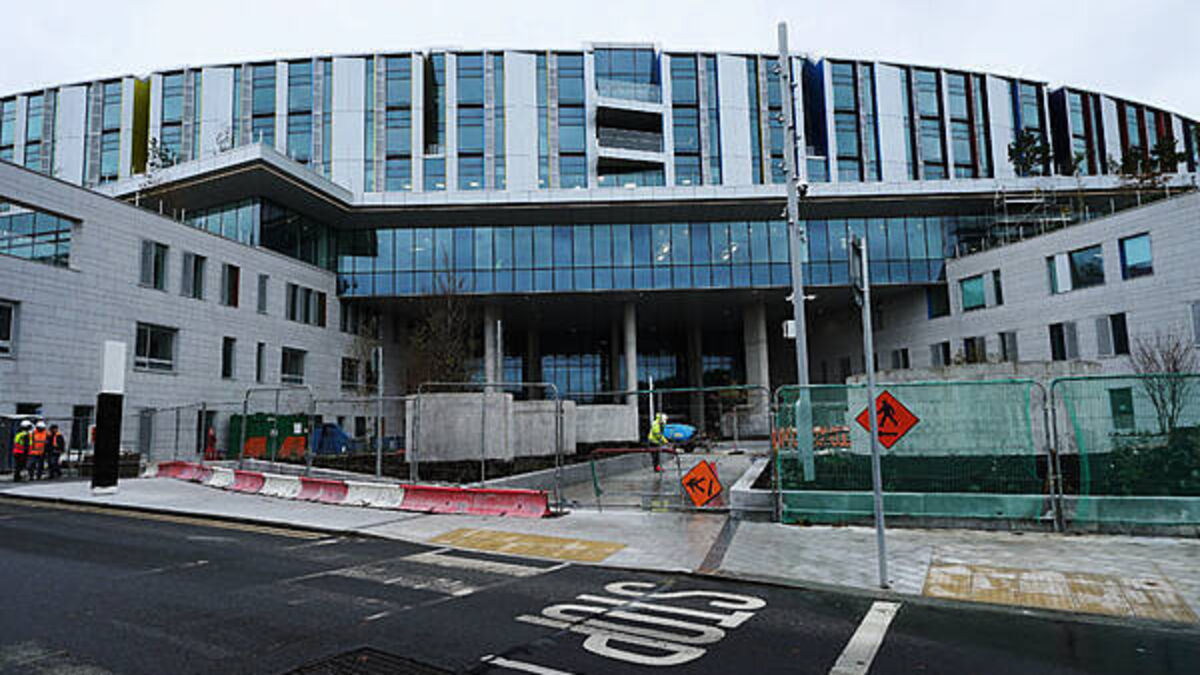
BAM’s work on the National Children’s Hospital has been beset by delays with costs rising well over €2 billion.
Two weeks ago, it was confirmed that the 16th completion deadline on the project would be missed and the hospital is three years behind schedule.
Their submission was one of dozens submitted to a consultation on accelerating infrastructure; its taskforce has since recommending sweeping changes around planning and development.
The daa, which operates Dublin Airport, said there was “considerable reputational damage” to Ireland from delays in delivery of projects.
Their submission said: “We are now witnessing international infrastructure-contractors reluctant or unwilling to engage on major infrastructure contracts given the lack of certainty of planning outcomes in Ireland, extended timelines for consent, and a marked lack of affordable and available accommodation.”
The daa said they dealt daily with airlines looking to provide routes to Dublin but the lack of certainty over the passenger cap and infrastructure meant they would not commit.
They said such missed opportunities directly hindered Irish access to established and emerging markets, hurting “business, tourism, and the Irish people.”
The American Chamber of Commerce in Ireland said housing and infrastructure were cited as the biggest constraints to foreign direct investment (FDI).
It said “delays and logjams” in planning created a barrier for investment and for delivery of vital infrastructure projects.
The American Chamber of Commerce called for these to be prioritised with a “triage system” for strategic projects.
The National Transport Authority criticised the “exceedingly low bar” for a person to bring judicial review (JR).
The NTA said while many JRs were “well intentioned and raised on legitimate grounds,” they could be seen as tools for opponents of development to stall projects.
Uisce Éireann highlighted a lack of state support for core economic infrastructure and associated projects.
The utility operator also raised lack of certainty of funding, “policy misalignment,” complexity of approval processes, and judicial review.
Their submission said: “The lack of clear and unambiguous state support at the highest level undermines public confidence in critical infrastructure projects.”
An Taisce said judicial review was being “framed” by many as a major challenge to the delivery of projects.
They highlighted how 30 percent of JRs in 2024 and 2025 were actually taken by developers and landowners and for wind energy the split was roughly 50/50.
An Taisce said the number of successful judicial reviews had increased exponentially in recent years.
Their submission said: “This indicates that unlawful planning decisions are indeed a serious issue and that the judicial review system is actually doing what it was designed to do, in terms of correcting those flawed decisions.”
Friends of the Irish Environment said many state agencies viewed climate, diversity, water, and other environmental obligations as “procedural steps” or “threats” to infrastructure delivery.
They said this was particularly common among public bodies that have failed to meet obligations under Irish and EU law.
Their submission said: “Rather than acknowledging their shortcomings, these agencies frequently shift the blame onto the regulatory or oversight mechanisms that have flagged their non-compliance.”