One of Ireland's patron saints: Who was St Brigid?
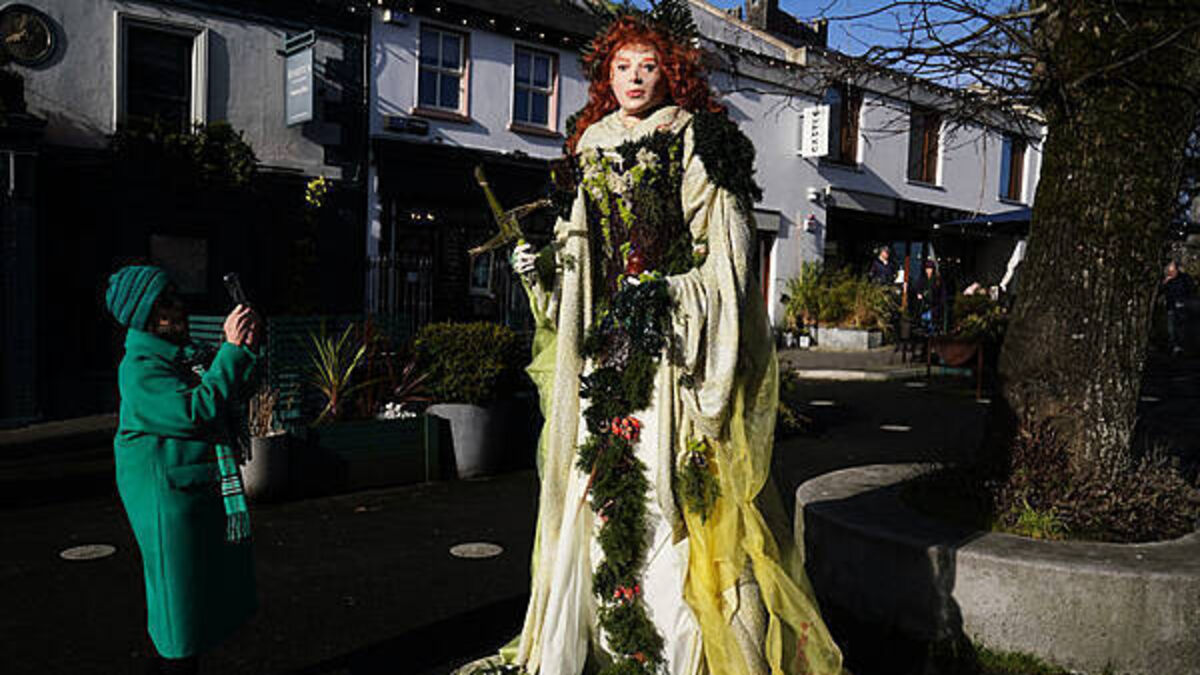
Eva Osborne
St Brigid's Day, or Imbolc, has been a yearly public holiday since 2023 to mark both the saint's feast day and the seasonal festival.
The public holiday is observed on the first Monday of February, except for years where February 1st falls on a Friday, in which case the holiday is observed on the Friday instead.
This year, February 3rd will be a public holiday to celebrate St Brigid and the traditional festival of Imbolc, which celebrates the start of spring according to the Irish calendar.
But who was St Brigid? And why is she one of Ireland's patron saints?
St Brigid was said to have been born in Faughart, Co Louth, not far from Dundalk in 451 or 452 AD. Her mother was a slave and her father was a chieftain.
As she grew older, St Brigid was said to have worked miracles, including healing and feeding the poor.
According to tradition, around 480, St Brigid founded a monastery at Kildare (Cill Dara, "church of the oak").
After asking the King of Leinster for a piece of land, the Irish Countrywomen's Association explains that he agreed to give her the amount of land that her cloak would cover.
Tradition states that St Brigid threw down her cloak and it grew until it covered what is now the Curragh of Kildare.
According to a hagiography of the Irish saints, Acta Triadis Thaumaturgae, St Brigid spent time in Connacht and founded many churches in the Diocese of Elphin.
St Brigid is said to have died in Kildare on February 1st, with her year of death usually placed around 524 or 525 AD.
The Irish Countrywomen's Association said St Brigid is remembered through the ages as "a woman of the land with an extraordinary concern and compassion for the poor people of her time and her spirit of hospitality".
"She is also often referred to as a peacemaker who intervened in disputes between rival factions and brought healing and reconciliation.
"She is also considered as a model of equity since she challenged both men and women to create a church and a society where men and women were respected equally."