New approach to diagnosing heart disease hailed as potential ‘game changer’
By David Young, PA
A clinical trial that saw high resolution scanning technology used to identity heart disease has been hailed as a potential game changer for cardiac treatment.
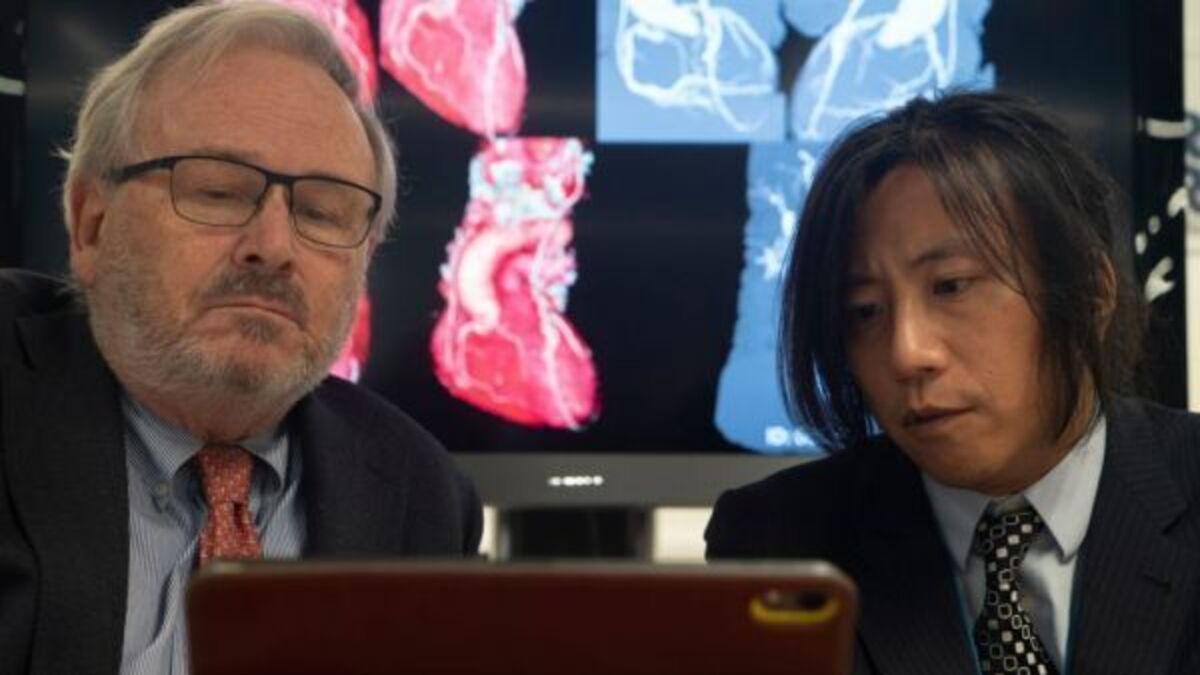
A team at the University of Galway used CT-scan imagery to pinpoint coronary artery disease and blockages as an alternative to traditional angiographs – an invasive procedure that involves the puncturing of blood vessels, insertion of cables and use of dyes.
The team based at the University’s CORRIB Core Lab analysed the images taken from patients in trial hospitals in the US and Europe.
The research was published on Sunday in the European Heart Journal.
It found that the approach was 99.1 per cent feasible, with the cardiac CT scanning offering good diagnostic accuracy without the need for invasive diagnostic catheterisation.
The trial was sponsored by the University of Galway and funded by GE Healthcare, based in Chicago, and HeartFlow, based in Redwood City, California.
Trial chairman Professor Patrick W Serruys, established professor of interventional medicine and innovation at University of Galway, said: “The results of this trial have the potential to simplify the planning for patients undergoing heart bypass surgery.
“The trial and the central role played by the CORRIB Core Lab puts University of Galway on the front line of cardiovascular diagnosis, planning and treatment of coronary artery disease.”
The study involved 114 patients who had severe blockages in multiple vessels, limiting blood flow to their heart.
Professor Serruys said the study offered the potential for a “monumental shift in healthcare”.
“Following the example of the surgeon, interventional cardiologists could similarly consider circumventing traditional invasive cineangiography and instead rely solely on CT scans for procedural planning,” he said.
“This approach not only alleviates the diagnostic burden in cath labs but also paves the way for transforming them into dedicated ‘interventional suites’- ultimately enhancing patient workflows.”
A randomised trial involving more than 2,500 patients in 80 hospitals in Europe is now set to be undertaken.
Dr Yoshi Onuma, professor of interventional cardiology at University of Galway and the medical director of CORRIB Research Centre, said there were several benefits from the new approach.
“A catheterisation procedure is invasive and it is unpleasant for the patient,” he said.
“It is also costly for the health service. While there is a minimal risk associated with the procedure, it is not entirely risk free.”
Commenting on the potential of the study, he added: “It may become a game-changer, altering the traditional relationship between GP, radiologist, cardiologist and cardio-thoracic surgeon for the benefit of the patient.”