Irish public debt of €42,000 per person ‘very significant’ for small country
By Gráinne Ní Aodha, PA
Ireland’s national debt has fallen slightly to €42,000 per person, in what is one of the highest gross public debt levels in the world.
The figures published on Wednesday indicate that public debt represented 76 per cent of the modified gross national income last year.
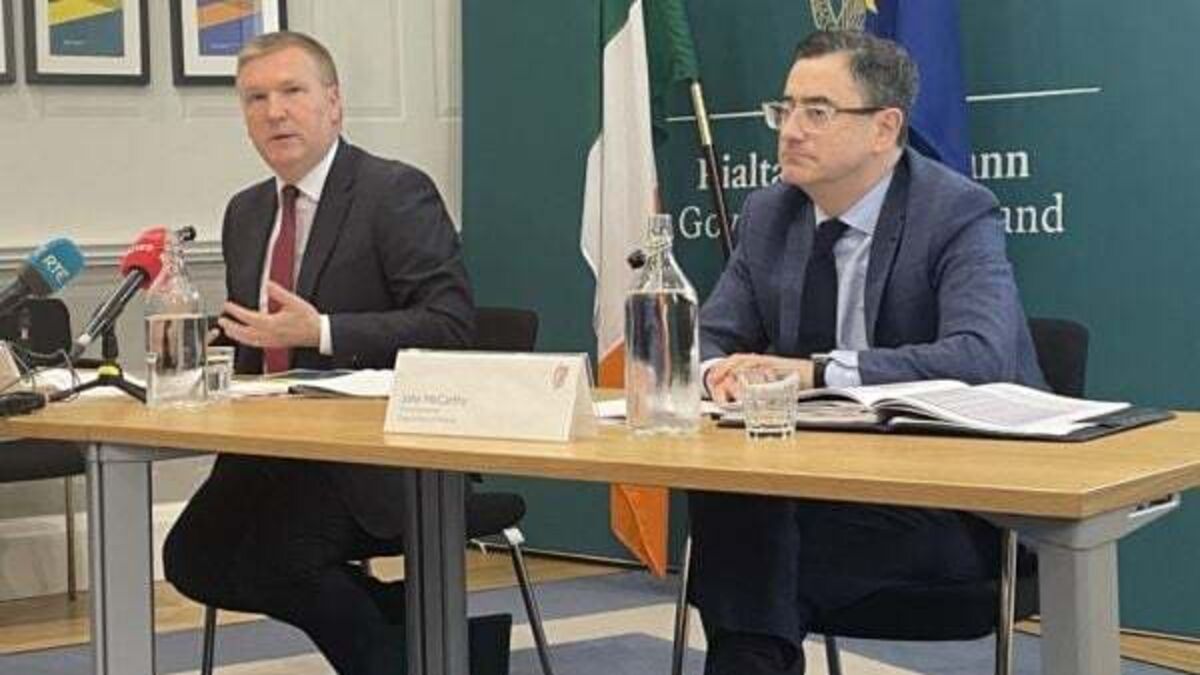
Minister for Finance Michael McGrath said the State’s debt of €223 billion gross was “very significant debt for a small, open economy”.
The Department of Finance’s chief economist John McCarthy said there are only a handful of countries in the world that have a higher level of per capita debt, including Japan, Belgium and Italy.
He said the risks facing the public finances include an overreliance on corporation tax, as around 60 per cent of overall receipts come from 10 firms and half of last year’s €23.8 billion in corporation tax revenue is windfall.
“One shock, if the excess corporate tax was to evaporate overnight… there will be a big hit on public debt: about 15 percentage points higher by 2035,” he said.
From about 2030/2035 onwards, there are “less benign type of scenarios” for public debt as “slow moving structural changes begin to really bite”.
Mr McCarthy said that if there are no policy changes made, the ratio of workers to retired people will shift from four workers for every retiree currently, to two people working for every retiree in 2050.
Mr McGrath said the State’s sovereign debt is in “a very manageable period” at the moment but warned the risks “can’t be ignored”.
“The purpose of the report here is to identify the strengths and weaknesses and also to help promote fiscal discipline.
“I think it is important to acknowledge progress, we are on reasonably solid ground.
“Gross public debt amounted to 76 per cent of modified GNI at the end of last year, at its peak, which was in 2012, it stood at 166 per cent.
“So 166 per cent in 2012, 76 per cent at the end of last year, the gross debt has fallen from a peak of €236 billion at the end of 2021 to €223 billion at the end of last year.”
He said two funds announced as part of Budget 2024, the Future Ireland Fund and the Infrastructure, Climate and Nature Fund, would be “key” to safeguarding against risks.
The Future Ireland Fund is designed to meet the costs of running the State in the future.
A total of 0.8 per cent of GDP will be invested into the fund every year between 2024 and 2035, for an expected total of €100 billion.
A separate Infrastructure, Climate and Nature Fund is expected to grow by €2 billion for the next seven years.