Bixiga 70: Afro-Brazilian brilliance at Cork Jazz Festival
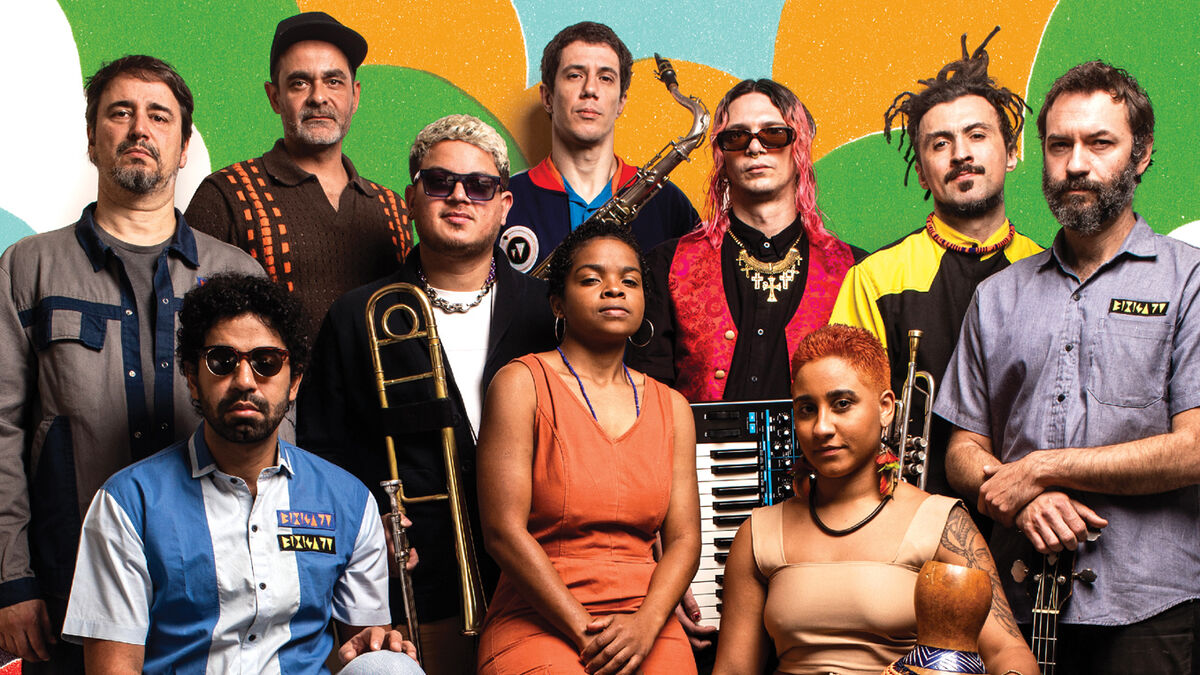
Bixiga 70 play Live at St Luke’s as part of the Guinness Cork Jazz Festival.
We might well be sick of talking and thinking about the pandemic and the crisis years as pertains to Ireland and its music scene, but regardless of how hard we had it, you can imagine trying to get back on your feet as a band - especially one that had been gigging for years prior - after the covid crisis had abated in Brazil.
The pandemic was keenly-felt in a densely-populated country, as one might imagine, suffering in particular under the rule of former President Jair Bolsonaro, and his mishandling of the crisis, in keeping with rhetoric and bluster of fellow strongmen on the modern-day international right.
Cuca Ferreira, baritone saxophonist of Brazilian instrumental outfit Bixiga 70, joins your writer via Zoom from the band’s studio, built in a former live music bar at 70 Rua 13 de Maio, in the Bixiga neighbourhood of their native São Paulo, that would have been home, in its time, to post-gig lockups and jam sessions.
Their sound is a fusion of Brazilian, wider Latin and African influences, and for Ferreira, this aspect of the band comes from their surroundings.
“It's a very important neighbourhood and area in the history of the city of São Paulo, where we are based. The city of São Paulo is not that old, especially thinking in European terms, because it's a city that is 450, 470 years old. So the city really was only put together like 100, 150 years ago, and the Bixiga neighbourhood was very important in that process.
“Brazil was probably the last known country to abolish slavery. In 1888, slaves that had been just freed in the region of São Paulo, a lot of them concentrated themselves in these areas, like the Bixiga neighbourhood.
“As the decades went on, it received many waves of migration from Europeans as well, that came to Brazil in the early 20th century to work, especially south Italy, people that came to this area - there is still a tradition of Italian foods in these neighbourhoods.
“It went on with people from the Northeast of Brazil, who came to this area to work in a moment when the city was booming, and more recently, you have people coming from Africa, from Latin America.
“It's always this pattern of having poor people that come to the city to try to improve their lives or to escape a bad situation and finding this area of the city, a place to start. So it is a beautiful confusion, of a lot of influences.”
Stood in the middle of history, and with a crossroads for society in front of them, Ferreira and crew had to face the decision of what to do next, and whether to proceed, amid ongoing personnel changes and wider industry uncertainty.
New album ‘Vapor’ is the sum of their decision to forge ahead as a reconstituted unit, he says, and welcome the inevitable changes that come with new influences, playing styles and interpersonal dynamics.
“This album is probably the most important one that we've ever made, because of what it represents to us, and because of the whole process that we went through to get it composed, played and recorded. We started playing together in 2010, we've always talked a lot, we've travelled a lot, played a lot of live gigs. We have always been more of a live band,
“So having said that, I mean, after some ten years together, I think we got a bit tired and a bit stressed, making music work, and the travelling, and the touring. Then we went through the pandemic and we had to stop completely playing gigs. We were financially completely destroyed during this period, because we very much rely on our live performances to exist as a band, and as a music project. Just a parenthesis but here in Brazil, we had a really bad pandemic situation, a far-right government that was a complete disaster, and the two things combined... It was really bad, especially for artists.
“We went through a "re-foundation" process - out of the 10 original people, four guys decided to leave. The six of us that stayed, we started playing again and getting to know new musicians after the isolation was over, and so we came back to the studio. It took us one year to really know new people, and try and see what we wanted, because for us it has always been something bigger than just getting a person to replace the one that was there before.
“The whole creative process of Bixiga has always been a lot of people putting their ideas out, so we always needed creative musicians to contribute to the compositions. It took us a long time but then we really got to a new formation that we are extremely happy about. We have a guy playing keyboards now, he's from Northeast of Brazil, so he brings a lot of influence from contemporary keyboard sounds that are being used in the Northeast to do some really popular dancing music. The kind of sounds that they use are completely different than the ones that we used before, because we used to have a lot of Rhodes, Hammonds and Moogs, so more classic colours in the keyboard section. That to me, made our sound expand its corridors.”
At the time of interview, the band’s current single was ‘Malungu’, which features percussion from legendary Brazilian musician Simone Sou. As it transpires, those unfamiliar with her work and legacy will get an education during the Jazz Weekend, as she’s set to join the band to play her parts live around Europe this autumn. Suffice to say, it’s a big deal for the Bixiga crew.
“She has recorded most of the album with us, and she will be touring with us in Europe, so people that have the chance to go to the concert will see her playing with us on the drums. An amazing artist, brought a lot of different ideas, so I think it made us really proud, because at one moment, we weren't sure if we would survive as a creative band that keeps on doing new things.
“We've really emerged from all this with more interesting stuff, to me, at least. I as a musician sometimes get tired of playing the old stuff, but I'm super excited about playing the new stuff, so even revising the old stuff to play it in a different way, everybody's really re-energised at this point with the band, and we are very happy about what's about to happen in the future.
That same excitement and momentum brings them to the Jazz as part of that extensive European tour, nestling into an all-star lineup that’s explored in these pages, and will make itself heard throughout the course of the weekend. And after that hard auld slog, you couldn’t blame Ferreira for being giddy at the thought of being back doing what he loves.
“We couldn't be more excited about it, because the last time we had a European tour was the year before the pandemic, so it's been a really long time. If you're in jail for a long period and then somebody opens the door, this is kind of the feeling that we have now, that we are about to be freed, to play again, and to share our music and the energy and have everybody with us. It's really a great moment for us.
“Here, we have the feeling that the worst has passed, and you can look at the future for the first time in many years with an optimistic view, so this music and this tour also has to do with that. We've always been really involved with the political situation. We played in the inauguration of President Lula in January in Brasilia. We were there to support the new government, because more than the person, is what it represents. Looking at the future with an optimistic view. It's something that we have been missing for so many years. It's a great feeling, and we hope to share with you some of that.”
- Bixiga 70 play Live at St Luke’s, on St Luke’s Cross, on Sunday, October 29, as part of the Guinness Cork Jazz Festival. Doors are at 7pm, and tickets are officially sold out.