Seamus Harnedy never saw minor or U21 action for Cork yet became an elite hurler
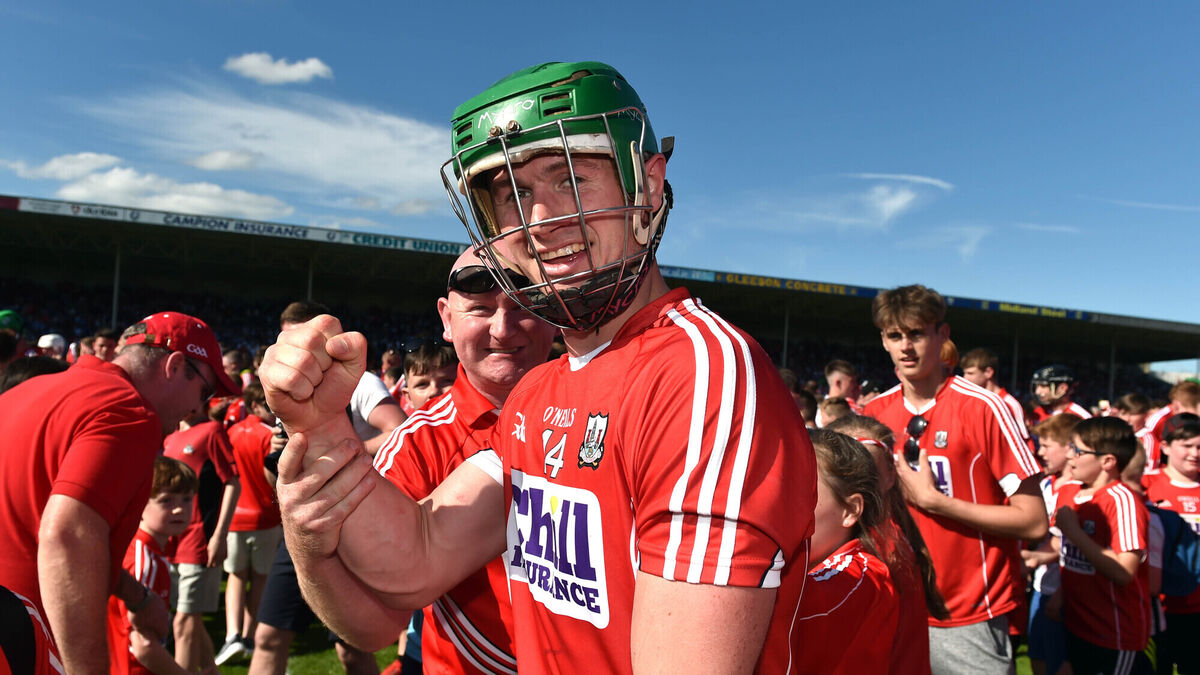
Seamus Harnedy with supporters at Semple Stadium in 2017. Picture: Eddie O'Hare
In the aftermath of Cork’s All-Ireland semi-final defeat to Galway in July, long after the rest of the Cork players had departed to the dressing room, Seamus Harnedy lingered on the pitch, chatting to family and supporters near the tunnel, clearly in no mad rush to leave.
On a bitterly disappointing day, Harnedy was still intent on soaking every last drop out of the experience of being on the Croke Park pitch. Because it looked like being his last time there as a player in a Cork jersey.
Harnedy only recently announced his retirement but his body language and reaction after that defeat to Galway was a vivid hint that his decision was more than likely confirmed in his own head that afternoon.
It certainly wasn’t the way Harnedy wanted to finish his inter-county career, especially when he didn’t see a second of action. Harnedy did play 20 minutes in Cork’s previous game against Offaly but his limited game time all season had already told him that he wasn’t in the management’s plans for the biggest days.
“Did I sometimes think I deserved a little bit more?” Harnedy asked last week. “Yes, I did. But that’s the nature of sport.
Harnedy is 36 now, turning 37 next year. He is building a house at the moment and is trying to do some of that work himself. The time was right to walk away.
“I’m still incredibly grateful that I went back in last year,” he said. "I look back on my time there with immense gratitude. I think it had run its course for me. It was time to go.”
Time and circumstance invariably dictates every retirement decision but a lot of players hate that thought. Still, even the great players reach the end. And knowing that moment is the final challenge of their careers.
Read More
In lots of cases, players don’t believe they are at that point. They drive on, refusing to make that decision, still believing that their timeless brilliance and warrior heart will still be enough to rage against the dying light.
In the twilight of some players’ careers, submitting themselves to the role of an impact sub is their bridge into retirement. Some happily cross that bridge but not every player is comfortable with a bit role. Others aren’t prepared to make that crossing with the same grace.
No matter how brilliant a player is though, time is the greatest form of erosion. In many cases, that decision is made for them, but is publicly packaged in a way that enables those great players to go out the way they deserve, and which they have earned.
In the background, that decision is often clinical and ruthless. A manager doesn’t want to cut that player to make it look like they have terminated the career of a legend and much-loved figure. So the transaction is calculated with cold sincerity; either retire now with grace and dignity – or get dropped.
Most great players who find themselves in that space take that opportunity. For those who don’t, and who believe that they have more to give, the end is often messy.
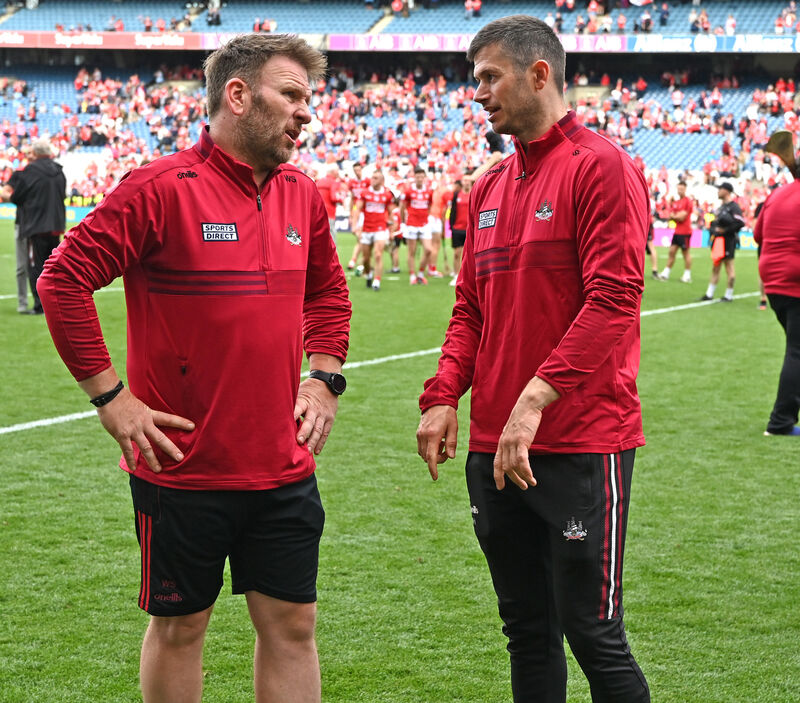
Timing is everything - and it is the hardest thing. In an ideal world, Harnedy would have gone out this year as a starter, or in some playing capacity, on a Cork team that finally won an All-Ireland again.
Only a handful of the great players though, go out on such a high after winning an All-Ireland; Jimmy Barry-Murphy (1986), Peter Canavan (2005), Darragh Ó Sé (2009), Henry Shefflin (2014).
Canavan was so content and sure about his decision that he announced his retirement live on ‘The Sunday Game’ the night of Tyrone’s 2005 All-Ireland win.
Shefflin was only a part player in 2014 but he still won his tenth All-Ireland medal that season and was happy to walk away. Barry-Murphy and Ó Sé were also departing with an impressive haul of All-Irelands.
Harnedy though, like Patrick Horgan last year, walks away without that coveted Celtic Cross, which inevitably makes that decision even more agonising. Harnedy still leaves the inter-county game with an incredible legacy, which was even more impressive again considering how he turned himself into Cork’s best and most consistent player over the last 15 years from such humble beginnings.
Three years before he won his first All-Star, Harnedy was only on the Freshers B team in UCC. He was 15 when his first Cork career came to an end, dropping out of the development squad system after two years.
He was a squad player for the Cork Intermediates for two seasons, but not a starter. Harnedy was part of the Cork U21 panel in 2011 but never got a minute of championship game-time.
He never had any advantages, especially coming from such a small club, St Ita’s. And yet despite all those obstacles, Harnedy still carved out a brilliant career. Just as importantly, he was universally loved and respected in Cork, and in the wider hurling community.
Read More
He may not have achieved the ultimate honour but Harnedy walks away now with huge respect for who he was as a player and how he held himself as an individual.
The uncomfortable reality is that few of the great players leave the way they want to. Harnedy would have preferred a different ending but timing is always everything, even though it is often the hardest thing.
And having given as much as he could to the cause, Harnedy surely feels content now that he got the timing right.






 App?


