Christy O'Connor on hurling: New handpass rule would made best goal at Croke Park this season illegal
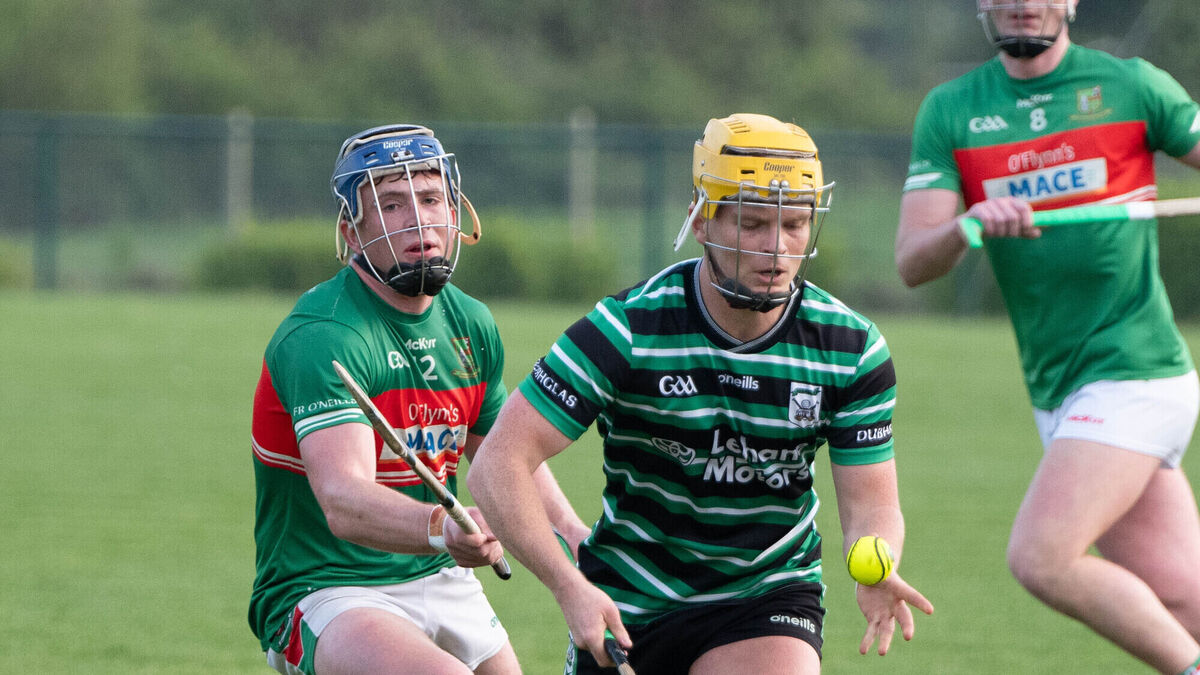
Sean O'Leary of Douglas about to handpass the sliothar ahead of Jack Finn of Fr O'Neills during the SHL match in Aghavine earlier this season. Picture: Howard Crowdy
One of the most pivotal moment of the 2026 hurling championship was Aidan O’Connor’s goal against Clare in the 70th minute of the All-Ireland semi-final in July, which finally broke Clare’s resistance and powered Limerick into the final.
Everything about the score along the production line, from origin, construction to final execution crystallised the elite standard of Limerick’s manufacturing excellence.
After Cian Lynch won Eibhear Quilligan’s long puck-out clean in the air, he handpassed the ball to Mike Casey who smuggled it clear to Tom Morrissey. After Morrissey got away from Tony Kelly, he slipped the sliotar to Adam English, who picked out O’Connor with a perfectly flighted cross-field ball.
After O’Connor secured possession ahead of David McInerney before turning inside the 20-metre line, everybody in the ground knew in that instant that Limerick were heading back to Croke Park two weeks later.
It was a brilliant score, especially in the circumstances, but it would have been effectively impossible to engineer under the new experimental rules being trialled in the upcoming higher education leagues.
After Lynch handpassed the ball to Casey, the only play Casey was able to make in that action was a handpass as he was on the ground with Cathal Malone, Tony Kelly, Shane O’Donnell and Peter Duggan around him.

Casey got off the handpass to Morrissey while he was falling on his front so the option of flicking the ball off his hurley, brick-flicking it, or kicking the sliotar would not have been possible. Even if he had somehow tried to flick the ball away, it’s probable that Casey would have been turned over in possession with so many Clare bodies around him.
Before the sliotar arrived in English’s hand, the ball had been handpassed consecutively three times by Limerick players. Under the new rules though, teams will not be permitted to complete two consecutive hand-passes.
That will encourage teams to use the hurley more but it could also lead to more chaos, especially when teams are so effective now at swarm-tackling the opposition player in possession.
“Usually a handpass is to get out of a tackle pretty quick,” said referee James Owens on OTB recently. “But if they can’t handpass, is it going to develop into a ruck? If that happens, it will be a problem.”
It could be, especially when players are so conditioned to break tackles. Conversely, opposition players have also had to come up with a way to try and stop that from happening.
When they don’t, the steps rule isn’t enforced as rigidly as it should be. As a result, players carry the ball into contact.
Since defenders have no legal way to dispossess a moving ball-carrier, the spare arm prevents a clear release, so players throw the ball to escape being swallowed up. Several players pile in and a ruck develops.
That pattern is deeply ingrained in the game now. Managing and minding possession is paramount. Hurling is increasingly becoming a running game, but the hurling advisory committee’s experimental rules is a means of trying to reach a compromise with the way the game is being played.
The guiding principles of the proposed rules – particularly the main ones around handpassing and steps - is to force players to strike the ball more.
Under the new rules, a player will be permitted to carry the ball in hand for a maximum of six consecutive steps, two more than the original rule, or to hold the ball for no longer than the time needed to take six steps.
With so much gang tackling and players frantically taking too many steps as they try and extricate themselves from being swallowed up in possession, six steps is more realistic. It just needs to be policed more stringently.
So does the handpass. Seamus Flanagan admitted in an interview last month how he used to throw the ball when he was surrounded by opposition players.
“When you’re in a situation like that, how is the referee supposed to call that?” asked Flanagan. “It’s the biggest guessing game of all time.”
Owens said that a referee “won’t see 70% of handpasses in a game”.
That’s true, which is why, according to the committee, the onus is now on the player to ensure the handpass is struck with a clear and definite action of the hand. If the referee doesn’t see as much, a free will be awarded.
Absolutely. Players are adaptable enough to be able to use the ‘Brick-flick’ or flick/tap the ball with their hurley more effectively. But their first impulse would still have to be to strike the ball more often.
The same principle of wanting the ball to be struck more is linked to the new puck-out rule; all puck-outs must clear the 45m line before the defending team can touch the ball, with three players from each team having to remain between the 45m and 20m lines.
The important distinction with the puck-out trial is that restarts can’t be taken until the referee has blown the whistle. The rule had stated that the ball could only be pucked out on the referee's whistle or signal but the committee have removed the signal.
Having to go on the whistle will slow down how players set up but the game would have a more defined shape.
Trialling a raft of new rules in the coming weeks doesn’t guarantee anything but it presents plenty of opportunity to see if the game can rebalance itself and return hurling to more of its original character.







 App?
App?


