Cork Boxing Year in Review: 53 All-Ireland titles landed by Leeside fighters
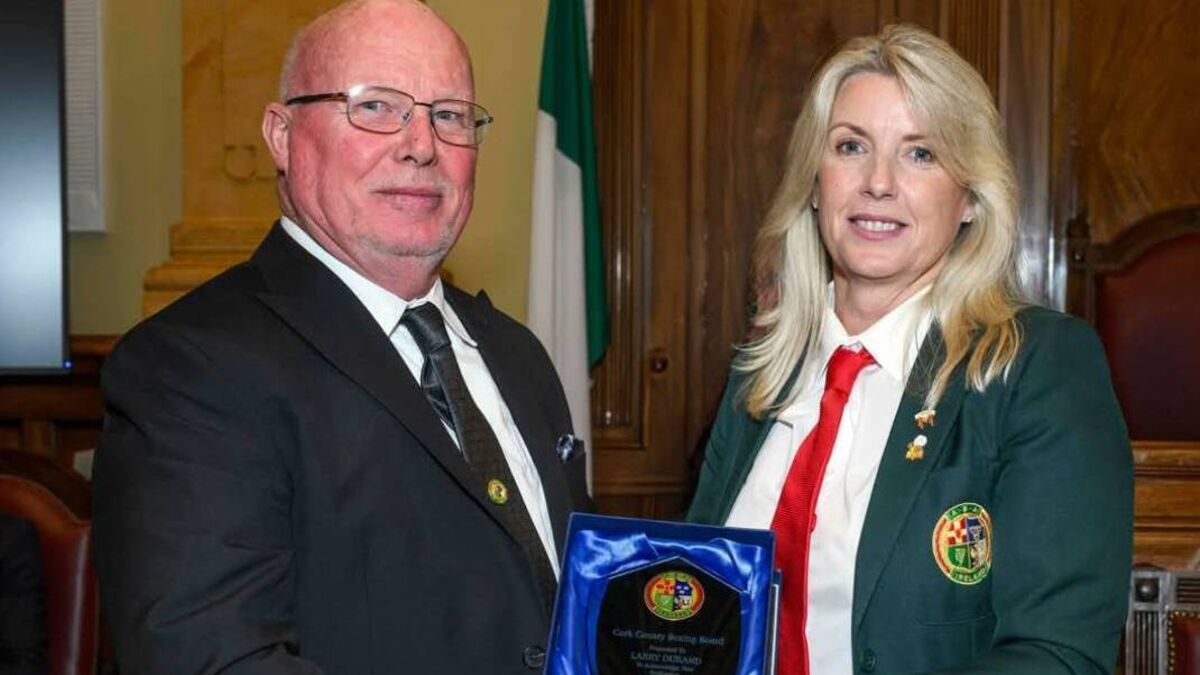
Cork Boxing: Larry Durand, medical register, Munster Council, receives his presentation for his contribution to boxing from Cork County Board register Louise Forde.
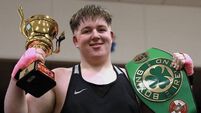
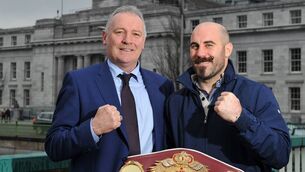
The curtain has finally come down on another outstanding year for Cork boxers both at home and abroad, with magic moments, glorious victories and an astonishing success rate of returning to Leeside with a new record-breaking 53 All-Ireland titles.
As 2026 dawns, the future of Cork boxing is now in a good place. The clubs are well structured, and the county board has a well-planned year of events in place to enhance the reputation of the sport.
However, Cork clubs have identified a number of issues concerning administration at national level and they are not happy with some aspects of how the rules are applied.
The board will lobby for remedial change on these important matters and will table four very strong motions for discussion at the national convention.
Many visitors to the new boxing wall at Bishop Lucey Park have expressed interest in many of the plaques on display. Over the Christmas period, Jack Doyle's name has captured the imagination of many tourists who sought an insight into the life and times of the .
He then went on to join the British Army and became Army Champion Boxer, undefeated in 28 fights, winning 27 of those by knockout.
Doyle was multitalented, extremely good-looking, a beautiful singer and stood 6' 5". He was Ireland’s first sex symbol and drew large crowds everywhere.
Doyle was born in 1913, and 20 years later was earning £600 a week as a singer. In 1933, 90,000 people saw him take on Jack Peterson at The White City London in a British heavyweight title fight.
He had captured the imagination of many in Ireland, Britain and America. The day he fought Peterson, a couple of thousand people awaited news of the fight outside the office of .
He had destroyed his previous five opponents which included Jack Pettifer, a giant of a man who the Cobh man knocked clean out of the ring.
Doyle had become a high-society celebrity and was enjoying the good life. He was drinking heavily and neglected his training. Peterson was well prepared and Doyle failed to match and ended up disqualified. The news was released to thousands in Academy St outside the Examiner office, the signal of a red light if Doyle lost and it would have been a green light if he was victorious.
Doyle was banned from boxing for six months and his £3,000 purse was impounded by the British Boxing Board of Control. Now denied earning a living with his fists, he concentrated on his singing career to packed-out venues in Britain and Ireland. He continued to enjoy a Romeo lifestyle and, by the age of 30, he had made and squandered a quarter of a million pounds.
He returned to Cork every couple of years. He held his 21st birthday party at a packed Imperial Hotel and he loved Canty’s Bar on Pembroke Street; his motto was 'a generous man never went to hell’.
He sang at the Cork Opera House in 1937. The concert was due to commence at 8pm but Doyle discovered thousands failed to secure a ticket. He responded by standing on a large crate, three hours before the official concert and gave the crowds a free impromptu concert, which lasted for over an hour. He scattered one hundred pounds in half crowns amongst the gathering, saying, 'have a drink on me...'.
In his heyday, he was famous worldwide. He married the beautiful Mexican film star and singer Movita Castaneda, who later married Marlon Brando. Doyle was now beginning to drink more and eventually this took its toll. He took up wrestling but was rapidly going into decline.
Doyle lived in a small bedsit in London for years, was destitute and died alone in 1978, at the age of 65, destined for a pauper's grave in Sheppard’s Bush. News of his death was carried on the BBC World Service and the Cork Ex-Boxers Association moved to have his remains returned for the burial in his hometown of Cobh. Tim O’Sullivan and Paddy Martin said it was a matter of honor to bring him home.
This was a costly operation but Cobh undertaker Peter Barry and Frank and Pat O’Shea of the Commodore Hotel were instrumental in the process. He was carried by hearse to Blackpool on the northside and thousands turned out. The Cork Ex-Boxers provided a guard of honour.
Tim O’Sullivan recalled: "We walked alongside the hearse all the way to the railway station. In the following days Jack Doyle was buried in his hometown with affection, dignity and respect."
The Cork Ex-Boxers Association were a credit to the sport and to the Cork boxing family.





 App?
App?


