Christy O'Connor: Hurling and football championships wide open but GAA must be wary of complacency
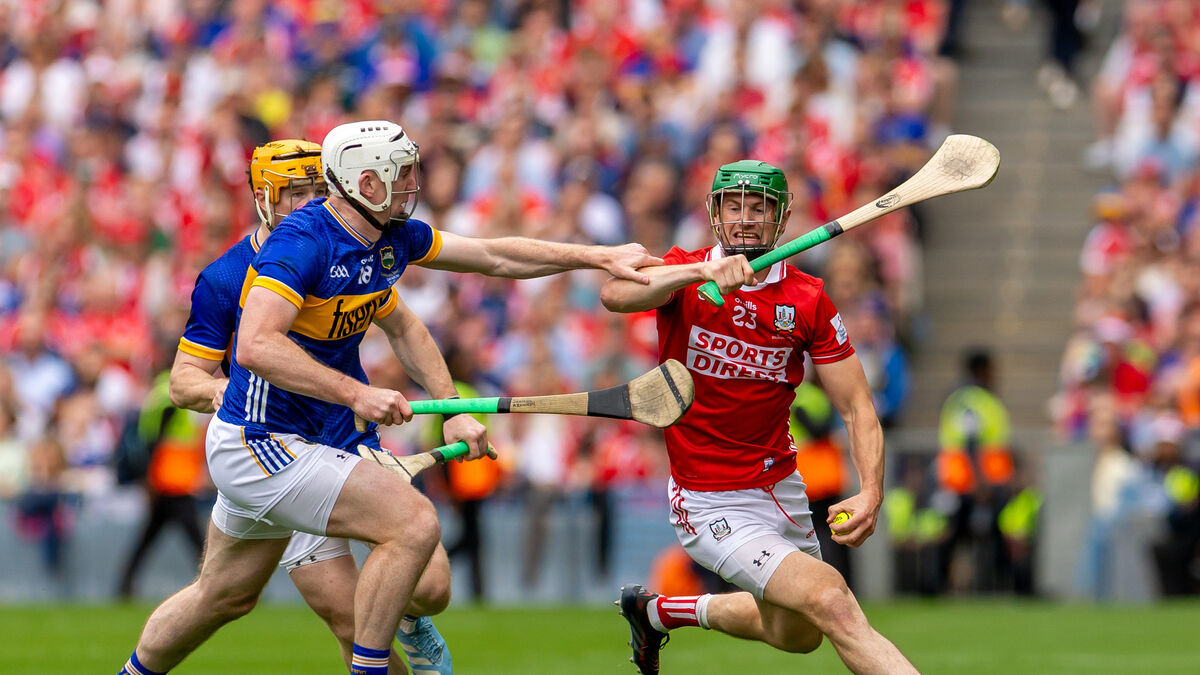
Cork’s Seamus Harnedy with Seamus Kennedy of Tipperary in action last July. Picture: INPHO/Morgan Treacy
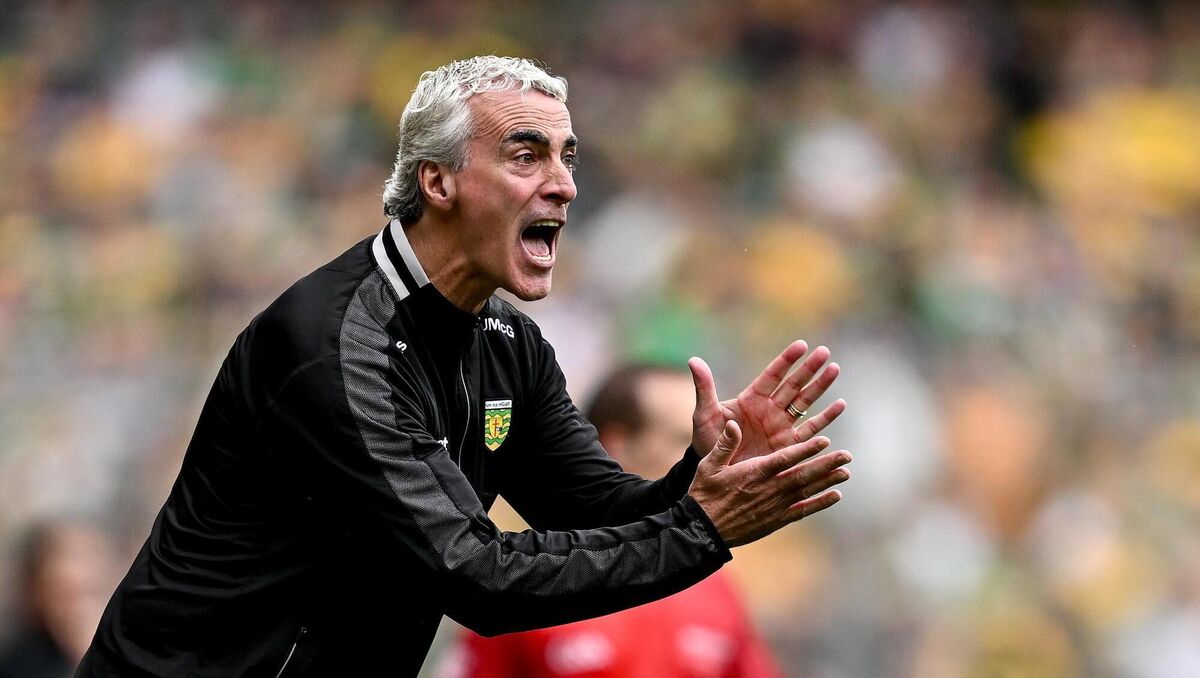
Ten years ago, not long after he had stepped down as Donegal manager after his first term in charge, Jim McGuinness began working with Sky Sports as a pundit and analyst for their live GAA matches.
On the evening that Sligo shocked Roscommon in Markievicz Park in the 2015 Connacht semi-final, McGuinness said that the manner in which Roscommon were turned over by Sligo added to his biggest personal disappointment of the championship up to that point.

The three teams McGuinness had been looking forward to following most over that 2015 summer were Roscommon, Cavan, and Tipperary, primarily because, along with Dublin, they had been three of football’s most dominant underage teams over the previous five years.
In McGuinness’s opinion, the performances of all three had been “a letdown”.
The qualifiers during that 2015 championship offered no respite to the expectancy around those teams: Tipp were annihilated by Tyrone; after defeating Cavan, Roscommon blew a big lead late on against Fermanagh.
GAP
Underage success has never guaranteed anything but if those counties which enjoyed sustained underage provincial superiority couldn’t climb higher up the ladder, it inflated the perception of a widening gap between the top three at that time — Dublin, Kerry and Mayo — and everyone else.
In truth, those three counties — Cavan, Roscommon and Tipp — did come through to eventually fulfil that potential. But it was years later when they eventually did.
Roscommon won Connacht titles in 2017 and 2019, while Cavan and Tipp sensationally won provincial titles in 2020, completely against the odds.
A knockout championship during that Covid winter of 2020 did level the playing field but none of those teams kicked on in the intervening five years.
Roscommon have only reached one Connacht final since 2019. Cavan were in the Tailteann Cup just two years after that Ulster win. Tipp have completely gone backwards since 2020.
It is a numbers game, but the failure of those counties to build on their underage success underlined just how difficult it is to get up that ladder.
The modern culture of sports science and defensive systems which made teams harder to beat always had the capacity to tighten standards and close the gap between the strong counties and the chasing pace. However, the stronger counties just made the most of those means as well to make themselves better.
The longer the last decade went on, the wider the gap appeared to be in the football championship. Dublin won six-in-a-row. They appeared capable of doing 10-in-a-row, but as soon as Dublin’s grip slipped, a whole new picture of a totally different landscape began to emerge.
Some counties began to increase their capacity to compete at the highest level more through resourcefulness than resources.
Seeking and finding their own funding and assistance helped to introduce more of a high performance culture, which enabled teams to work harder and think differently.
Teams had more of a platform to build on and suddenly a whole range of new challengers began to emerge on the scene.
A championship system introduced in 2023 was far from bulletproof, but it was more equitable because every team was guaranteed three games after the provincial championships.
Limiting the Sam Maguire race to 16 teams was more realistic and, while the strong teams were still bound to dominate, the new system at least enabled teams to try and build momentum and confidence when it was needed most in the championship.
In any case, any system doesn’t restrict ambition and desire because ultimately every team helps itself. Kerry may have impressively won this year’s All-Ireland, dominating Armagh, Tyrone, and Donegal in their last three matches, but the 2025 campaign was still the most open championship in the history of the competition.
After Armagh won last year’s All-Ireland, at least eight other teams entered the championship believing that they were as good as Armagh.
And a team that wouldn’t have been included in that category by anyone — Meath — reached the All-Ireland semi-final.
It’s fair to say now that the GAA has never had it as good in terms of the democracy and competitiveness of both the football and hurling championship. Because there has never been a period in the association’s history where both championships have been as open at the same time as they are now.
ALTERED
Limerick may have dominated the game, many expected Cork to dominate if they could win an All-Ireland, but Tipperary’s success this year has completely altered the hurling narrative going forward.
How many teams would have entered this year’s championship thinking they were better than Tipperary? Including teams from Leinster, that number would have been at least six, possibly seven.
How many teams will think they are good enough to beat Tipp next year? The other four counties in Munster will make life so difficult for Tipp next year that there is no guarantee that the All-Ireland champions will emerge from the province. Clare couldn’t manage as much this year.
The GAA is in a great place but it can’t get complacent either. Despite all the drama and excitement of the Munster championship, the campaign wasn’t nearly as exciting this year as in other seasons.
July was not a good month either. Of the six biggest games of the year, there was only one really competitive match — the Tipperary/Kilkenny All-Ireland semi-final.
That’s a timely reminder to the GAA that, while the hurling and football championships have never been as competitive at the same time, complacency and failure to build on the positives that any sport has can always be deadly.
App?