League of Ireland boom started with Cork City rivalry with Dundalk
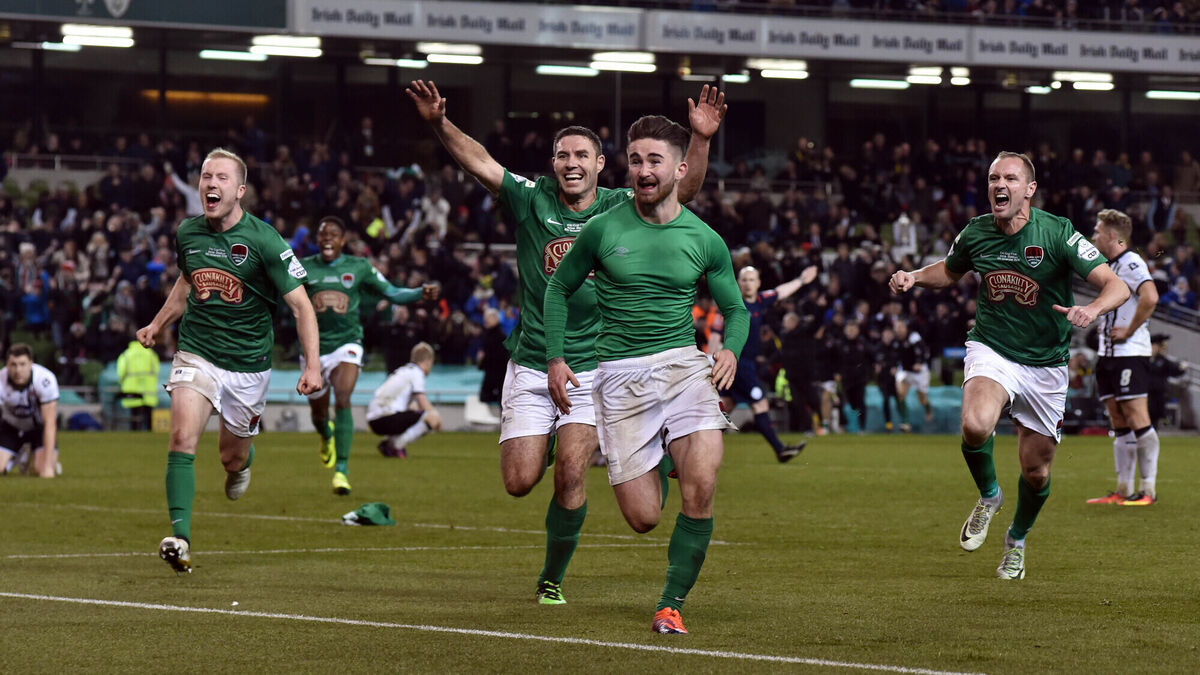
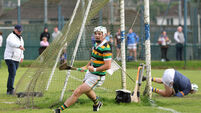
Cork City's Sean Maguire celebrates his winning goal with Stephen Dooley, Mark O'Sullivan and Colin Healy against Dundalk. Picture: Eddie O'Hare
Out of the shadows, the problem child has started to grow up with booming attendances now a regular event in the League of Ireland.
Opening weekend saw 51,665 people pass through the turnstiles between five fixtures, with the marquee event a special Dublin Derby between Bohemians and Shamrock Rovers at the Aviva Stadium that brought together 33,208 spectators, according to FAI Connect.
Out of the traditional games, Cork City had the second-best attendance with 5,031 in the stands for their return to the League of Ireland Premier Division, marked by a visit of local legend John Caulfield and his Galway United outfit.
Just three more seats were filled at Richmond Park, where title favourites St Patrick's Athletic drew 0-0 with a Drogheda United side buoyant from their FAI Cup victory over Derry City last November.
All of this, in addition to landmark television and radio deals, has created a buzz never before seen in a competition famously called a 'difficult child' by former FAI CEO John Delaney. Those words were uttered just over 11 years ago, which is a lifetime ago in the world of football.
The excitement is real, and can be seen through rising attendances each season, year on year.
2015 versus 2025 in the Premier Division lays this bare, with 15,039 arriving on opening night as opposed to 51,665. If the Aviva fixture is taken out, that's still 18,457 people before a Dublin Derby is factored in, making an adjusted figure close to 23,000 spectators.
How it got to this point is convoluted, instead of being a sudden realisation of love towards the League of Ireland.
And every club can state their case as a reason for the explosion in popularity, from Bohemians with their marketing to Shamrock Rovers making history on the continent by making it to the knock-out stages of the Conference League.
In between the details is the emergence of Cork City, and their rivalry with Dundalk that defined the 2010s. It began with a title decider in Oriel Park, which ended in heartbreak for Caulfield and his players.
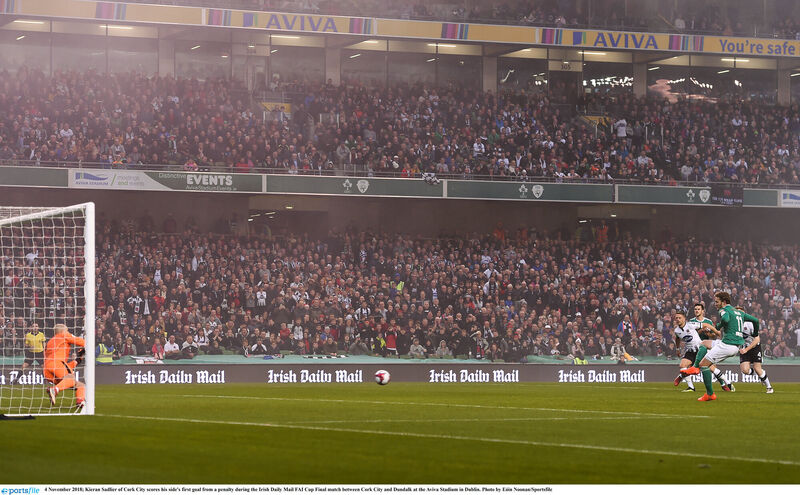
The Rebel Army reached the FAI Cup final the following year and experienced defeat once again, this time at the Aviva Stadium, before winning the trophy with a last-minute goal in 2016. This sustained rivalry went on for five seasons, with the two clubs meeting on Lansdowne Road four times and two 'title-deciding' games.
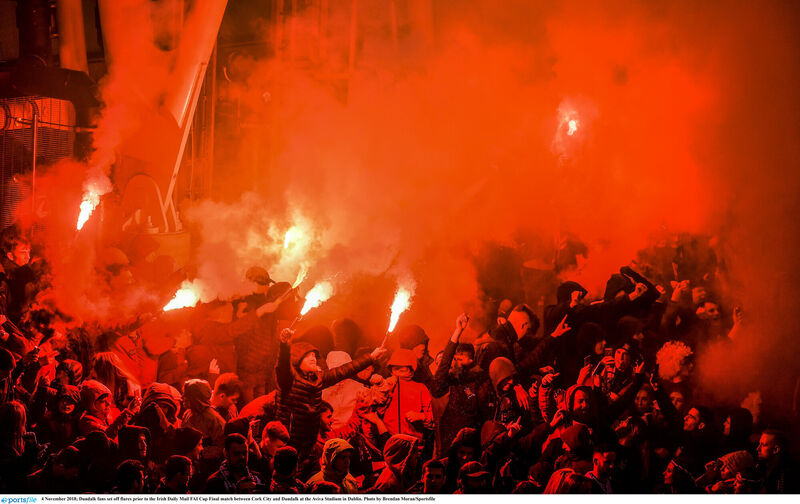
This captured the imagination of the wider public, and more and more people went to watch the unfolding story up close.
The sustained growth spread to the league with 2016 seeing a two-year 6.9% increase in attendance, with 97,221 going to matches that season and the figure swelled to 441,466 in 2018.
While that stat is padded over an extra round of fixtures over the switch to a 10-team structure as opposed to 12, the consistency over a period was noted by many pundits at the time.
City topped the charts during this period, with the Rebel Army recording the best attendances as Caulfield’s side won a league and cup double with a squad featuring future Irish international Sean Maguire. The striker was one of many that made their case before departing to England, a way of operating that was redefined by Brexit.
That forced young players to stay and develop in their domestic league, and the new environment produced current Premier League stars Jake O’Brien and Evan Ferguson. Cork City players Mark O’Mahony and Franco Umeh followed, while others like Matthew Moore and Jaden Umeh settled on the continent.
This meant interest, and curious eyes added more people to the terraces as the world emerged from the pandemic, which further fuelled the fascination with 486,365 going to Premier Division games in 2022 and 596,196 in 2023.
And where will this figure be in 10-years-time?
With TV contracts pushing up the cost of the major leagues, local football is the suitable antidote, with the added bonus of watching future Irish internationals before they take the next step in their careers.
Everything is going that way, after a long slumber in the shadows.








 App?
App?


