New football rules have to be given a proper chance

Cork's Ian Maguire in action for Munster against Leinster's Ray Connellan in last October's inter-provincial series, during which the new football rules were trialled. Picture: Shauna Clinton/Sportsfile
Manchester United head coach Ruben Amorim is currently seventh in the standings for the Premier League ‘sack race’ – the odds of being the next one to be relieved of their post.
That’s not a typo for 17th, either; while he is still a 20/1 shot and West Ham United’s Julen Lopetegui will almost certainly be the next to get the “mutual consent” treatment, it’s somewhat indicative of the modern world of association football. After all, Amorim’s successor at Sporting Clube de Portugal, Rui Borges, lasted just eight games before being dismissed.
For sure, Amorim has made poor decisions – a midfield of Christian Eriksen and Casemiro against Newcastle United was not a wise choice – and things will almost certainly get worse as they travel to Anfield to face Liverpool tomorrow.
However, the Portuguese is not the biggest problem at Old Trafford. If he were dispensed with, they would once again be looking for a silver-bullet manager to solve everything. As much as the fans may not like to hear it, time is needed to overhaul things after a decade of mediocrity since Alex Ferguson’s retirement. Amorim may not be the man for the job but, when you’ve paid £10.4m to sack Erik Ten Hag and his staff and then shelled out £11m for the new man and his entourage, six weeks is too short a test period.

Which brings us to the real thrust of this column. This weekend will see the new Gaelic football rules come into effect at inter-county level (the ongoing club championships are of course exempt and it will be another three months before club games are subject to the new regime).
Much like Manchester United, there has long been a since that Gaelic football has been listing and that A Big Change is what’s needed. There’s little doubt that the Jim Gavin-led Football Review Committee have brought that about, to the extent that some commentators are wondering if it’s too much, all at once.
Well, the response to that is that the top two in the betting for the 2025 All-Ireland are Kerry and Dublin, followed by Galway and Donegal – the more things change, the more they stay the same.
The new landscape will take a lot of getting used to, there can be no doubt about that. A change in the scoring system in terms of the advent of two-pointers could be seismic while the ‘three up’ should ease some of the congestion and make blanket defences less effective. The ‘solo and go’ also has the potential to aid attacking play and stop the offending team getting set as quickly.
They are possible positives, but we can’t pretend that there won’t be drawbacks. Making so many alterations at the same time, a 100 percent hit-rate would be more of a surprise than not.
If and when there are misgivings, though, the long view must be taken and patience must be practised, by players, managers, teams and spectators alike. Changes take time to take effect and there will always be teething problems.
An essential requirement in terms of making sure that the rules are given the best opportunity to flourish is that officials are allowed to apply them properly.
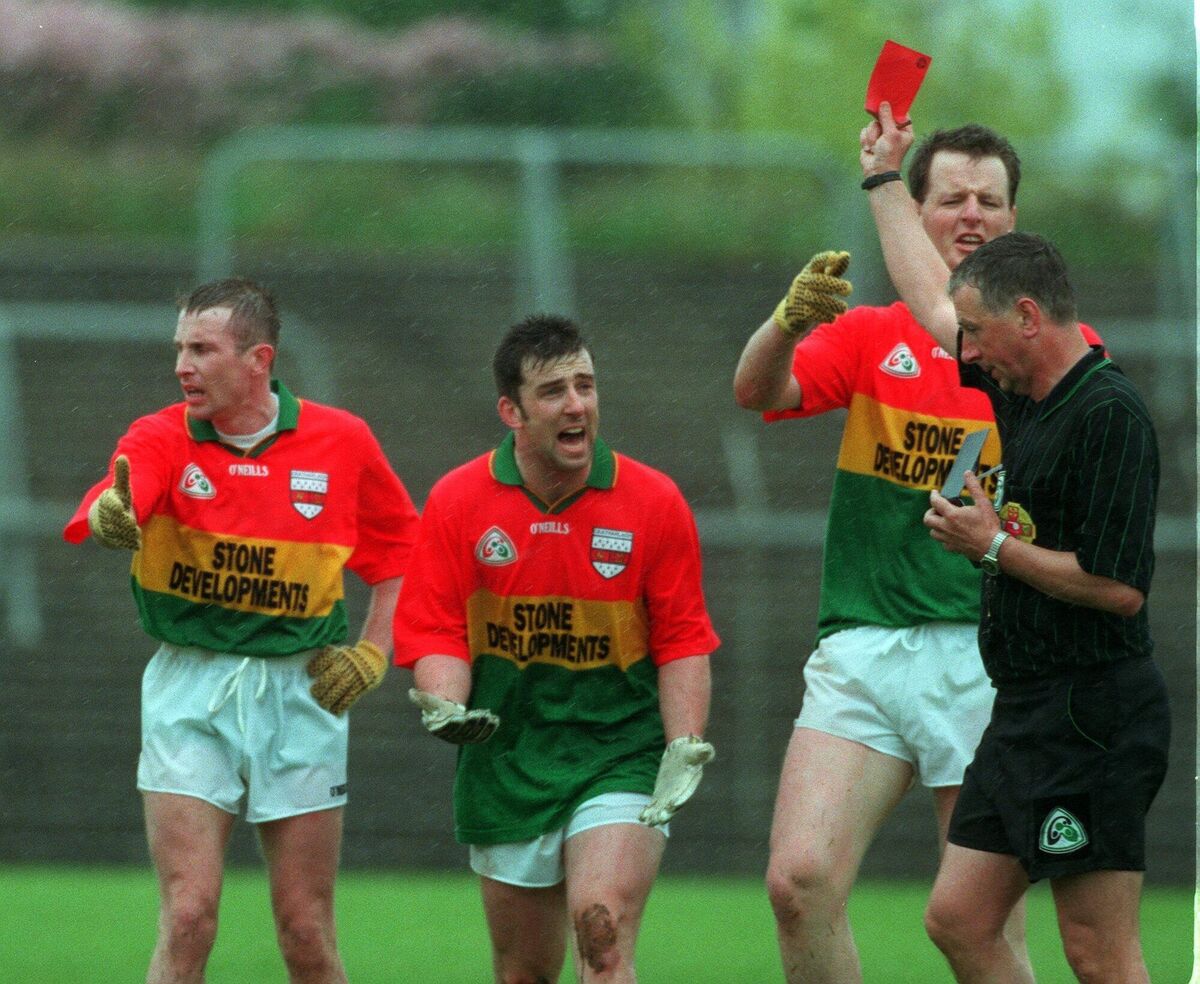
In 1999, a new series of guidelines were issued and Cork referee Niall Barrett ended up sending off six players in a Leinster SFC game between Carlow and Westmeath.
What should have happened in that instance was that everybody else should have learned a lesson as to what would and wouldn’t fly under the rulebook. Instead, Barrett was a handy fall guy for Croke Park and he lost out as the new instructions went largely ignored.
Hopefully, all stakeholders can give the new version of football a proper chance.








 App?
App?


