Rebels sharing scoring load to good effect
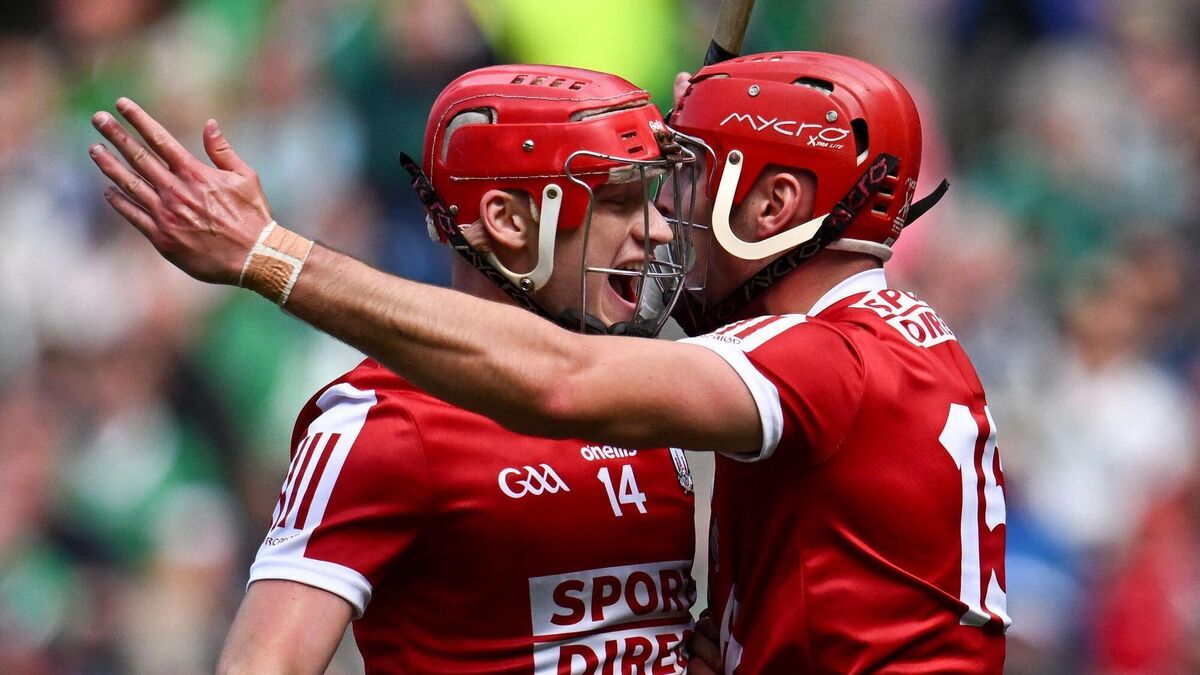
Cork duo Brian Hayes, right, and Alan Connolly celebrate during Sunday's game against Limerick at Croke Park. Picture: Seb Daly/Sportsfile
Sunday’s All-Ireland SHC semi-final win over Limerick was that rarest of beasts for Cork – a hurling championship win achieved by scoring more goals and fewer points than the opposition.
Since 1991 and a 2-10 to 0-13 triumph over Waterford, there has been just one other instance of that phenomenon: the 3-19 to 1-23 qualifier victory over Clare en route to the 2021 All-Ireland final.
While such a statistic could be said to point to a lack of goalscoring prowess – and there was certainly a time where that was the case in the early 2000s – recent years have seen Cork reignite the green-flag touch. The 11 goals they scored in the Munster SHC was at least two more than anybody else and four more followed in the All-Ireland preliminary SHC against Offaly, though the quarter-final victory over Dublin was devoid of goals at either end.
To be Limerick, the general consensus was that Cork would need to find the net three if not four times but, in the event, Brian Hayes’s first-half strike was sufficient as the clean sheet at the other end was maintained.
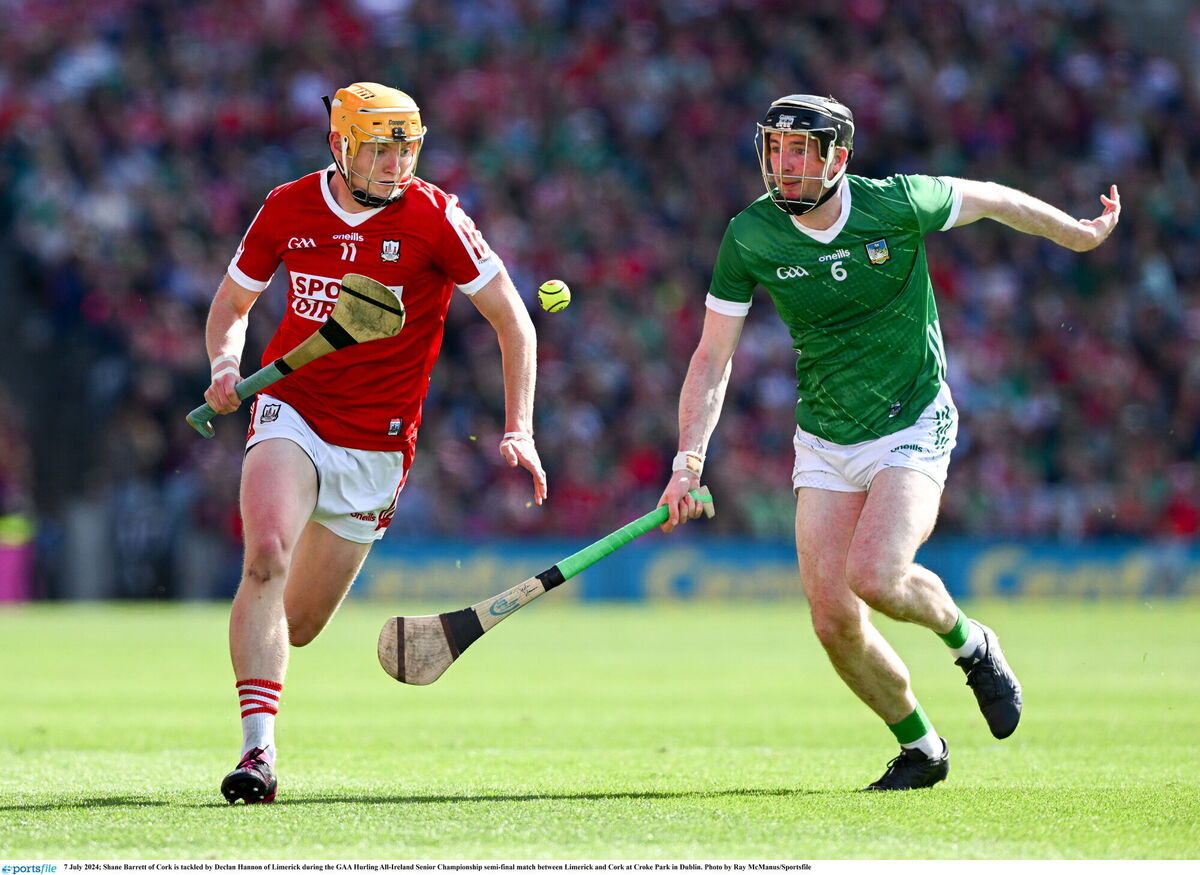
That Cork should be able to out-last Limerick in a game where the teams each had 29 scores underlines a growing maturity in the side, though it should be pointed out that it would not have taken much to go differently for Hayes’ 1-4 to be marked down as 3-3. The attacker was unlucky that Alan Connolly was harshly blown for a thrown pass just before Hayes found the net when a Cork goal would have made it 2-8 to 0-6; later in the first half, a dinked effort over the onrushing Nickie Quaid just cleared the crossbar rather.
In his pre-match column in the Irish Examiner, former Cork star Seánie McGrath had posed the question as to who would be the ‘bolter’ in terms of posting a big personal tally and Hayes certainly answered that question. In doing so, he became the seventh different Cork player to be the highest, or joint-highest, scorer from play across the seven games played so far.
In the defeat to Waterford, Alan Conolly scored 1-4 with two of the points from frees and a week later, 1-1 of Patrick Horgan’s total of 2-10 came from open play.
The win at home to Limerick, which reignited Cork’s season, displayed a very healthy spread – Shane Barrett and Séamus Harnedy each scored 1-2 while Darragh Fitzgibbon’s wonderful midfield display was capped with five points.
Away to Tipperary, Connolly caught fire with 3-1 while Barrett had 1-4 in the victory over Offaly. Against Dublin, Patrick Horgan and Declan Dalton allied their free-taking with three pieces apiece from play and then, last Sunday, Hayes was the flagship operator in an ensemble cast of nine players who got on the scoresheet.
On a day when their shooting efficiency was not at the levels we have become accustomed to, Limerick’s total of 0-29 was probably a shade below par, not least because the last six minutes of action failed to produce a score for either side.
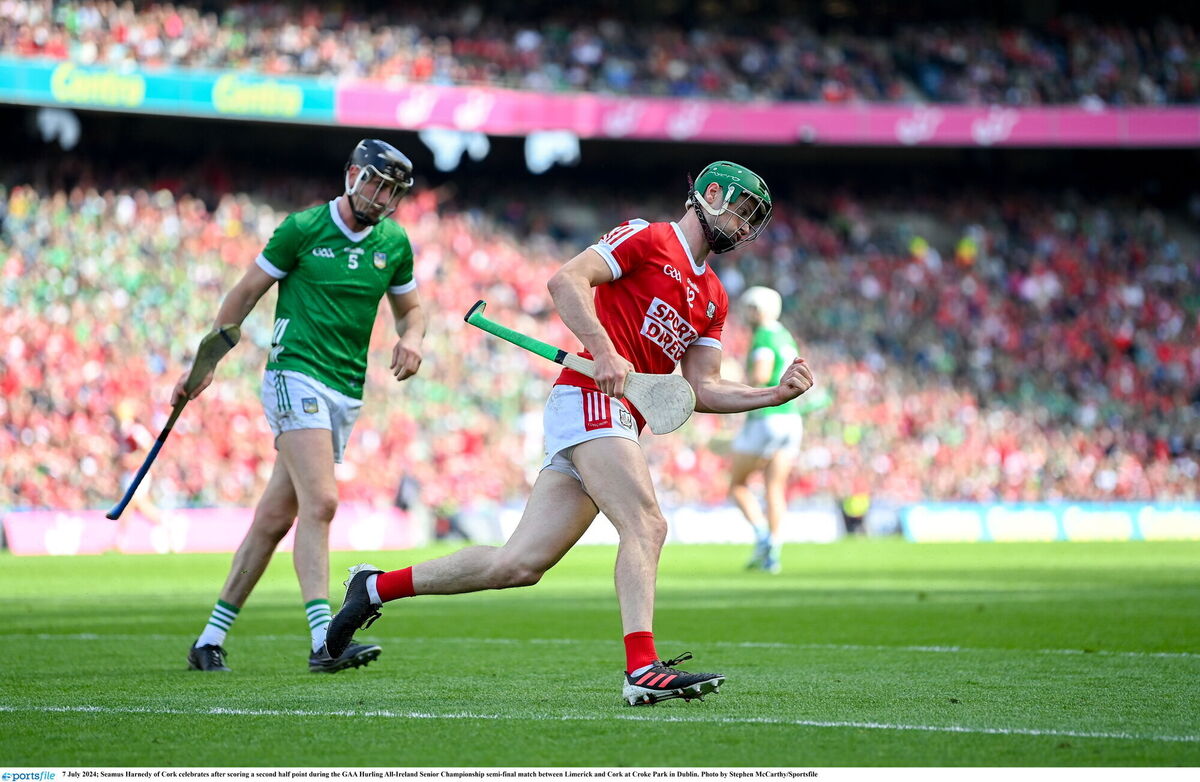
The flipside of being the top scorers in Munster was that Cork’s tally of 9-98 allowed was higher than anybody else’s except Tipperary. It’s the price paid for going with a three-man full-forward line and not playing a sweeper – and once you score more than the opponent, it’s an acceptable by-product.
Pat Ryan was asked on Sunday about the danger of going man-for-man against Limerick’s dangerous full-forward line and he made the point that dropping a body back merely allows them to build from deep and set the tone of the game. Cork back themselves to go toe-to-toe and it will be the same against Clare.
Like Cork, the Banner have played seven matches. Cork’s average is 33.43 points per game scored and 29 conceded while Brian Lohan’s side have both scored and conceded a tally of 196 points or 28 per game. There is however a caveat in that, aside from the four provincial games, All-Ireland quarter-final and semi-final, their other match was the Munster final against Limerick whereas Cork’s was the preliminary quarter-final against Offaly.
Clare’s biggest tally posted was the 3-26 against Cork, though that has an asterisk in that the Rebels played with 14 men for the last 20 minutes; Cork got 3-24 that day and then, when also conceding 3-26 against Limerick at SuperValu Páirc Uí Chaoimh they answered it with 3-28.
On Sunday week, the silver jubilee team will be the 1999 Cork side that beat Kilkenny by 0-13 to 0-12 in the All-Ireland final. Such a scoreline may pertain after around 20 minutes in this year’s final – Cork will want to make their firepower count.




 App?
App?


