Cork City's history of survival is a cause of celebration this year
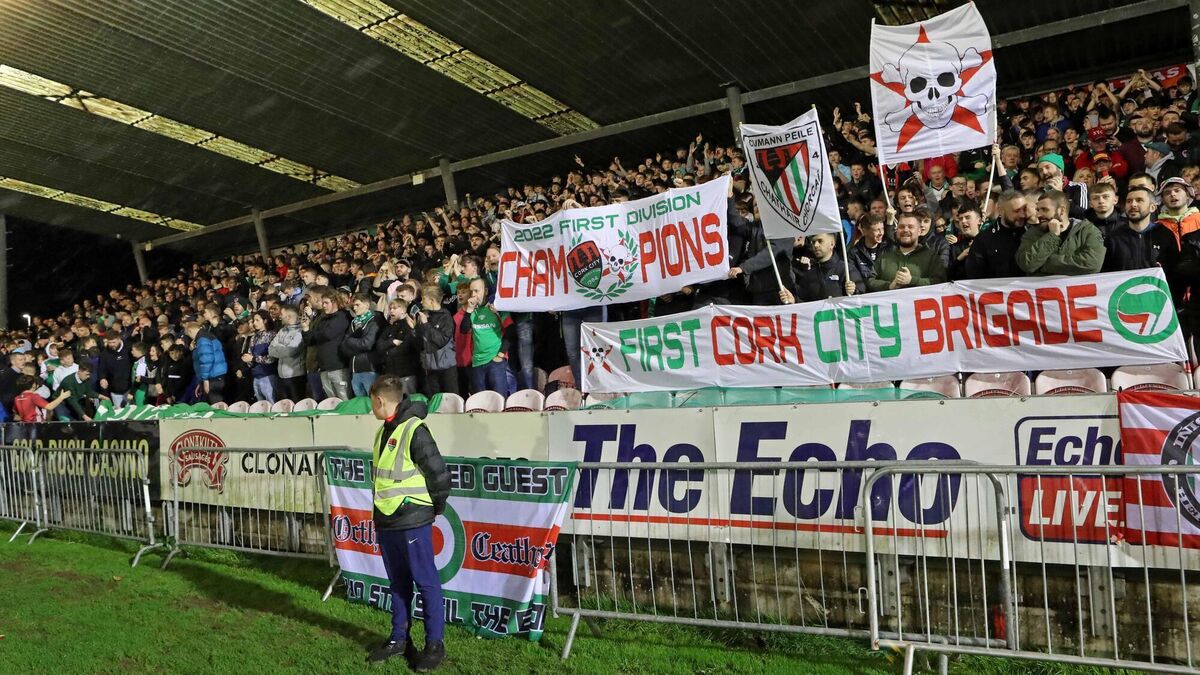
Cork City FC fans celebrate winning the First Division league title in 2022. Picture: Jim Coughlan.
EVERY club has it – a defined identity that is unique to their specific place.
It doesn’t matter what sport or where they are based. Everyone has something that sets them apart from the rest, even in cities with hundreds of clubs operating at all levels.
River Plate – who are known as Los Millonarios – created a unique identity by splashing out and signing players to play a brand of football based on self-expression and skill. Their cross-town rivals, Boca Juniors, forged their sense of self in the barrios made up of the working-class children of immigrants who travelled to Argentina from Europe during the 18th century.
A lot of those who docked in Buenos Aires had roots in Naples and the south of Italy, a place that worships Napoli, an institution in Italian football. Their entire being is created around pride of place, and being in opposition to the rich teams from northern cities that look down on those in the south.
When Napoli play in Europe, they bring their message with them and broadcast it to like-minded clubs.
Barcelona are one of those and their entire existence is based on the Catalan way of life and doing things their way, which is playing football the way Cruyff taught them in the 1990s. That in itself comes from Amsterdam in the 1960s, during the city’s transformation into a place of bohemian-like self-expression.
Ajax was the sporting embodiment of this time in the Dutch capital and a team managed by Rinus Michels created ‘Total Football’ by experimenting through trial and error. One of their most famous results was a 6-1 hammering of Liverpool in 1966 at the Olympic Stadium in Amsterdam.
The English champions were stunned, as they were on the crest of a wave under Bill Shankly, a person who fused the city’s love for football with socialist working-class sensibilities.
The Rebel Army might not have the same history as those in South America or the prestige of the teams that use the Champions League as their playground, but they still have a place in the wider ecosystem that is their own.
That’s an innate sense of survival and place, and it means everything to do with the club is wrapped up in the city’s history.
The club, and the supporters, know struggle and it has helped the Rebel Army survive extinction time on time again.
It’s almost coincidental – that the worst economic disaster that the club was founded in the same year the city was crippled by the closure of Fords and Verolme. The two beings almost act as one, with the fortunes of one directly influencing the other.
Like when the Great Recession brought Cork to a standstill in 2009, the same year that the Rebel Army were in a seemingly never-ending battle for survival with the High Court over.
Cork City has often had to fight it out on its own – like when the club was served with wind-up orders in 1994 and 2006. Each time its sense of being was hardened and reinforced, and a greater appreciation grew for what went out on the pitch at Turner’s Cross.
Out of such sentiment comes movements like FORAS and the supporters' group rushed in to save Cork City during its darkest hours in January 2010.
The people involved knew the history of football on Leeside, and the importance of having a team competing in the League of Ireland.
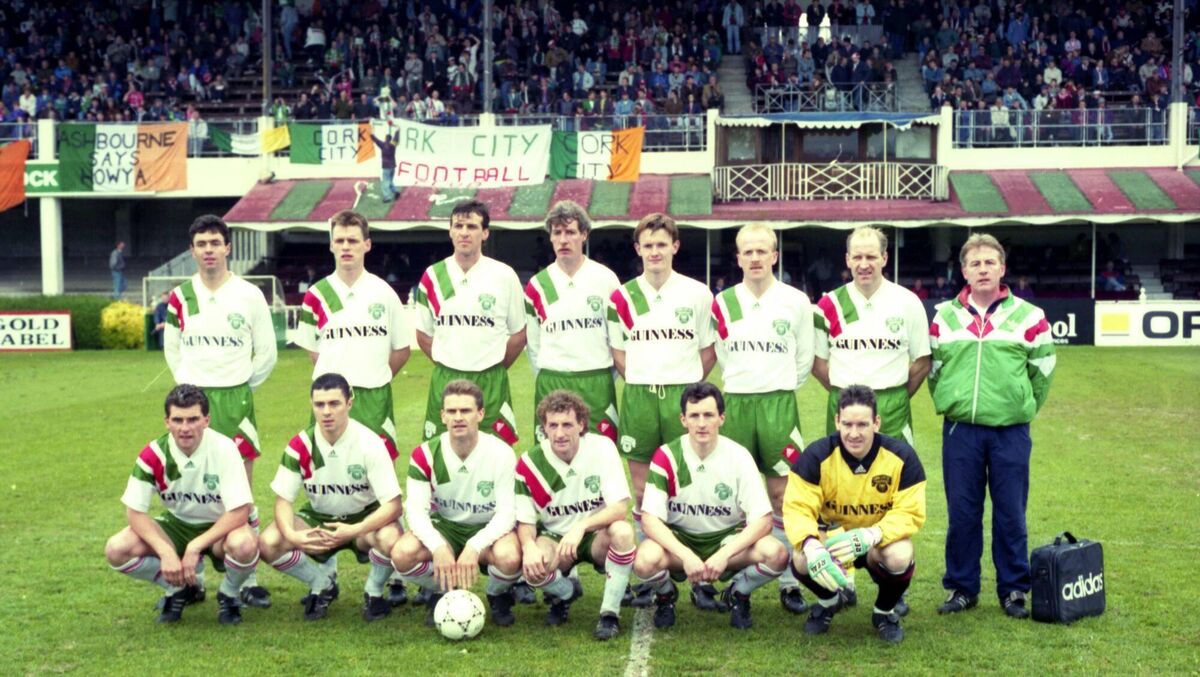
Especially with the long list of ‘fallen clubs’ like Fordsons, Cork Celtic, Cork Hibernian, and Cork Alberts.
Each one of those is a story of mismanagement and how people had to start again with a new club.
The coming months will see plenty of events organised alongside matches at Turner’s Cross, and that means there will be plenty of conversations about famous matches and players who went on to represent various national teams and teams in England.
Each discussion will include some mention of the ‘fallen teams’ and the various crises that threatened association football in Cork over the years.
It’s almost a guarantee people will look back to when they thought they Rebel Army was on the verge of joining the likes of Hibs and Celtic.
Each time the club came back from the brink and gate receipts increased at Turner’s Cross as people went out to show their support. This is what the club is all about; the stands filled with colour on Friday night as people from all ages get together with a deep appreciation of history under a shared cause.
Some call it fanaticism. Others call it passion.
It’s what makes Cork City Cork City.




 App?
App?


