Christy O'Connor on why hurling in counties like Laois needs huge backing to develop
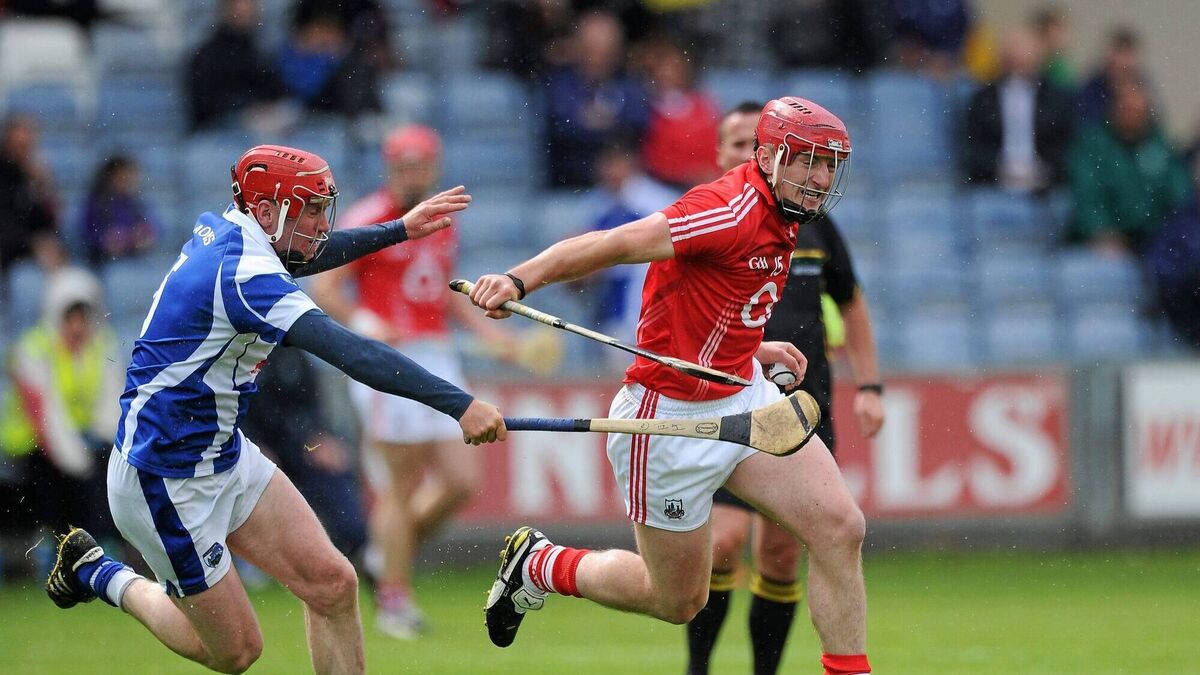
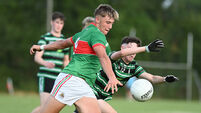
Patrick Horgan, Cork, in action against Joe Fitzpatrick, Laois, in the 2011 hurling qualifier. Picture: Matt Browne/SPORTSFILE
AT the end of the 2019 Laois-Dublin preliminary All-Ireland hurling quarter-final, the Laois hordes rushed on to the field to sweep up the players in a tidal wave of joy and ecstasy, sucking in that sweet inhalation of pride and satisfaction that counties like Laois rarely get to experience.
The win was Laois’ biggest result since the 1985 Leinster semi-final but Laois’ pocket history ever since has been defined by constant defeat and disappointment.
They reached Ground Zero at the outset of the last decade when Cork hit them for 10-20 in 2011 and won by 34 points. The following year, Laois lost two championship matches to Dublin and Limerick by an aggregate of 47 points.
Laois slowly began to work their way back up the gradient again under Seamus ‘Cheddar’ Plunkett in the middle of the last decade before finally seeing real tangible progress under Eddie Brennan in 2019.
Beating Dublin was a huge breakthrough but the week before the 2019 Laois-Tipperary All-Ireland hurling quarter-final, Laois selector Tommy Fitzgerald made some interesting comments around that win.
"Let’s be fair, the play-off games (preliminary All-Ireland quarter-finals) was pure tokenism, plain and simple," said Fitzgerald.
"Nobody ever thought that a Joe McDonagh team would come up and beat one of the (round-robin) third-placed teams. It was an afterthought.
"Croke Park are either genuinely interested in increasing the number of counties who are capable of competing at the highest level or they’re not.
"If they are willing to do that, then the onus shifts on to the Laois county board to show them a plan as to how they’re going to capitalise on that support."
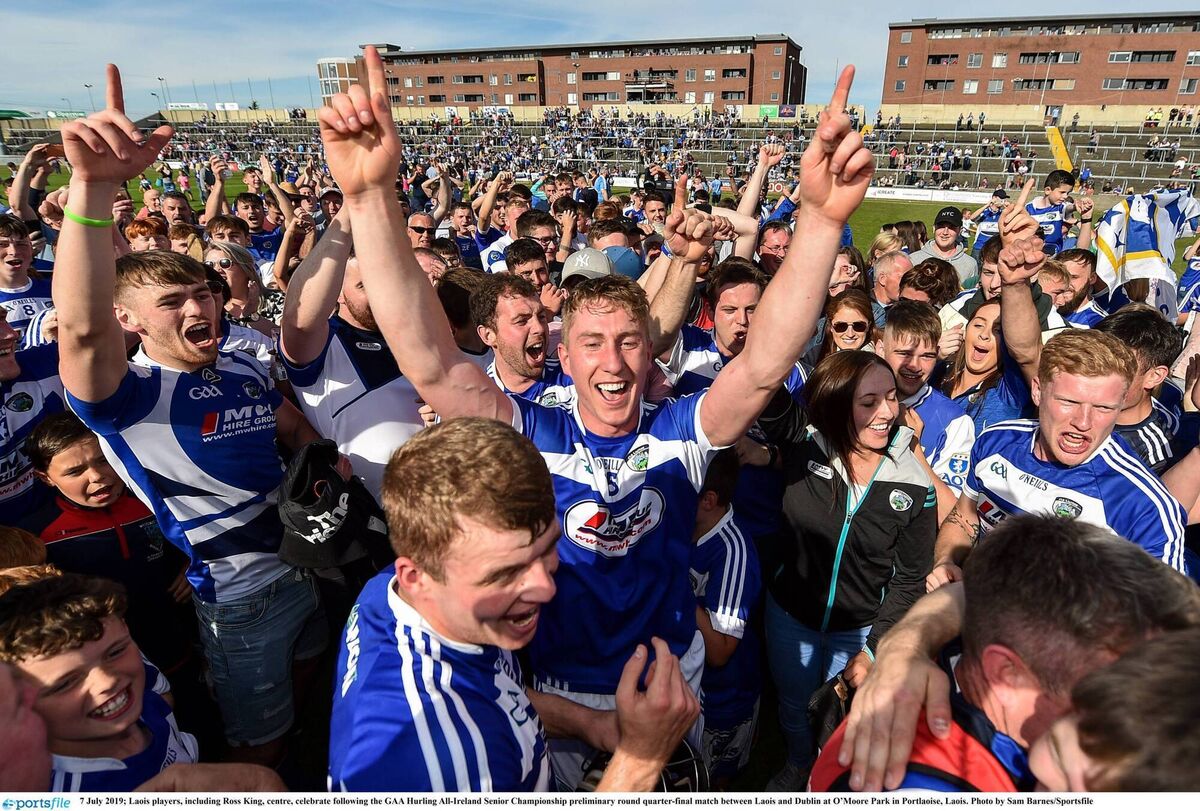
Unfortunately for Laois, they never capitalised on that momentum, getting relegated to the Joe McDonagh Cup again in 2022.
Although Leinster revamped their championship after 2020 to cater for a six-team hurling championship, it was still always going to be difficult for the teams at the bottom of that chain to survive.
Westmeath made huge progress in the last two years but they were still relegated on the last day of the championship in May, losing to Antrim, with Wexford’s win against Kilkenny sealing their fate.
The six-team Leinster format does try and foster growth and progress, but that is still only an interim plan to what should be a serious long-term plan that hurling desperately needs.
In the aftermath of that Laois win against Dublin in 2019, ‘Cheddar’ Plunkett made some excellent points about the need for such a project.
"There needs to be a 10-year programme to improve the foundations, and subsequently the playing numbers in these (Joe McDonagh) counties," said Plunkett.
"Then, step back and look at strategic plans and operation plans and performance reviews that would be needed to close the gap."
Plunkett had plans to effectively reconstitute Laois hurling, with his blueprint extending from underage teams to the senior set-up.
Yet after securing support at all levels, the county board just weren’t interested in implementing the strategh.
It was the third hurling development plan Plunkett had drawn up in 20 years, all of which effectively ended up in the bin.
The biggest sin with such wastage was that somebody with the business experience and expertise of Plunkett was the ideal person to oversee such plans.
The GAA have backed a multitude of those plans over the years, but they’ve never been serious enough about it to really try and instigate the kind of cultural change for which hurling is crying out.
Counties need to help themselves first. Of course, the will and ambition has to be there to match the investment being made but the mistake the GAA consistently make is that serious projects, or businesses, are not run by committees anymore – their operations are managed on a day-to-day basis by a Chief Executive and Executive Directors, overseen by a Board of Directors with responsibility for corporate governance, high level policies and strategic direction.
The vast layers of politics within the GAA are consistently stymieing growth, especially in hurling.
A real high-powered project with the right vision and people to drive it could design a radical way of reengineering how hurling is developed in those counties. That development plan would need to be very comprehensive and well-supported by key stakeholders.
If counties had that security, there would be more focus on underage and trying to strengthen the culture of improvement and development in clubs and schools.
Any such plan need serious financial investment.
Nine years ago, then GAA President Liam O’Neill announced that Antrim, Carlow, Laois and Westmeath would receive an accumulated total of €900,000 over a period of five years from the GAA to develop hurling in those counties, while €100,000 was to be invested in player development projects in other hurling counties.
Before Saturday’s Special Congress, where Motion 1 proposed to abolish the All-Ireland SHC Preliminary Quarter-Finals, which would have meant that the Joe McDonagh Cup finalists would no longer have an avenue into the Liam MacCarthy Cup, 76% of respondents (who have played in the Joe McDonagh) of a GPA survey wanted the pathway retained.
On Saturday, the motion was defeated, with 52% of delegates voting against it. Hurlers from the Joe McDonagh are fully entitled to play in the Liam MacCarthy.
But, for those hurlers to have a better chance in the competition, and for hurling to really prosper and expand, the GAA need to do a lot more for the game than they currently are.





 App?
App?


