Bringing Cork's football history to book
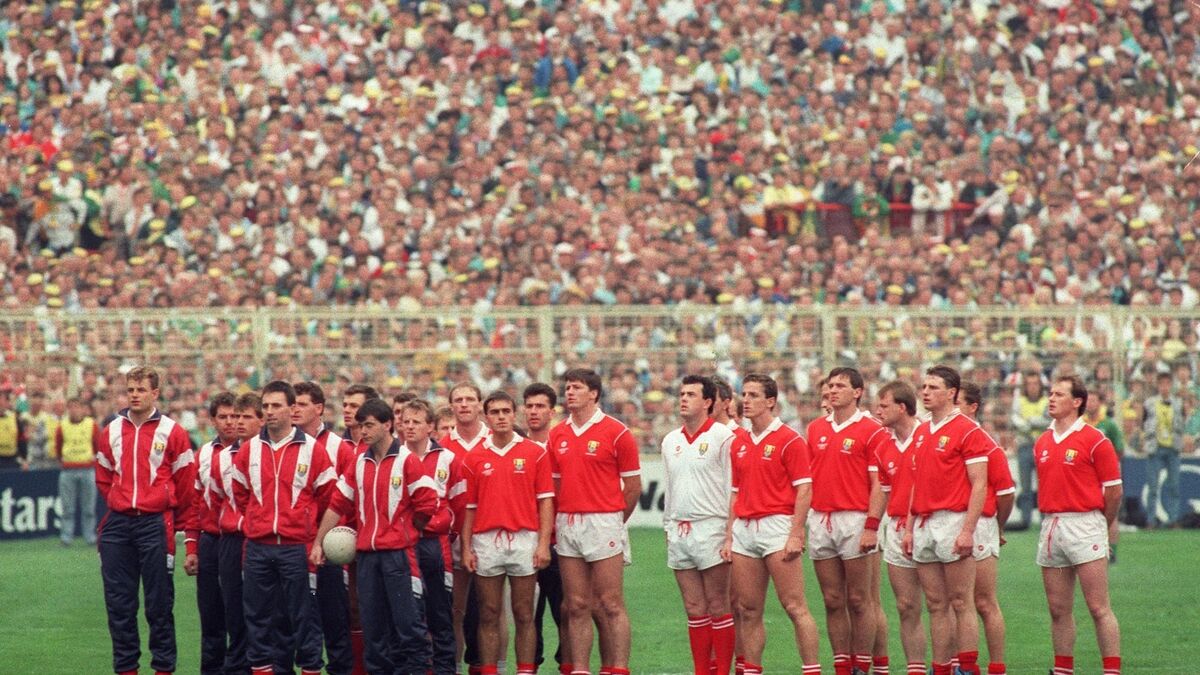
The Cork football panel pictured before the 1990 All-Ireland final against Meath.
Cork football sits in a unique position in the GAA pantheon.
On the one hand, the proximity of Kerry, the most successful county in the history of the sport, provides a millstone in terms of (a) providing a high barrier to success at Munster and national level and (b) giving an easy barometer of unfavourable comparison when times are tough on Leeside.
Then, there is fact that this fair county is shared by the football folk with Cork hurling, currently in between stints at the top of that roll of honour. It’s not an exaggeration to say that the presence of such behemoths can leave the big-ball faithful somewhat squeezed.
In that regard, and accepting that Cork’s large population provides a good starting point, the fact that only three counties – Kerry, Dublin and Galway – have a greater All-Ireland haul than Cork is an estimable feat. And yet, whenever a top Cork team comes along to claim Sam Maguire, there is a refrain – heard after 1973, 1990 and 2010 – that they should have won more.
Perhaps that’s a common emotion among supporters of all teams, but it does feel like Cork football gets more of a kicking than is deserved at times and praise is in short supply. Hopefully, the balance will be redressed slightly with the publication of a new book, Cork Football: Game of My Life.
Having written the hurling equivalent last year, I was delighted to be asked to compile the football version. The format is one that has proven popular for the publishers, Hero Books, which is led by the two-time Meath All-Ireland winner, Liam Hayes. Top players reminisce about the one match that stands above all others for them and in the process what results is an oral history of the county in question.
Being lucky enough that the All-Ireland finals of 1990 were among my first exposure to live sport, the players from back then were heroes to me growing up.
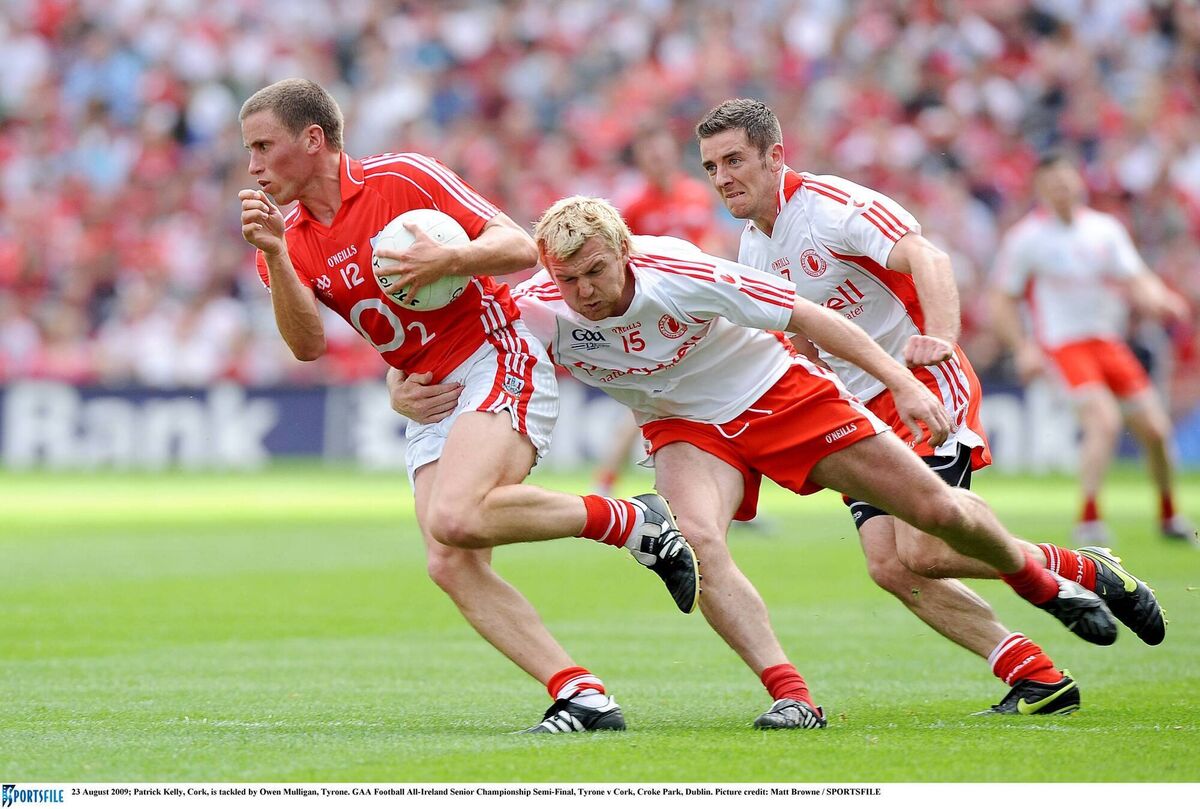
Then, having become a journalist in 2007 – my byline first appeared in the Echo on October 1 that year – the battle that Conor Counihan’s Cork team had to win the 2010 All-Ireland will always be close to my heart.
All of the players featured were generous with their time and thoughtful with their answers. Getting the opportunity to speak to them and sate my own inane curiosities is a privilege that I will never take for granted.
Sadly, the heroes of 1945 are no longer with us and so the earliest match featured in the book is the 1966 Munster final win over Kerry. From there, the highs of Cork football are charted – but the lows are examined too, with no questions shirked. Ideally, the last match covered would have been an All-Ireland victory of recent vintage, but instead it is the win against Roscommon in this year’s All-Ireland preliminary quarter-final, through the eyes of Ian Maguire.
He finishes on an upbeat note, saying that winning the All-Ireland has to be the aim every year and that is what keeps the Cork footballing spirit going, ever durable despite the setbacks.
Daniel Goulding, in recounting the 2010 final win, put it best when he said that he’d say Cork could have won more rather than “should have won more”, but equally Cork could have won less. He was grateful to have been part of a group that made it to the top and the tightness of that group shines through in the various submissions.
The 25 players that feature are Con ‘Paddy’ O’Sullivan, Billy Morgan, John Coleman, Tadhg Murphy, John Cleary, Colman Corrigan, Conor Counihan, Paul McGrath, Dinny Allen, Tony Davis, Niall Cahalane, Larry Tompkins, Joe Kavanagh, Kevin O’Dwyer, Ciarán O’Sullivan, Nicholas Murphy, Micheál O’Sullivan, Pearse O’Neill, Patrick Kelly, Derek Kavanagh, Paul Kerrigan, Graham Canty, Daniel Goulding, Mark Collins and Ian Maguire.
I think them wholeheartedly and hope that the book is as enjoyable to read as it was to put together. Publication is slated for some time in early November and we will have a copy to give away here at that time.



 App?
App?


