Christy O'Connor on Gaelic football's issues: Dublin v Kerry final won’t save the season
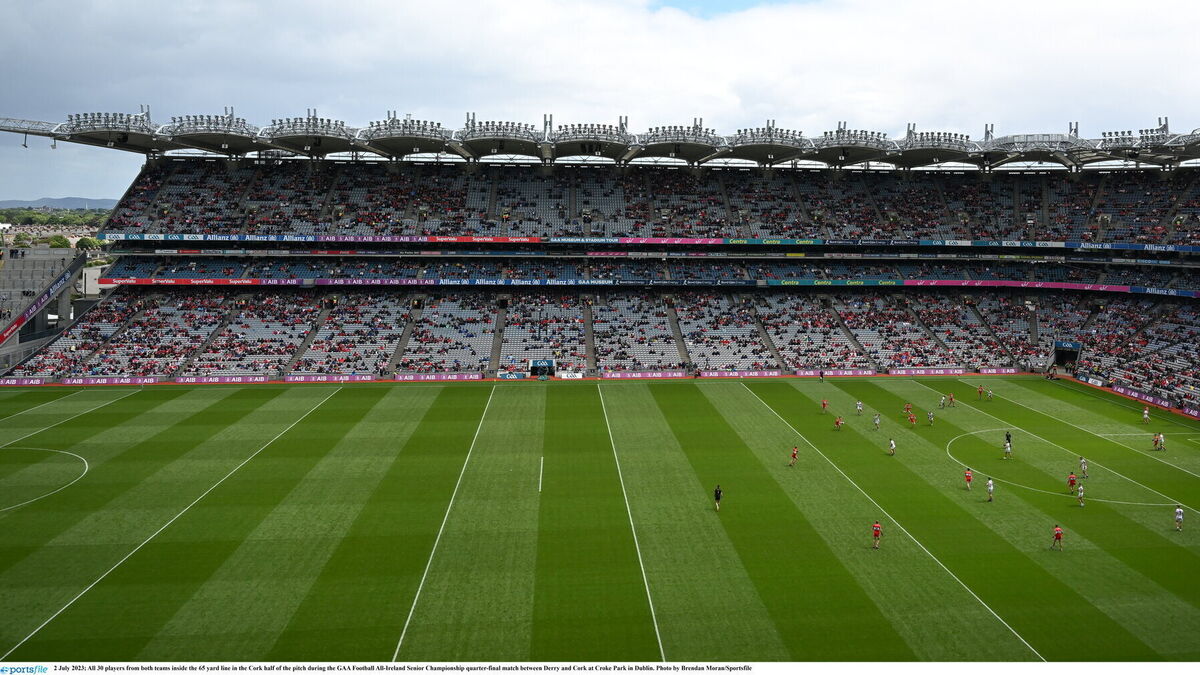
All 30 players from both teams inside the 65 yard line in the Cork half of the pitch. Picture: Brendan Moran/Sportsfile
A COUPLE of years ago, Dinny Allen said that he doesn’t enjoy watching Gaelic football anymore.
Very little of the modern game piques Allen’s interest because the visual appeal is so limited for him.
“I wouldn’t dream of watching a football game now that didn’t involve Cork, or that wasn’t an All-Ireland final with Dublin and Kerry or whatever,” said Allen.
"They hold onto the ball, play it back and forward across the field, and eventually one of the opposition defenders will slip or make a mistake, or lose their position, and the team in possession can get through for a point.
"It’s completely boring to me to look at those kinds of games.”
With all due respect to Derry and Monaghan, but, the only way Allen is likely to watch this year’s All-Ireland final is if Kerry and Dublin win this weekend’s semi-finals.
It’s not as if Kerry and Dublin don’t do what every other side in the country does – play the percentages and hold onto the ball until the right opportunity opens up.
It could be argued that Dublin started the trend after failing to break down Donegal’s blanket defence in 2014, probing and waiting, gradually ripping the stitching apart at the seams as opposed to going straight into the blanket and being suffocated by it.
Whatever happens now, a Kerry-Dublin final still wouldn’t solve football’s main issues of how the game now largely resembles rugby league, where so much controlled possession has sterilised the entertainment value.
On the other hand, none of this is new.
Those arguments are decades old at this stage because the modern game has been continually making evolutionary steps which has constantly challenged how football is viewed.
Instinct has been overridden by a more clinical thought process. Results are governed by percentages and precision.
But the balance of the game isn’t right.
The managers, coaches and players don’t really see it as such, primarily because they are in the results business where the only bottom line is the bottom line of winning.
They often treat rule changes and any attempts by administrators to make the game better through new rules with suspicion and contempt.
“Instead of recognising the strengths of football and examining ways to promote it while steering a continuing evolution,” said Aidan O’Rourke, who ended up as Donegal manager this year, speaking back in 2018. “We are being sabotaged from within by a lack of understanding.”
If that mindset prevails and persists, where is the willingness to accept change, even the need for change?
Even if there are rule changes, they can only achieve so much. They’re not a panacea.
There are responsibilities with others, not least in the coaching of the game.
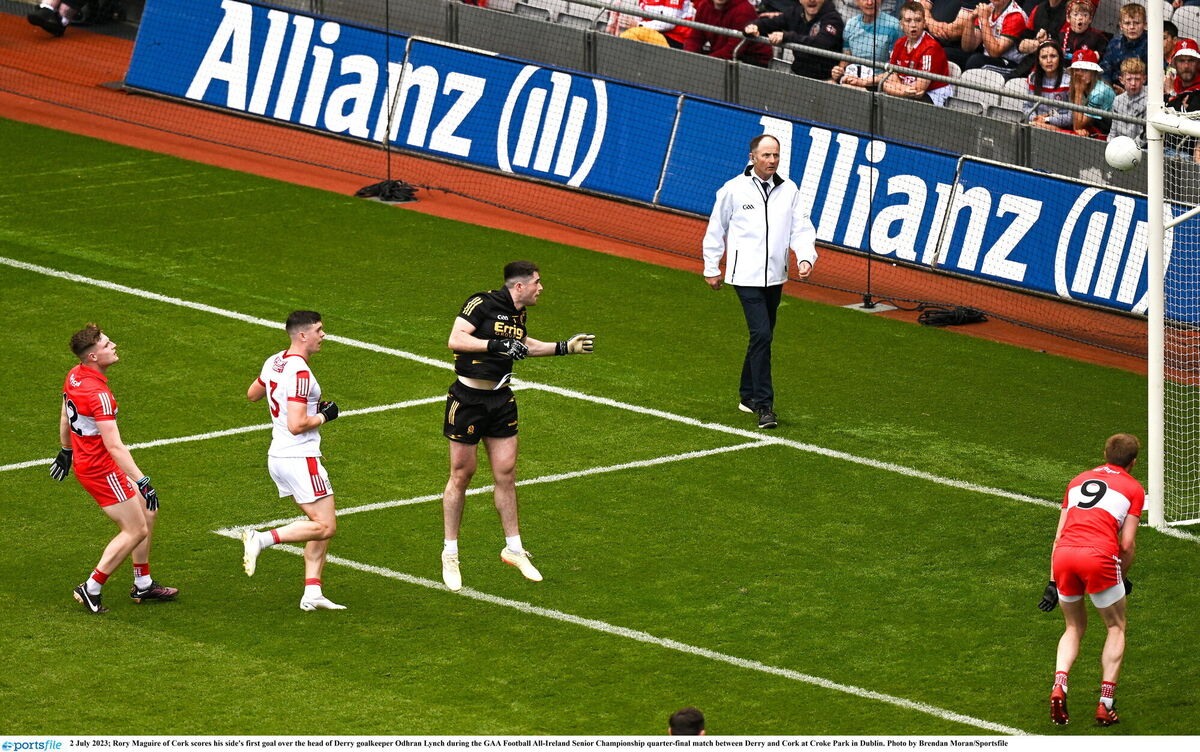
The wider discussion should be around what Gaelic football actually looks like, and how people consume it.
Especially in such a congested sporting market. Attendances have been high this summer but Gaelic football no longer has the luxury of assuming that people will always choose to come to the games. Or even watch them.
Whether managers, coaches, players or most of the diehard fans in those counties agree or not, the game needs to change as a spectacle - because the wider public are switching off.
Much of the beauty of the modern game is tied up in the tactical complexities and the problem-solving required for teams to be successful.
The game is continually evolving but the majority of the viewing public have no interest in those subtle nuances or tactical engagements. They see it in more black and white terms; they’re either entertained or they aren’t.
What can be done? The introduction of a shot-clock, like in basketball, has been widely mentioned, whereby a team would have to get off a shot within a certain time-frame of possession or else they lose the ball.
That would leave no option but for teams to attack but how long would that time-frame be? If it was say, 45 seconds to a minute, would that actually work?
Might it not be counter-productive and actually tip the balance back towards more all-out defence? If the defending team pull everyone behind the ball, how would any team get off a shot within a minute, say, after winning a short kickout?
Would two minutes work? If the attacking team turns over the ball high up the field just before they can get off a shot, will it not promote more cynical play, where they will rotate tactical fouling to stop the counter-attack to allow all of their players get back into a massed defence?
Who knows? A shot-clock doesn’t seem to be on the GAA’s agenda. In the forthcoming Higher Education Freshers 1 football competition, the GAA will trial alternative rules relating to the kick-out, free-kicks, sideline kicks, and free kicks awarded for a mark.
Whatever happens next, whoever the incoming GAA President Jarlath Burns appoints as the chair, and the members of the next playing rules committee, their role and decision-making process will be critical.
They need to have a vision of the future of Gaelic football. The future is always decided by players, managers and coaches. Yet there needs to be a clearer vision of how that future should be shaped, and of how Gaelic football needs to be a better and more attractive version of itself.
For everybody.








 App?
App?


