Sarah O'Dwyer: Male support gives a boost
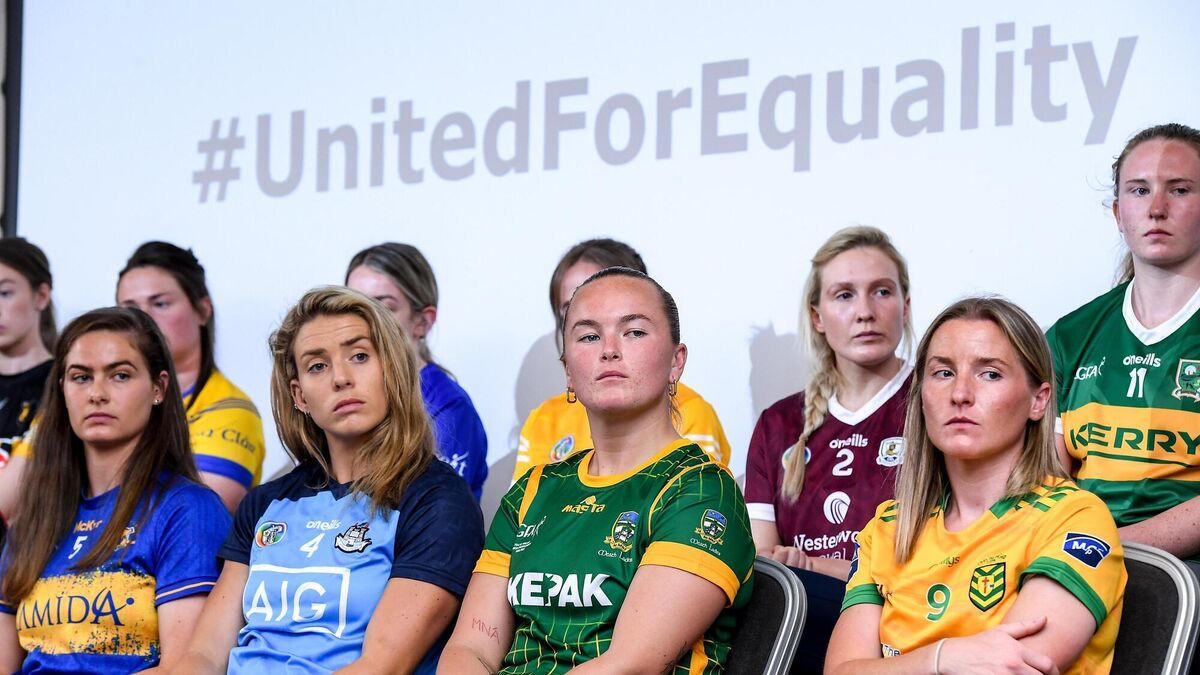
Members of the GPA addressing the media at Radisson Blu Hotel in Dublin Airport. Picture: Matt Browne/Sportsfile
IT lifted my heart to see the captains across the men’s intercounty senior hurling and football teams coming out in support of their female counterparts who have raised significant issues they’re facing in recent weeks.
Ladies footballers and camogie players playing for their counties are playing the rest of the season under protest. This protest has been backed across the board. All players from all teams are participating.
This has seen them wear T-shirts highlighting their case which say ‘United for Equality’ during pre-match warm ups, and teams running off the pitch to the dressing room just prior to games to register their protest.
In a letter released through the Gaelic Players Association (GPA) a couple of weeks ago, the players stated what they had sought from the three organisations: “We asked the LGFA, the Camogie Association, and the GAA to engage in discussions with the GPA to develop a charter designed for female players to be implemented in the 2024 season. This charter would establish minimum standards for our collective welfare.”
Their statement added: “We as players are not receiving the respect we deserve. Therefore, do not expect business as usual in the upcoming weeks and months.”
The protest is ongoing, which shows the issues have still not been adequately addressed, and I wondered if the intercounty men’s captains would back the women’s calls. I’m pleased to say they have.
In a statement addressed to the leadership and management of the GAA, also released through the GPA, they called on the GAA to listen to the concerns of the ladies football and camogie players.
“We, the 68 captains of the male senior inter-county teams, want to express our full support for our female colleagues and stand beside them #UnitedForEquality. As such, we are asking you to work with the Camogie Association, the Ladies Gaelic Football Association and the Gaelic Players Association to discuss the steps necessary towards providing the minimum standards of welfare and care for female players for 2024. They cannot be expected to wait any longer.
“We do not accept that this is a matter solely for the two female governing bodies which is the response you have given to date. Among the GAA’s values is that of community identity. Community is at the heart of our association. We know from our own communities that if our neighbour is struggling or requires help, the local GAA club steps forward to provide it.
“We know our female inter-county colleagues in the Gaelic games community are in need of support. They need help to provide basics such as medical support, nutritional support, access to facilities and financial support to offset travel expenses.
“Are you going to live that value of community, or will you allow this opportunity for positive change to pass us by? In the GAA we know and love, there would only be one answer to that question.”
That’s as unequivocal a statement as you can get. It’s also not men fighting for women, but the captains of both the men’s and women’s intercounty teams working together to fight for what is right. It has been a long time coming, and I wish that men had spoken out on these and similar issues sooner. However, it is still a hugely welcome move.
It remains to be seen if the GAA will take notice. If not, the next obvious step would be for the men’s teams to join in the protests on their own match days as the women have, and return to their dressing room before games, or even just simply wear the ‘United for Equality’ T-shirt in the warm up. It would draw huge attention to the issue, and that may be enough for the GAA to stop and take notice.
Following on from that, a plan needs to be put in place for how the women’s games can progress. The LGFA and Camogie Association need to be examined to see if all of the organisations should be brought together, finally, through an umbrella organisation. Finances also need to be looked at — where is the money going to come from for financial support for the female players as is called for in the men’s letter to the GAA?
How far are the male intercounty players willing to go to highlight the circumstances of the women’s games? Words and solidarity are hugely welcome, and I’m sure appreciated, but concrete action would be even better.




 App?
App?


