Tom MacSweeney column: Sea lords’ rule of western seaboard
A western seaboard, connected from West Cork to the North coast of Antrim and across the North Channel to the coasts of Argyll and the Hebrides in Scotland, was the maritime scene from the 11th to the 17th centuries.
Tom MacSweeney column: Sea lords’ rule of western seaboard

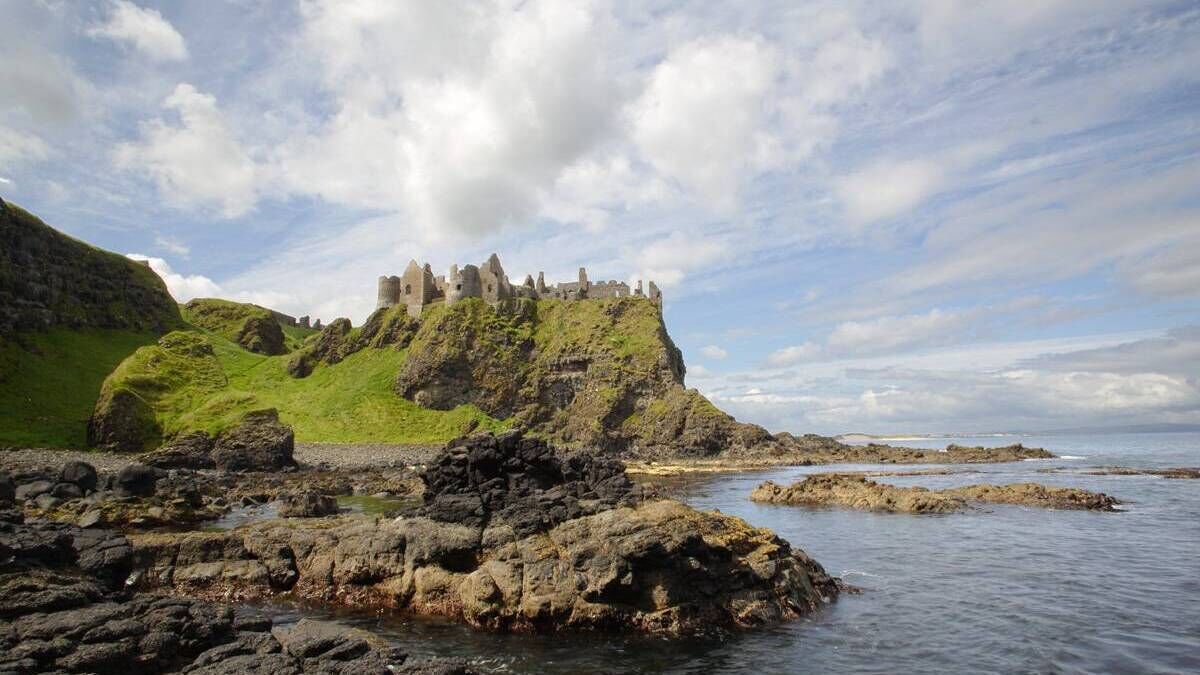
Dunluce Castle in Co Antrim is one of the locations in ‘Lords of the Sea’, a book recalling a West Cork-Scottish maritime society.

A western seaboard, connected from West Cork to the North coast of Antrim and across the North Channel to the coasts of Argyll and the Hebrides in Scotland, independent political territories beyond the control of the English and Scottish Crowns, was the maritime scene from the 11th to the 17th centuries.

Trade and communication was strong between the Irish and Scottish communities, away from the reach and influence of the kings and queens of England and Scotland. The western seaboard communities had connected to each other through a wider European social world. Trade and communication were central to a lifestyle that used the sea extensively.

Fishing fleets from France and Spain were regular annual visitors and there were associated financial and social interactions for the Irish Gaelic society of the time.

The Irish ‘sea lords’ who controlled these coastal areas built their wealth on taxing and supplying the visiting fleets. Life was harsher for the ordinary people who worked the land and fished the sea.

Colin Breen, associate head of the school of geography and environmental sciences at Ulster University and an advisor to Unesco — the United Nations Educational, Scientific and Cultural Organisation — on culture, heritage, and climate adaptation, has written the first book to examine the history of the sea lords and their coastal communities that existed along the western seaboards of Ireland and Scotland throughout the later Middle Ages.

Amongst his previous publications is The Gaelic Lordship of the O’Sullivan Beare. The new book, Lords of the Sea, comes from his 30 years of study and research into the archaeology and historical geographies of the maritime Gaelic world across Ireland and Scotland.

Wild Atlantic Way 

“The development of the Wild Atlantic Way has been a success on many levels,” he told me. 

“As a marketing campaign it has brought significant global attention to the beautiful and dramatic landscapes of Ireland’s western seaboard while also providing social and economic opportunities for the communities who live across this region.

“For the modern visitor this is a remote place, a landscape that is filled with stories of a romantic past linked to writers, painters, and pirate queens. This romanticised perception of the West was promoted by early architects of the independent Irish State. Politicians and poets encouraged a vision of Gaelic idylls, with coasts and islands, the last vestiges of an insular and culturally vibrant past.

“More detailed historical scrutiny strongly challenges such perceptions. Rather than being an isolated place, the western seaboard was intrinsically connected to the wider western European social world.”

Compared with the sea lords — O’Sullivans, O’Malleys, and O’Donnells — who lived in castles and fortified tower houses controlling land and seaways, life for ordinary people working on the land and fishing in the coastal waters was a daily struggle to survive.

Their diet was forms of broth, with bread and milk. What they lived in could be best described as ‘shelters’. The book places the sea at the centre of life in a time when Gaelic Irish communities were politically sophisticated maritime-oriented societies part of the North Atlantic world.

There is fascinating comparison to Ireland’s modern connection to Europe, noting that link existed many centuries before the European Union — stretching from West Cork.

“Commentary around a united or unified Ireland over the past few weeks represents an increased dynamic around this subject, but it is important to note that there never was a united Gaelic political nation in the past,” says Colin Breen.

Gaelic maritime society

 “The Gaelic maritime society during the Middle Ages was a loose, cultural federation — familial groupings, sharing cultural traditions, a common language, and other characteristics. The Gaelic social elite were bound to wider western European society through religion, trade, learning, alliances through marriage with kin-groups in adjacent territories as far north as Barra or Lewis in the Outer Hebrides.

“Not all attempts at alliance building or cultural diplomacy were successful and one of the features of these communities was the near continual level of violent conflict that existed between them.”

That also reflects aspects of modern life in separate identities — the Republic and Northern Ireland.

“Despite the connection of the sea, by the close of the 16th century this maritime society was under serious threat from the English and Scottish crowns, the sea lords system had largely collapsed by the middle of the 17th century and cultural connections across the western coasts of Ireland and Scotland gradually diverged,” records Colin Breen.

The book costs €59 (368 pages) and is published by Cork University Press.

  • Seascapes podcast: Colin Breen will discuss his book and the findings of his research with me on the October edition of Seascapes, Ireland’s only maritime programme at: https://tommacsweeneyseascapes.ie or wherever you get your podcasts;
  • Email: tommacsweeneyseascapes@gmail.com with your maritime comments.


More in this section

Scales of justice and Gavel on wooden table and Lawyer or Judge working with agreement in Courtroom, Justice and Law concept Cork man signs pleas of guilty to eight charges relating to drug seizure
Cork man in plea for wife’s visa application to be expedited Cork man in plea for wife’s visa application to be expedited
Cork traffic and weather: Met Éireann predicts sunny spells with dry and bright conditions Cork traffic and weather: Met Éireann predicts sunny spells with dry and bright conditions

Sponsored Content

Friends playing padel on a blue outdoor court — energetic POV shot of group sport and recreation Padel 100: Bringing Europe’s fastest-growing sport to towns and schools across Ireland
Rockwell College – 160 years of excellence Rockwell College – 160 years of excellence
Tesco How Tesco’s Community Fund is helping to keep a vital search and rescue team afloat
Contact Us Cookie Policy Privacy Policy Terms and Conditions

© Examiner Echo Group Limited

Add Echolive.ie to your home screen - easy access to Cork news, views, sport and more