Uisce Éireann says it's working on addressing bad smells from Mahon wastewater plant
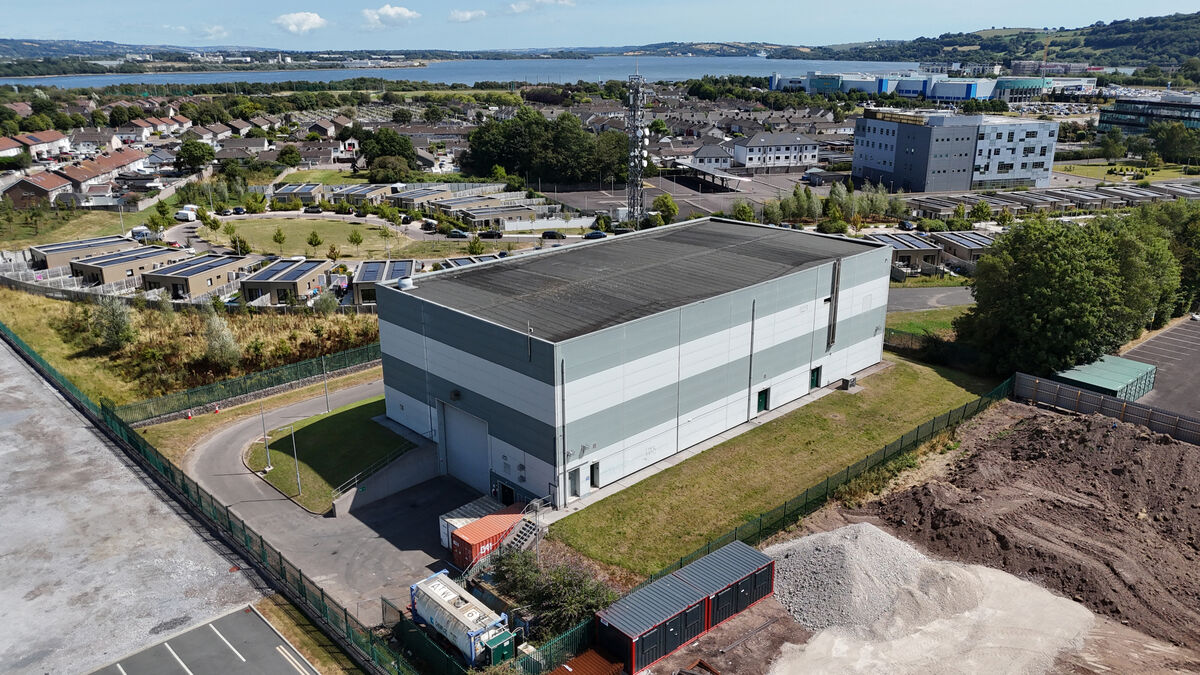
The Ballinure Header Chamber treatment plant on Ballinure Way in Mahon, has been described by Uisce Éireann as “a key part of the Cork city wastewater network”. Picture: Larry Cummins.
There has been no operational gas detector on the site of a major wastewater treatment facility in Mahon for “several years”, Uisce Éireann has confirmed to .
In August, a formal complaint regarding persistent sewage odour emissions from the site was submitted to the Environmental Protection Agency (EPA).
The complaint was lodged alongside signatures from more than 100 local residents and over 90 first-hand impact statements.
For many years, residents living in Ballinure, Mahon, Blackrock, Jacob's Island, Beaumont, and Ballinlough have endured recurring foul sewage odours in the region.
The Ballinure Header Chamber treatment plant on Ballinure Way in Mahon, has been described by Uisce Éireann as “a key part of the Cork city wastewater network”.
The facility was built as part of the Cork main drainage scheme, and operates as a transfer and preliminary treatment facility. It receives the waste water from across the city before transferring it to the Carrigrennan wastewater plant in Little Island, for full treatment.
In simple terms, wastewater from homes and businesses across Cork city, which travels through the sewer network to local pumping stations, is then transferred to the Mahon plant.
Initial treatment processes at Ballinure include screening and grit removal, before wastewater is then transferred via twin rising main pipes under the harbour, to the Carrigrennan site.
Uisce Éireann has said that throughout 2025 and 2026, more than €1.6m has been invested into maintenance and capital works at the facility. But it has now revealed there has not been an operation gas detector on this site for several years.
While a new detector system was installed and commissioned by Uisce Éireann this summer, it is not connected to a controller, meaning that the detector can only display live levels, with no historical data available on previous gas exposure.
The company has advised that its operations department has requested the connection of this safety device be added to the current investment project.
Last month Uisce Éireann confirmed that it had been ventilating the facility on a daily basis, because units and fans on-site were “operating below design criteria”.
At the time, the company also identified another issue which resulted in untreated gases – namely hydrogen sulphide – being released into the community, leading to the prolonged bad smells in the wider area.
The newly-installed detection system recorded elevated levels of hydrogen suphide on only one occasion in June. Uisce Éireann says the odour was not toxic and was consistent with "general sewage smells".
However, while the system has an alarm set at five parts-per-million of hydrogen sulphide, according to the Centre for Disease Control, exposure to hydrogen sulphide at concentrations below 10 parts-per-million can cause eye irritation, headaches, and fatigue.
Speaking to , a spokesperson for Uisce Éireann said the company intends to move to 24/7 staffing at the facility.
The spokesperson also confirmed that a range of measures will continue to address odour issues and improve performance at the site.
“These works will continue throughout 2027, with increased levels of investment,” the spokesperson said.
They added that early indications suggest that remedial measures are having a positive impact at the site.
“While reports remain relatively low, Uisce Éireann recognises that odour can be unpleasant and impact local residents. Our focus is on addressing these impacts through ongoing data-led operational measures, enhanced monitoring, and targeted investment.”
Labour Party councillor for the Cork city South East ward, Peter Horgan said reports of bad smells are now low because public confidence in Uisce Éireann is low.
“Reports are low because people have lost faith in Uisce Éireann’s ability to respond meaningfully,” said Mr Horgan.
“It is concerning that we are not seeing capital works begin – potentially – until 2027, when residents need these works now. However, the move to fully man the chamber away from automation is welcome. Proactive community engagement must now be the watchword.”
The utility company said detailed investigations have been carried out across the local wastewater network and surrounding area, and enhancements to odour control systems, repairs and optimisation works, and adjustments to treatment processes have already been implemented at the Ballinure WWTP.
“Ballinure Header Chamber is a complex piece of wastewater infrastructure and improvement works must be carefully planned and undertaken in a structured and sequential manner to ensure the safe and continuous operation of this critical asset,” the spokesperson said.
The company said upgrades to key systems, improvements to the overall resilience and performance of the facility, and measures to address odour impacts will be made as part of a "multi-year" programme.
“Protecting public health, safety, and the environment, remains our priority,” the spokesperson said.
They said the hydrogen sulphide, which is commonly associated with wastewater-related smells, is a "common and naturally occurring" by-product of the wastewater treatment process.
“While it can be detected by smell at extremely low concentrations, these concentrations are typically far below levels associated with adverse health effects. More broadly, odour can arise from a range of sources and environmental factors, including wastewater network conditions, mudflats, seawater infiltration, and weather conditions," the spokesperson told .
The company said that reduced flows and higher temperatures throughout the summer months had contributed to the release of gases at the facility and conditions at site will continue to be monitored in accordance with "all applicable health, safety, and environmental requirements.”
The spokesperson said that community feedback continues to play an important role and they encouraged anyone experiencing odour-related issues to contact our 24/7 customer care helpline on 1800 278 278.
“We will continue to engage with local representatives, regulator, and the local community as this programme of work progresses.”







 App?
App?


