WATCH: On manoeuvres with Cork soldiers as they prepare for last Lebanon tour
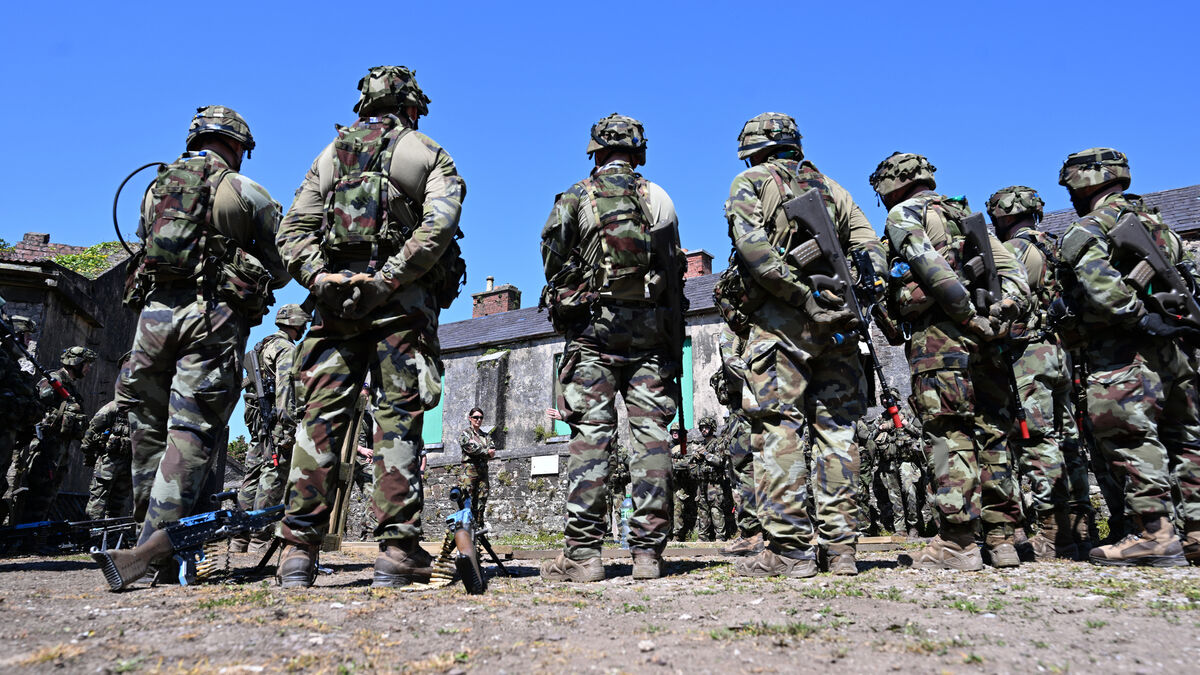
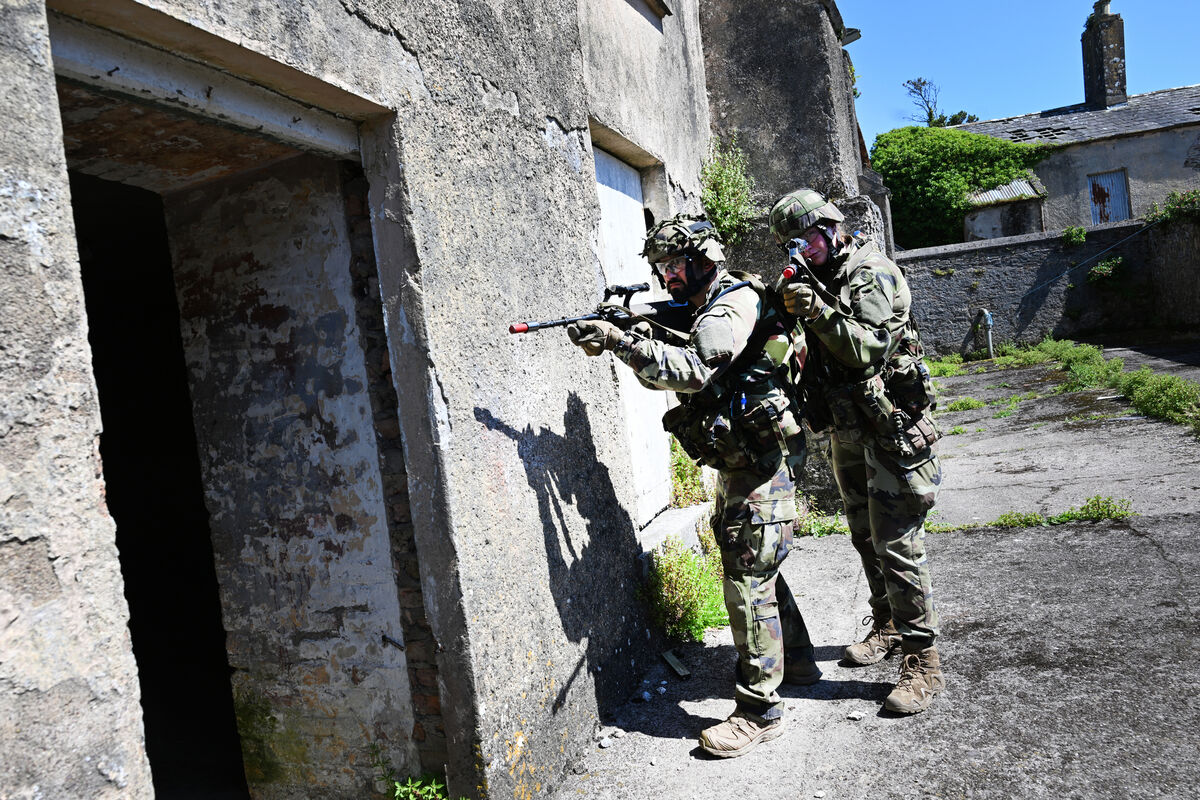
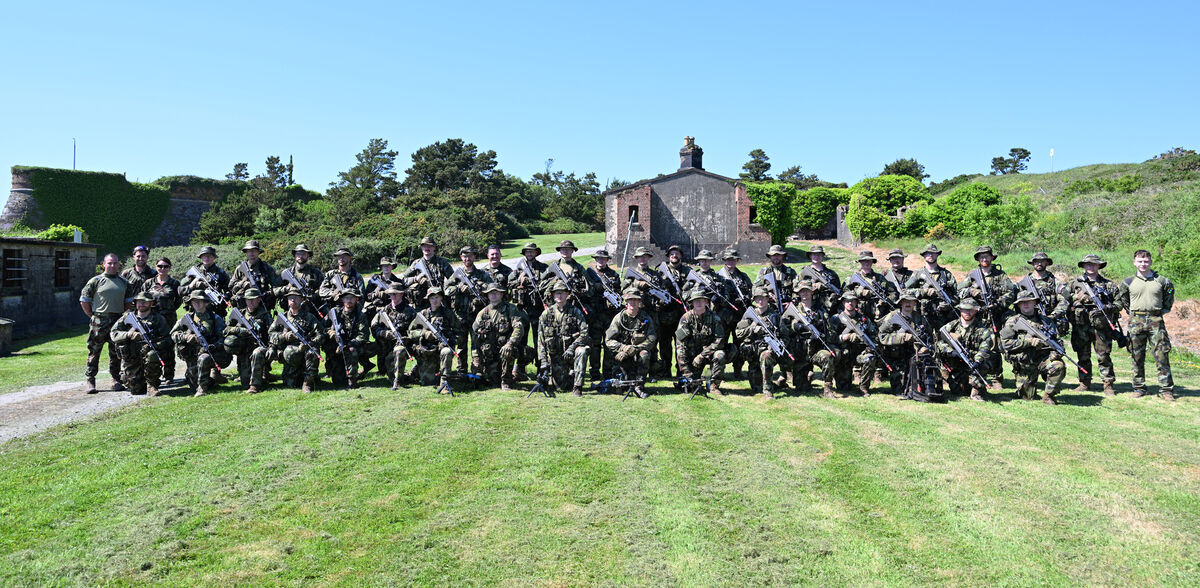
Participants on the Potential NCO course receiving training in urban combat at Fort Davis. Pictures: Larry Cummins
The 127th Infantry Battalion of the Irish Defence Forces concluded its six-month deployment with the United Nations at the end of May, as troops from all over Ireland returned after their last tour of duty in Lebanon as part of Unifil troops.
Those Irish troops were based in the Lebanon during the middle of the conflict between Israel and Hezbollah.
Irish troops have also been involved in multiple operations in support of other contributing countries to Unifil.
This included the medical evacuation of a wounded Ghanaian soldier and resupplying other United Nations posts during volatile periods.
Regardless of the ongoing tensions in the Middle East, the important cog in the machine that is the Irish Defence Forces never stops moving.
Training is always ongoing and is a crucial aspect of the development of Irish troops.
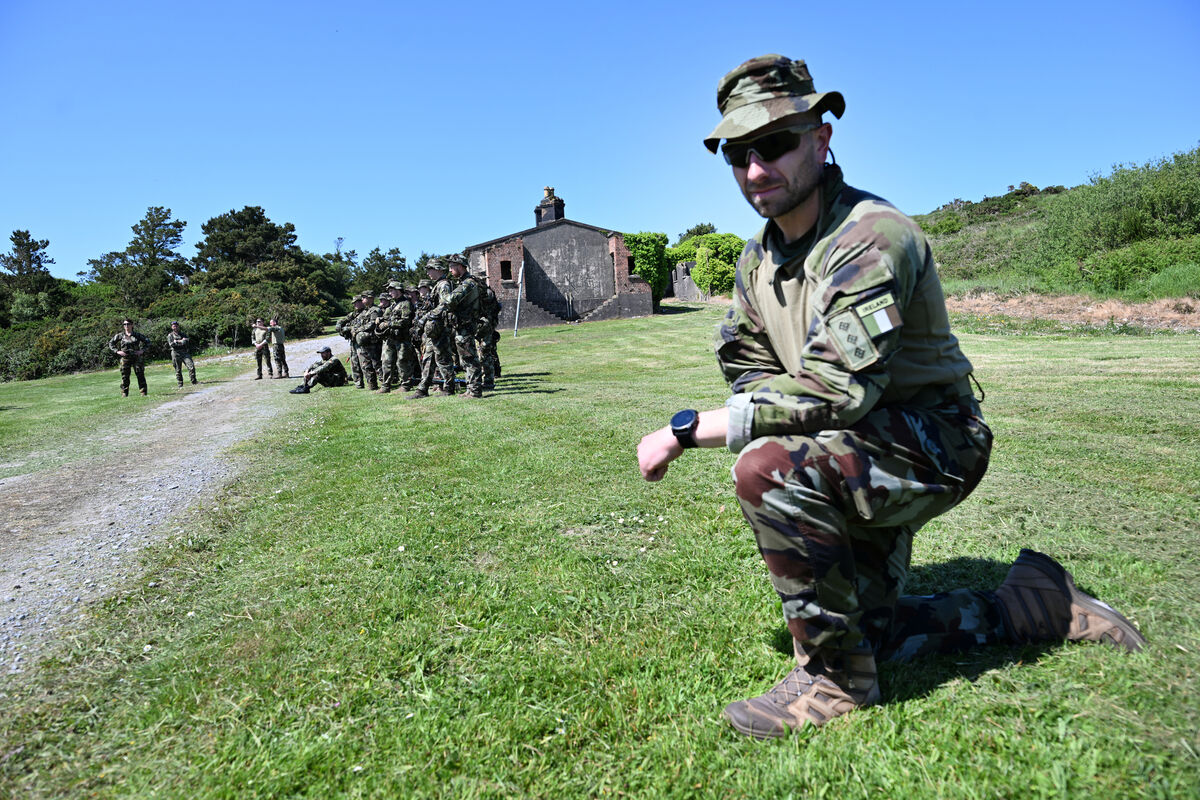
It was almost 28 degrees celsius when The Echo arrived at Fort Davis at Whitegate last month. But that wasn’t stopping the Defence Forces troops, who were in the midst of an intense week of training before the 128th Infantry Battalion headed for Lebanon for the last time.
It is week 15 out of 20 in the potential NCO course (non-commissioned officer), the junior leadership course in the Defence Forces for students, currently of the rank of private or trooper.

There is no time to enjoy the fine weather, with participants training in combat gear and undergoing a series of military operation drills.
The training ongoing on this particular afternoon in Fort Davis is military operations in urban terrain.
This involves planning and conducting military actions on complex terrain, where man-made construction can significantly affect tactical options.
As becomes plainly clear, being decisive and being able to communicate clearly are just two of the absolutely essential skills.
This is a job where one wrong move could prove to be the difference between life and death.
Captain Joe Everett, instructor on the potential NCO course at Fort Davis outlines the plan.

“They will be here for the next three days. We will take them through different stages of how to clear a building, how to enter a building and how to attack a building.
“This is massively fundamental. If they deploy out to, say the Lebanon, they are the section commander and the patrol commander on the ground.
“They are going to be the front face operating out in South Lebanon, it is not going to be the captain or the lieutenant.
“So there is massive responsibility on them and that they come away from this course at a good standard.”
Mr Everett enjoys being at the helm of such an important role in terms of developing the next generation of the Irish forces.
“The wheel has come full circle at this stage. It is just nice to be able to give back in that sense. The unit gave me that first exposure to the army and it was a brilliant exposure when I first joined.

“Now to be able to come back and give back, it is massive. For all of the staff here, it is busy here when we are on.
“But the instructors are very proud of what they do and they are very into the work that they do as well.
“For us, the best day of the year is that passing out parade in July, when you can see the work that everyone has put in and the work that the students have put in as well.”
In terms of what are the main things he wants to see from his students during the week, Mr Everett adds: “We have weapons and you have to make sure your weapon is operational at all stages.
“Feet - you need to make sure your feet are in a good state. Eat – you need to make sure you are eating enough to be operational for your section.
“Then the last thing is sleep. But weapons, feet and eat come first.”
Among the many being put through their paces are troopers Eimear Walsh and Francois Olivier.

Ms Walsh provides an outline of what is in store for the trainee troops over the coming days ahead of them.
“Clearing buildings – this is how you enter a building as safely as possible. If there is an enemy in there, you have to make you you’re not getting shot and becoming a casualty yourself.
“It is also how you enter up into a top floor and clear the building down the way. Anything like that, it is any kind of urban environment that you could be thrown into.”
She adds: “You learn to operate at that level and that is the level you are expected to operate, even if you are sleep deprived.”
“It is all about perspective. I actually enjoy this job, so I don’t mind a bit of pressure and it makes you who you are.”
Mr Olivier describes that there is a demanding week of training ahead for the troops.
“All of the weeks leading up to here have been tough. All of the ground phases have been physical and tough.
“But, especially this week, this weather that we are having today, over the next few days, it is going to be physically demanding on the body and especially the feet as well.”

He said there were a couple of times when he thought he would throw in the towel. “Every course in the army is physically tough and robust. But this one is a bit more about the mental toughness. You have to start thinking about the bigger picture.
“It is not just yourself you are worried about getting through the day.
“You are worried about eight or nine bodies behind you as well – you are trying to get them through the day as well.
“Keep them safe at the end of the day and make sure they can still do their mission and can still do it effectively as well. You are constantly thinking about those things.”

Back in Collins Barracks, members of the 128th Infantry Battalion are departing Cork to commence deployment with the United Nations Interim Force in the Lebanon (Unifil). Soldiers on the square say their final goodbyes to their parents, partners and children, before beginning their trip to the Lebanon.
There are emotional scenes. But generally there is a strong sense of pride among the troops heading off to serve for their country.
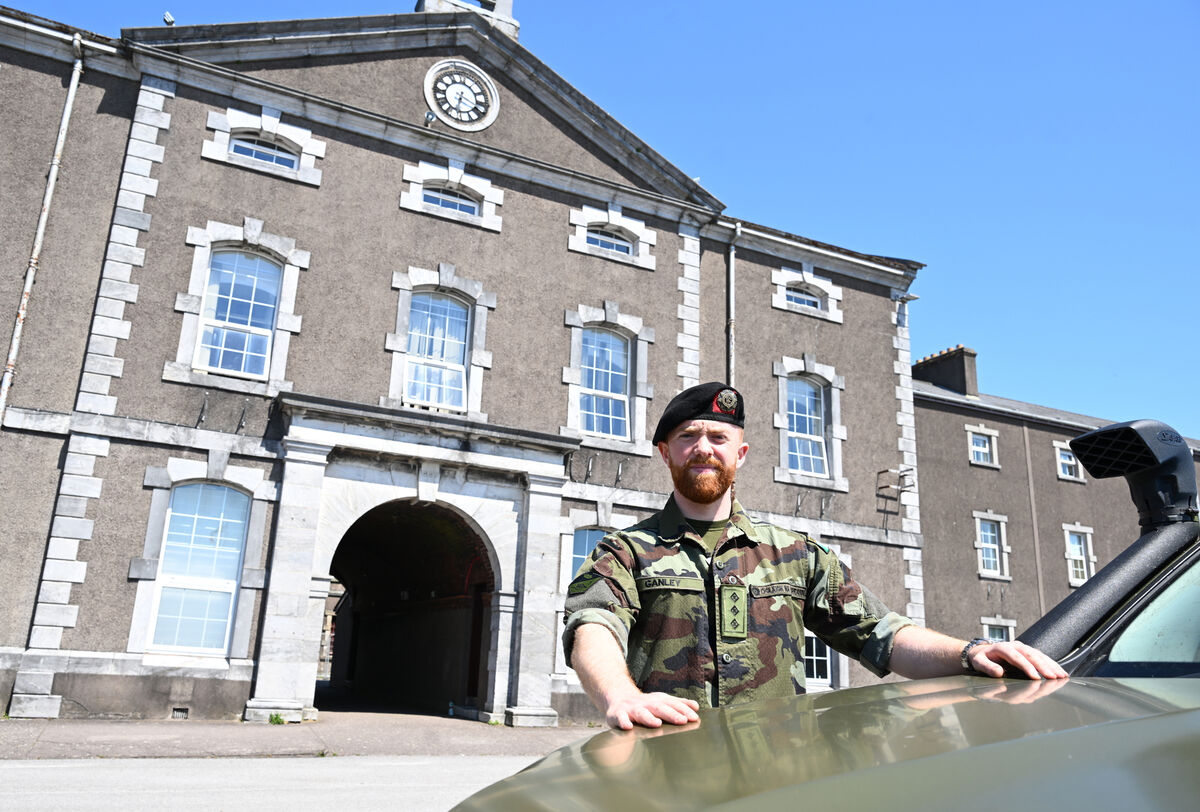
Captain Ruairí Ganley plays a fundamental role in the human resources operation in the forces at Collins Barracks.

He can strongly relate to the feelings and emotions which the soldiers, embarking on the current mission to the Lebanon, are going through.
“I served overseas to the Lebanon from November 2024 to May 2025. It was difficult on the day to say goodbye to family and friends.
“It was always on my mind that I was going to go and I was really willing to go. My family were a bit upset to see me go.
“But they were also very proud and very happy for me to go, because they knew it was something I really wanted to do.”
Despite the day that is in it, with departures for Lebanon, normal service still is ongoing at Collins Barracks, in the training and development of preparing troops for future potential overseas missions.
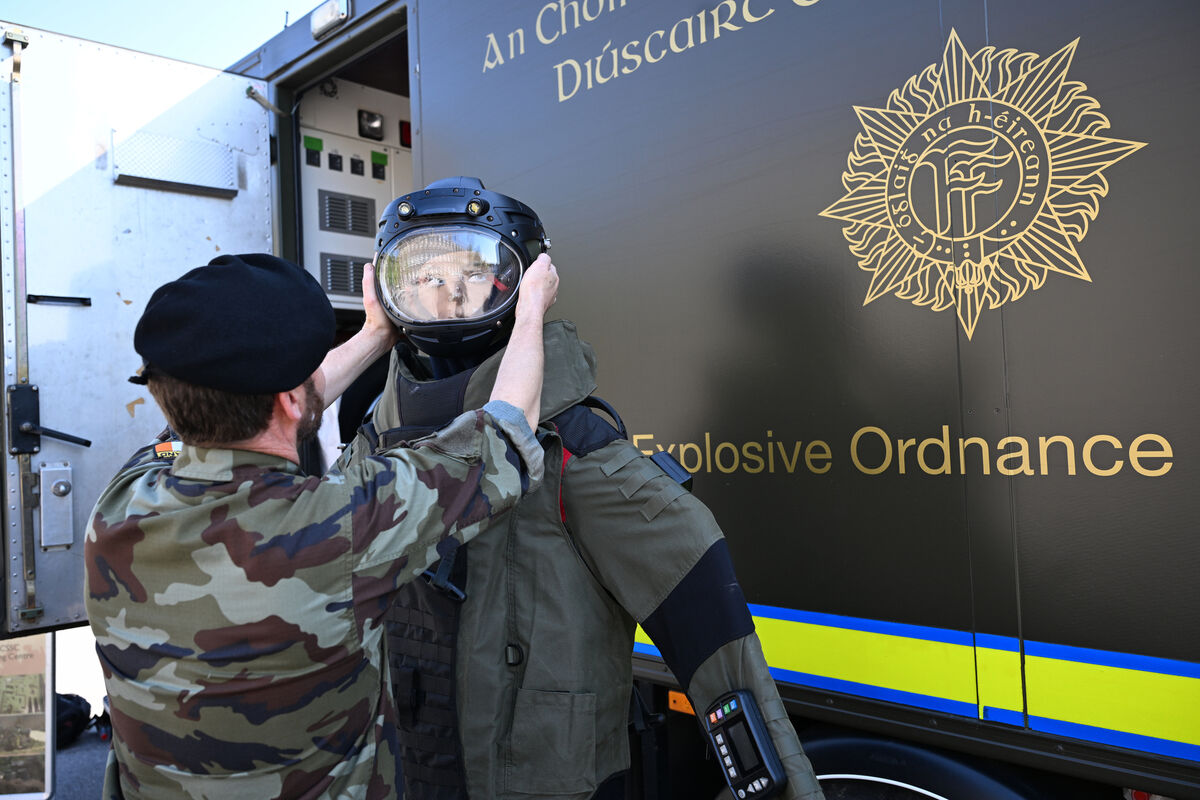
The explosive ordnance disposal team is often referred to as ‘the bomb squad’.
A robot can be deployed by the ordnance team to investigate un exploded ordnance, suspect devices including pipe bombs when called upon by gardaí.
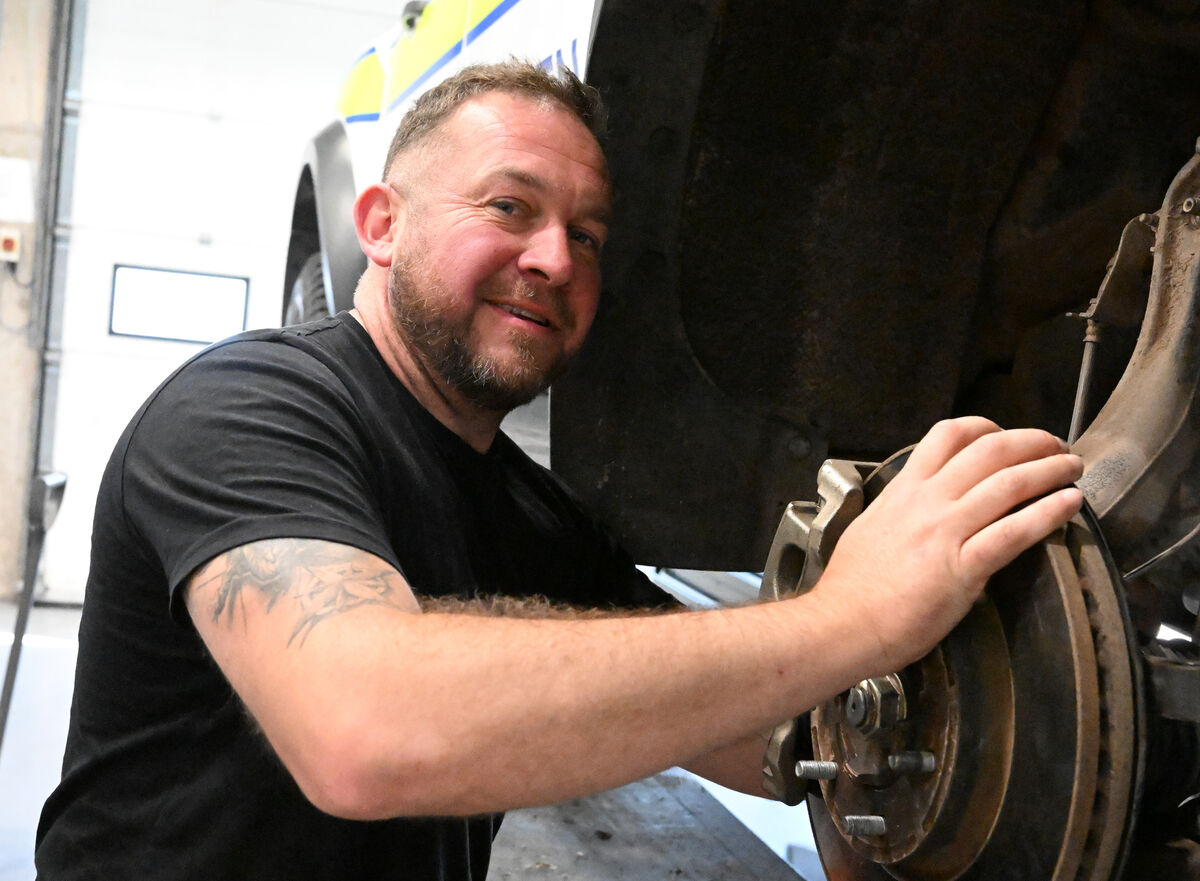
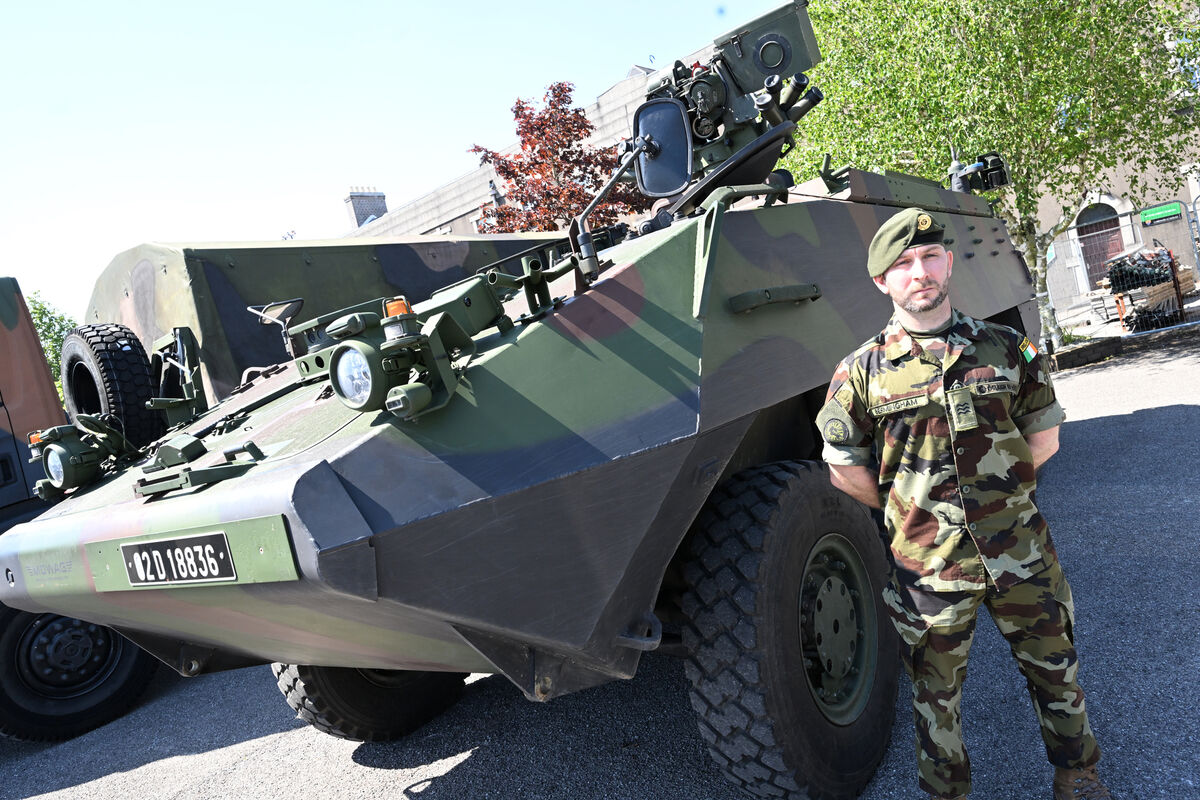
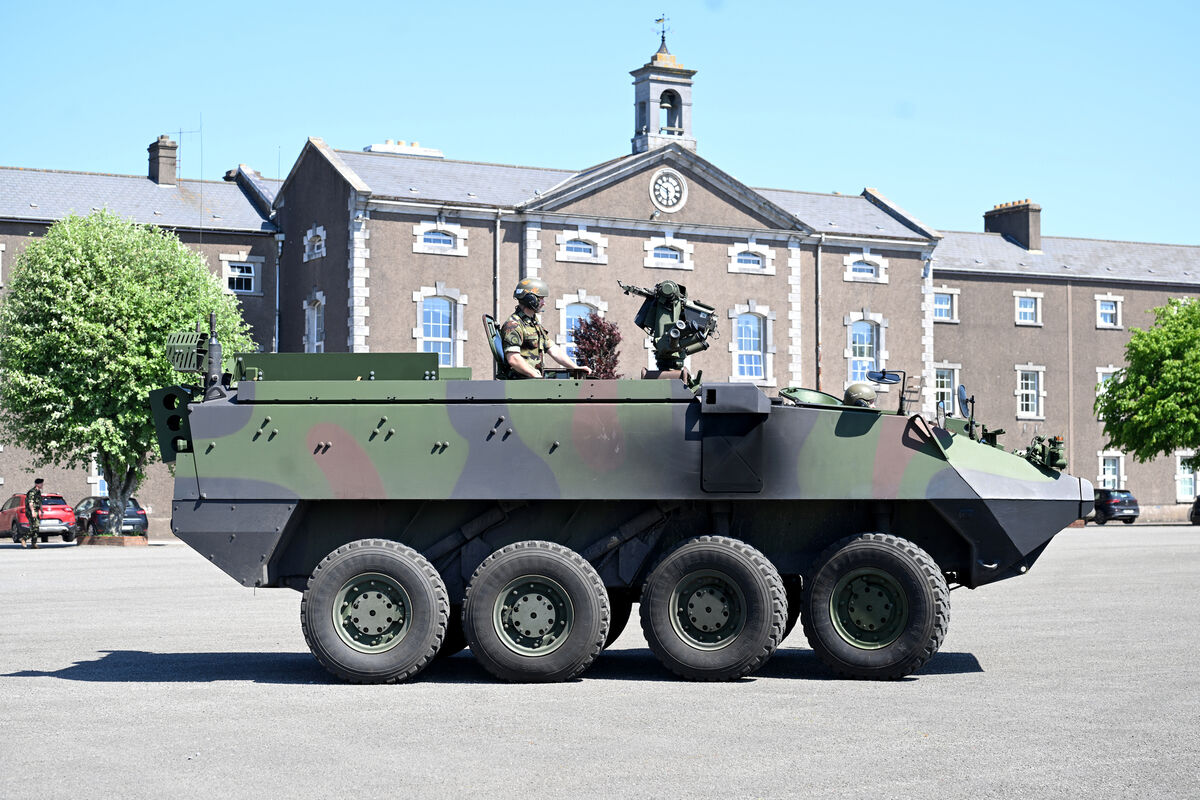
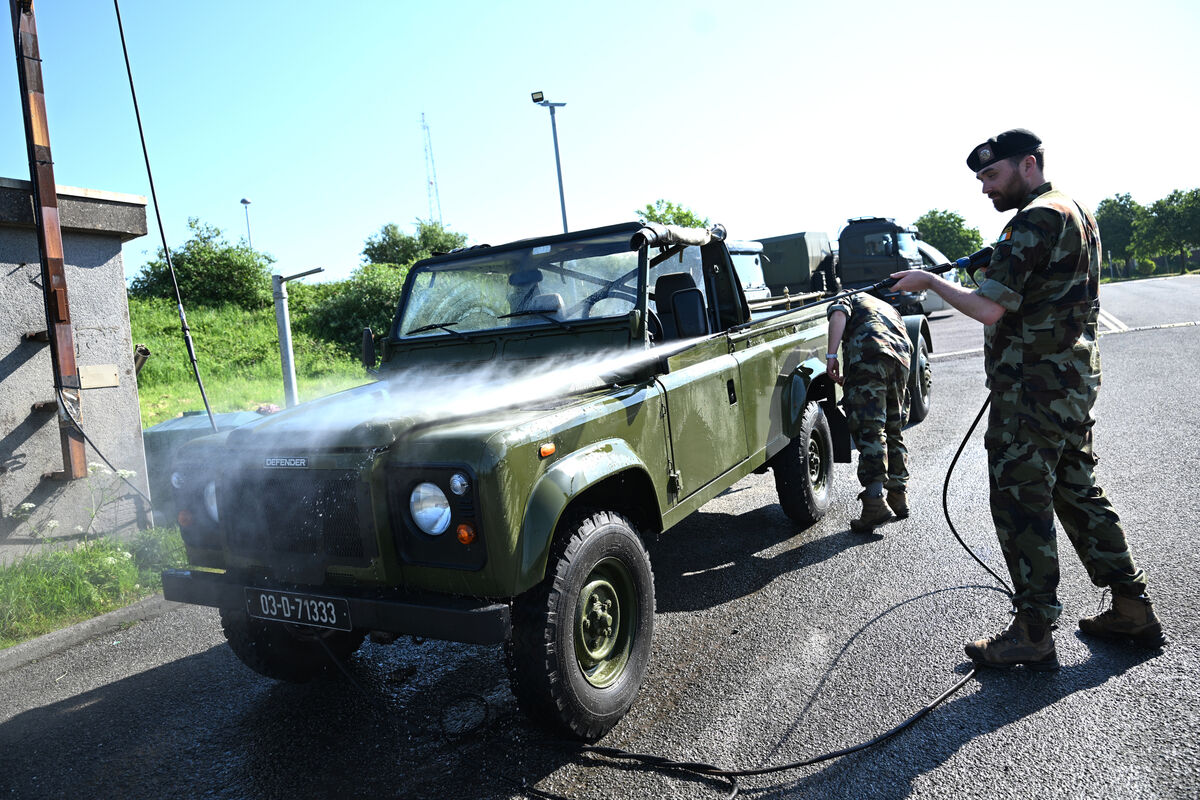
Sgt Martin Bermingham, 1st Cavalry Squadron, is in the driver’s seat of a MOWAG armoured personnel carrier providing a demonstration.

The MOWAG armoured personnel carriers are a fleet of wheeled armoured vehicles designed for various military duties.
In his role, Mr Bermingham is fully aware of the importance, in the overall outlook of the Defence Forces, of the maintenance of vehicles and having extremely well-trained drivers.
“In the Lebanon, this would be used for quick reaction team (QRT). So if the patrols are out, like the land cruiser, if they get into trouble or if a patrol is stopped, the MOWAGs will be sent out on a QRT.
“They are given 10 minutes’ notice to go out and they are sent out as back-up then basically, for the patrols.” On the training and upskilling of military drivers, Mr Bermingham adds: “We do it quickly. We try to get it down in a year, so that lads are qualified for overseas.
“I enjoy my role a lot. To get from driving a jeep, to MOWAG in the space of a year, it is a good experience.

“Driving these MOWAGs overseas in the Lebanon and Beirut, it is not easy but it is a great experience.”
Nearby, trooper Karolina Sipailaite is undergoing driver training for trucks, which she feels serve a vital role in the Defence Forces, especially in relation to overseas missions such as in the Lebanon.
“I would say it definitely is. You always need to go somewhere and you need someone to be able to transport you.
“Whether it is weapons or people, you do need to be able to drive and we need drivers.
“I think everyone has their own personal preferences. So it is either for you or it is not really for you.”
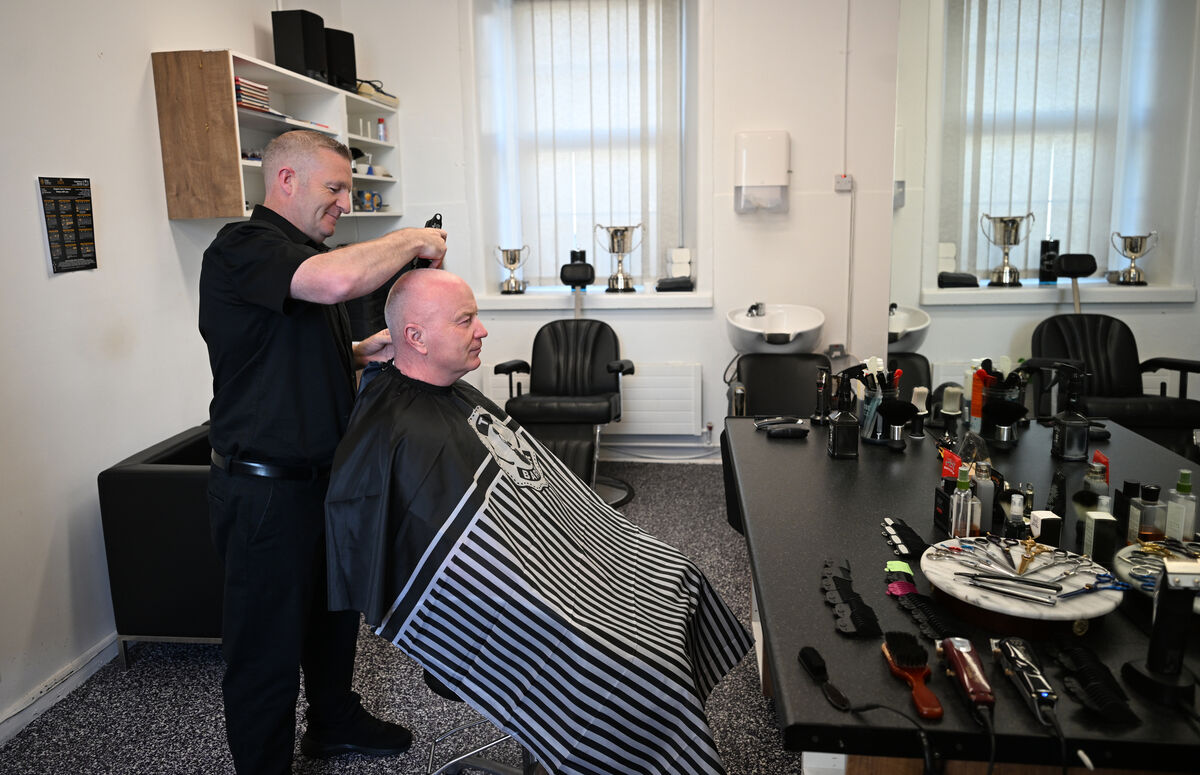
One of the other roles which may not be public-facing, but also a key part of the daily routine life at Collins Barracks, is the role of barber, which falls under the remit of Gunner Jason McGroarty.

On top of ensuring that soldiers are getting their haircuts clean and trim, Mr McGrogarty is also something of an unofficial therapist.
“The most enjoyable part of my job is meeting the people and meeting the personnel in the barracks of all ranks.
“You get to learn about their careers as well. The senior soldiers, the stories you get from them from their overseas time when they first started out on their careers.
“If they don’t want to talk about their job, they won’t.
“It could be something they did at the weekend, or going on holidays.
“If they are having a bad day, that takes them away from it and they can relax for 20 minutes while I cut their hair.”

App?