New documentary charts West Cork origins of female Blueshirts
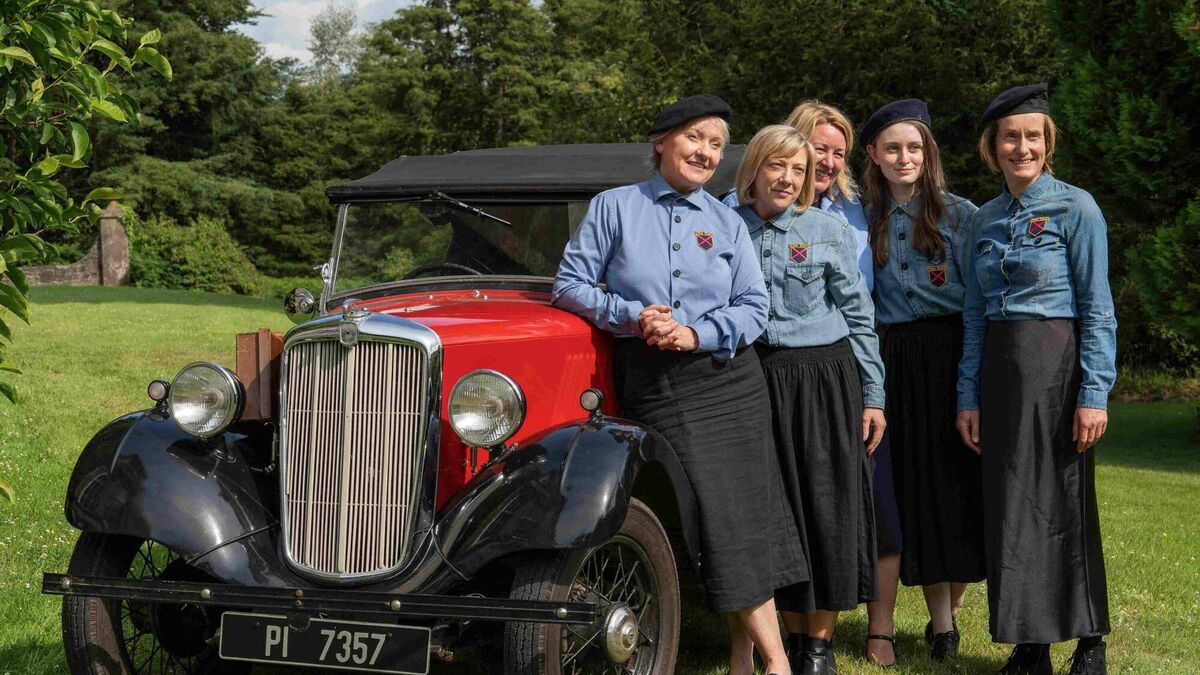
‘Mná na Léinte Gorma’ is a new TV documentary telling the forgotten history of the Blue Blouses, the female wing of the Irish 1930s proto-fascist movement known as the Blueshirts. The first branch of the ‘Blue Blouses’ was founded near Macroom. The programme will be screened on TG4 on Wednesday, March 4.
The first branch of the female wing of an Irish proto-fascist movement was formed in West Cork almost a century ago, a new documentary has revealed.
Nowadays, it is largely forgotten, but in 1933, one group had more female members than Cumann na mBan, the Irish Countrywomen’s Association, and every other women’s organisation in Ireland combined.
The Blue Blouses was the name given to the female organisation within the Irish fascist movement the National Guard, which is better remembered by the nickname given it because of its distinctive uniform — the Blueshirts.
Founded in 1932 in reaction to the election of the first Fianna Fáil government and its lifting of a ban on the Irish Republican Army, the Army Comrades Association (ACA) began by providing security at Cumann na nGaedheal (CnaG) events.
By year’s end, it was claiming 30,000 members, although that number has been disputed.
The following summer, the ACA appointed former garda commissioner Eoin O’Duffy, who had been fired by Éamon de Valera, in effect the taoiseach, for considering a military coup.
O’Duffy reorganised the ACA as the National Guard, giving it uniforms and adopting the straight-arm Roman salute of European fascist groups. Soon the Blueshirts, as they were known, merged with CnaG and the Centre Party to form Fine Gael.
At its height, the Blue Blouses had an estimated 12,500 members in 628 branches.
A new one-hour TG4 documentary, Mná na Léinte Gorma, uncovers the forgotten story of the Blue Blouses. It begins in Toames, near Macroom, where the first branch of the Blue Blouses was formed.
Produced by Cork-based company Bo Media, the documentary asks why such a large and powerful female movement was written out of Ireland’s historical narrative.
Rooted in Cork, the programme resonates nationally, opening timely conversations about extremism, gender, identity, and how history chooses what and who it remembers.
Mná na Léinte Gorma — TG4, 9.30pm, March 4.




 App?
App?


