Tom MacSweeney column: Cork woman leads analysis of Ireland's ocean economy
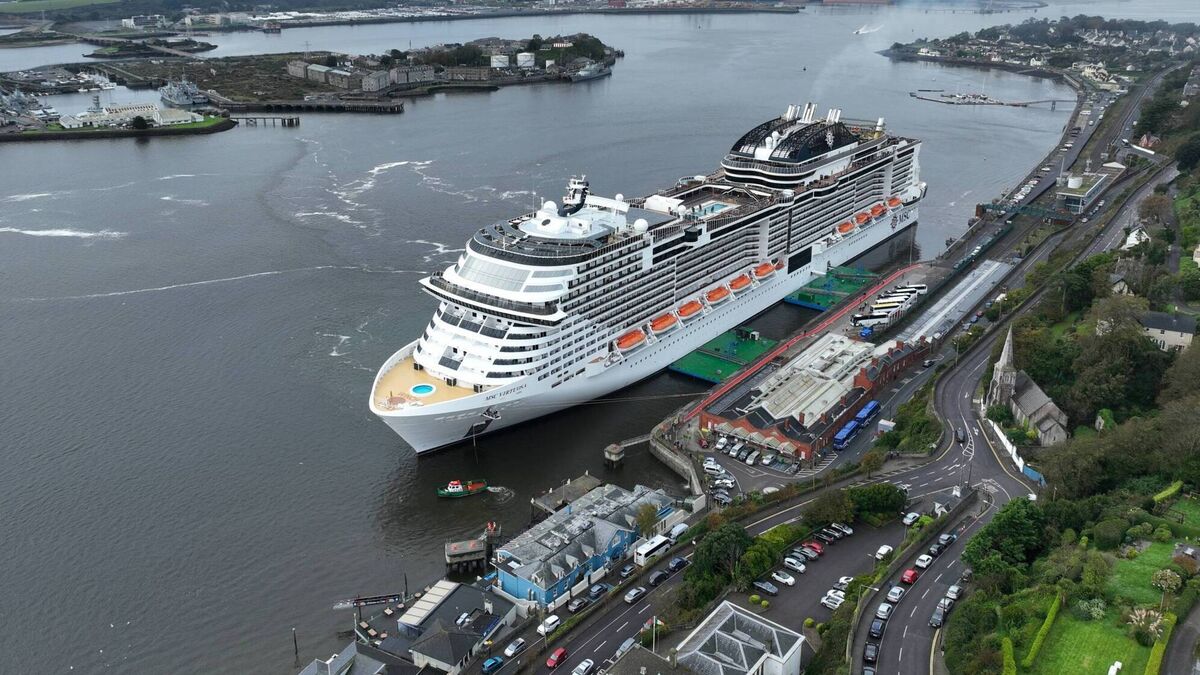
Cruise ships: The public does not realise the value of the marine sector.
The value of the maritime sector to the national economy is not fully appreciated by the public.
It should be.
The scale, contribution and performance of Ireland’s ocean economy is huge. Its total economic contribution is over €17 billion when indirect impacts are included and it supports more than 109,000 jobs.
These figures are outlined in the State agency, the Marine Institute’s report on ‘Ireland’s Ocean Economy.’ Jenny O’Leary from Cork led the team which compiled it.
“While fishing and shipping are very important, the overall marine sector in Ireland is more diverse,” she tells me on the February edition of SEASCAPES Podcast.
“I have been working in this area for 25 years and seen major improvement. If you can’t value your industry it’s very difficult to talk about it and the benefits it provides. There has been major growth over the last 10 years and it continues to grow.
“We look at five-year and 10-year trends, so we can see what is happening to the coastal communities, the crisis in the fishing industry, and cuts in quotas. We see how important the seafood sector is to those communities, as well as culture and tradition.”
The report examines 13 marine industry sectors, including tourism in marine and coastal areas, shipping and maritime transport, seafood, fisheries, aquaculture, processing, and emerging sectors including offshore renewable energy.
“We see fishing, the coastal communities, shipping and their importance as major industries. Becoming important is renewable and offshore energy. There is tourism, but seafood is still a vitally important employer, the second highest in an analysis of 10years of data from 2010 to 2024,” says Ms O’Leary
Interesting about tourism is that, with Cork Port and Bantry due to receive103 cruise ships to Cork this year, there is increased interest from international cruise ships in visiting smaller coastal ports, other than the main ones, a development the Institute is tracking.
It also evident that in the development of offshore energy renewables, its socio-economic impact on coastal communities has to be analysed. The Marine Institute is being asked by government to look at this.
Cork People to the Fore
Corkonians are to the fore in dealing with difficult aspects of the maritime sector at present. These include delays in aquaculture licensing, which are causing problems for investment, development and encouraging newcomers, including young people, into the industry.
“There are unreasonable delays at all stages throughout the aquaculture licensing process, creating uncertainty for investment and the future of the next generation of producers,” IFA aquaculture chairman. Finian O’Sullivan, who operates in Bantry Bay, told the Oireachtas Committee on Fisheries and the Marine to which he led a delegation from the primary representative body for the sector,
It is almost impossible to get certainty or clarity about the licensing process, run by the Department of the Marine. That’s an unacceptable state of affairs for which it was criticised at the Oireachtas hearing. departmental officials blamed lack of resources and staffing.
Lee Hunter (31) who set up his own farm at the top of Ireland, in Trawenna Bay, near Dungloe in Donegal outlines to me on SEASCAPES the difficulties he faced and, “can’t understand why there is such a lack of State support.”
In West Cork, Michael Desmond, who fishes inshore around Roaringwater Bay is chair of the National Inshore Fisheries Association. It has sent to government a detailed ‘Proposal for Inshore Fisheries Income Stabilisation & Climate Compensation’ on behalf of inshore fishermen.
According to NIFA: “Without immediate intervention, Ireland risks the progressive collapse of a sector that produces high-quality domestic food, sustains coastal and island communities, and supports significant onshore employment in processing, transport and services. Once lost the inshore fleet cannot be easily rebuilt.”
There are growing calls for an overhaul of State agencies in the marine sphere, examining their effectiveness. That might be beneficial.
Dr Kevin Flannery, an acknowledged expert on Irish fisheries, points out to me, that in the context of the current row between the Irish Farmers’ Association and the chair of Board Bia that: “Board Bia has no representative from the Irish seafood or fishing industry on its board!”
Everyday Objects of Cape Clear
Cape Clear Island’s social history will be told through ‘Everyday Objects’ at the Cork Literary & Scientific Society Lecture in the Metropole Hotel, MacCurtain Street, Cork, tomorrow night (Thursday) by historian and author Diarmuid Ó Drisceoil.
SEASCAPES is on Podcast platforms and https://tommacsweeneymaritimepodcast.ie
Email: tommacsweeneymarine@gmail.com.

App?