Cork's Fota welcomes €700k allocation as costs mount up due to bird flu closure
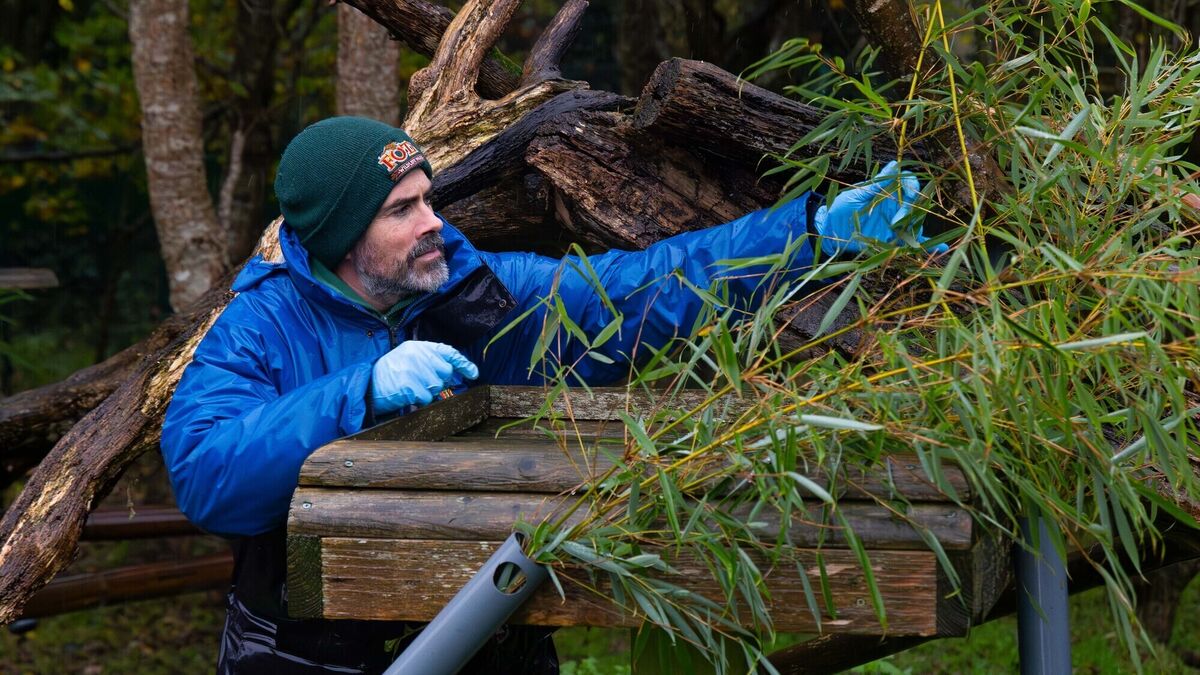
John Leahy, Senior Ranger, tending to the red panda habitat at Fota Wildlife Park, while the Park is temporarily closed. Picture: Michael O'Sullivan / OSM PHOTO
Operational costs are approximately €120,000 per week, so the eight-week closure is estimated to have cost it €960,000 so far. A park spokesperson told The Echo that an update on the park’s re-opening is due later today.
The €700,000 in funding announced by Minister for Nature, Heritage and Biodiversity, Christopher O’Sullivan will be used to support the continuation of vital biodiversity conservation programmes at Fota Wildlife Park, in partnership with the National Parks and Wildlife Service (NPWS), to secure the future of key initiatives for threatened species such as Natterjack Toads, White-clawed Crayfish, Curlew and Dunlin, and Corncrakes.
The funding is being put in place to bolster the continuation of delivery of actions under the 4th National Biodiversity Action Plan, for bespoke and endangered native species work and to support off site conservation management initiatives.
This will serve to increase public engagement, awareness-raising and behavioural change in relation to some of Ireland’s most vulnerable species.
A park spokesperson told : “The closure of Fota Wildlife Park has resulted in significant financial challenges for the not-for-profit organisation. Fota Wildlife Park is a long-term, committed National Parks and Wildlife Service (NPWS) partner, delivering measurable conservation outcomes aligned with the National Biodiversity Action Plan (NBAP) 2023-2030.
“This funding was sought to ensure that critical investment in Ireland’s biodiversity infrastructure continues, and it will allow Fota Wildlife Park’s dedicated teams to continue with our native species work and international conservation programmes.”
Mr O’Sullivan said Fota Wildlife Park has been doing “fantastic work with the NPWS for many years to give the best possible start to some of our most vulnerable species. The early weeks and months are crucial for the long-term success of these species, as they are easy prey for hungry predators.
“Young are captured in the wild, either as eggs, spawn or hatchlings, and brought to Fota Wildlife Park, where they are reared in captivity until they are resilient enough to be released back where they came from. This funding is going to ensure the future of these programmes, and contribute to the broader conservation efforts that the NPWS are leading on to protect these species into the future.”
Aileen Tennant, who is the director of Fota Wildlife Park said the organisation is “incredibly grateful for this vital intervention from the NPWS and the State during a very challenging time.
“With NPWS' support and partnership, we’re engaging in important native species projects, from releasing over 13,000 natterjack toadlets into the wild to supporting breeding waders and rescuing endangered white-clawed crayfish. This funding also helps us continue our research and education work, reaching more than 17,500 students each year.”










 App?
App?


