Farming boost as UCC team develop sensor to cut use of fertilisers
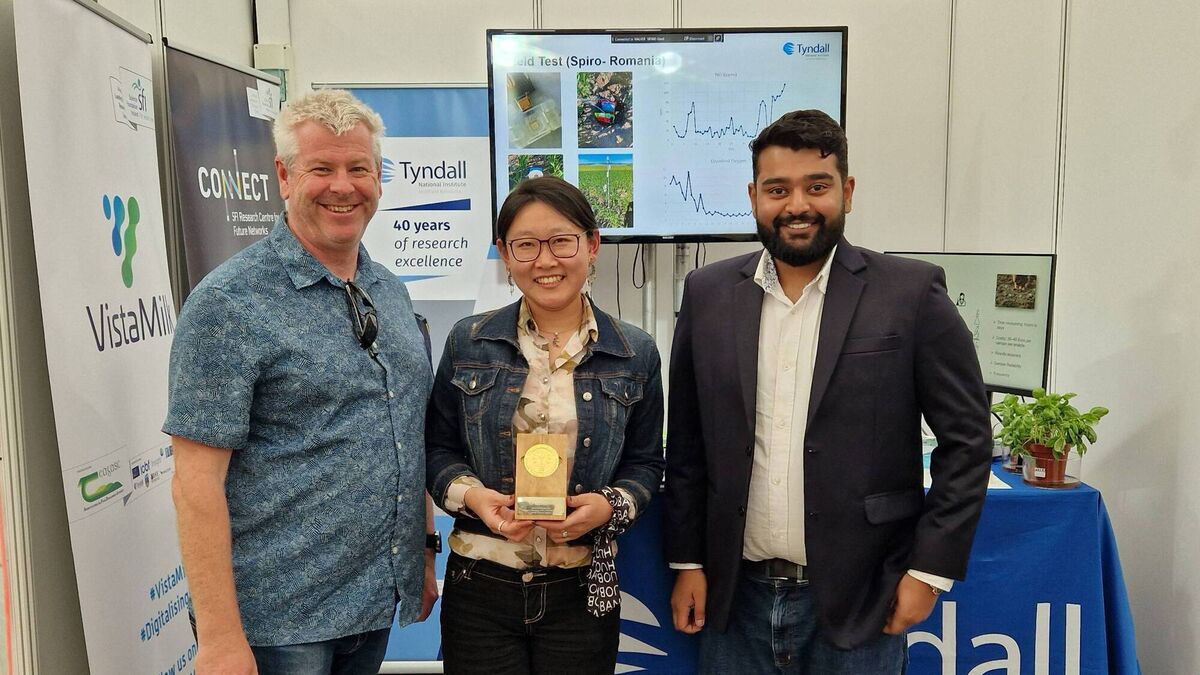
Professor Alan O’Riordan, Dr Han Shao, and Tarun Narayan, the team that have developed the soil sensor.
The project will deliver significant cost savings and a reduction in the harmful environmental impacts of fertilisers, which can cause nitrogen and phosphorous contamination.
The Electronic Smart System sensor works to monitor nutrient levels by being buried in soil. The sensor then connects to the Internet of Things and uses cloud technology to collect and analyse the data, generating a report for the farmer.
The report provides farmers with real-time insights into changing soil conditions, helping them to optimise their use of fertilisers, reduce nutrient losses and monitor their environmental impacts.
The project, which is funded by the VistaMilk Science Foundation Ireland Research Centre, is in line with the EU’s Green Deal objectives and the EU’s Farm-to-Fork strategy, which aims to reduce nutrient losses by 50% and to address air, soil and water pollution.
Speaking to , IFA Munster chairman Conor O’Leary said: “It would really help us to fine-tune fertiliser applications so there is no over-use. This is going to be part of a wider portfolio of new science that’s going to come and help us achieve climate and water quality goals. What it brings to us as farmers is real-time measurements and I think nature is going to be key.”
He added, “Tools like this will give a very definitive picture of what we should and shouldn’t be doing. It would really help us to maximise crop growth and help us reduce any losses. Anything that will give us reasoning or backing to maintain derogation will be key to how we farm in Cork.”
Tyndall Nanotechnology Group professor Alan O’Riordan said: “This a very exciting emerging technology that does not exist elsewhere in the world.
“We are now looking at ways to translate this tech into the hands of farmers through licensing or commercialisation.”






 App?
App?


