Retiring Cork county councillor says abolishing town councils 'was a mistake'
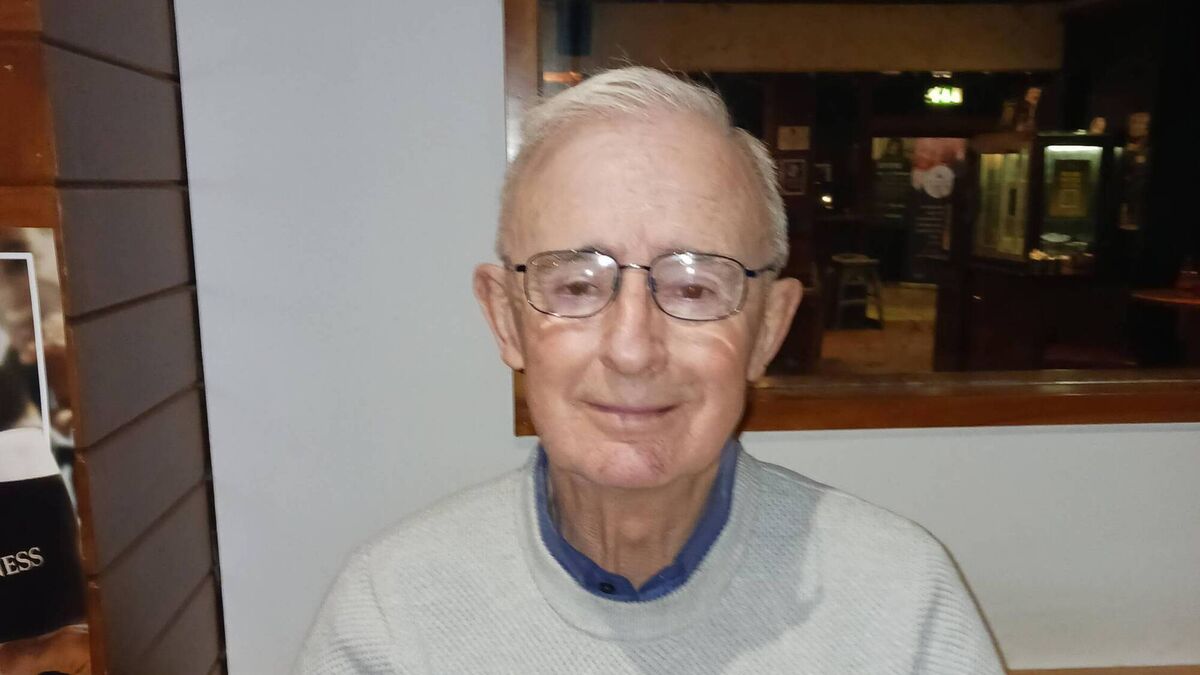
Former Labour Party councillor, James Kennedy, relaxing at home following his retireiment from Cork County Council.
James Kennedy was a Labour Party councillor for Mallow/Kanturk Municipal District since 2019 and, before that, a member of Mallow Town Council for 10 years until its abolition along with all other town councils across Ireland in 2014 as part of austerity measures.
“I thought it was a mistake to get rid of the town councils because they were nearer the people, you just had one engineer there, you had a town clerk and a number of assistants and it was easy to bring people in off the street to bring their problems to them,” said James, echoing a sentiment expressed by many veterans of the town councils.
Connection
“It was a way, way easier for residents’ committees and the likes to get access and that connection has been lost in a way.”
According to the former councillor, Cork County Council “is a good organisation but it’s a beast of an organisation”, pointing to the sheer numbers employed.
“You could have 20 engineers to get around or a manager of this department or that department,” he said.
“It was a learning curve in there just to find your way through the organisation. What I will say that it has been voted on numerous occasions as the best local authority in Ireland ... and it is a good local authority.
“Local government in Ireland is not really local government, it’s local administration, whereas in Europe, people elect their own mayor and they elect their councillors, and the mayor then can decide to put one councillor in charge of housing, another in charge of roads, and another councillor again in charge of education.
“It’s more democratic and the mayors in those towns and cities have real power. That is actually local government.”
The veteran councillor said Ireland had one of the most centralised political systems in Europe.
“It all has to come from the top,” he said. “They got rid of town councils like Mallow Town Council with a simple signature of a pen, they were demolished overnight.”
Last year the Council of Europe published a report on the operation of local government in Ireland and the Congress of Local and Regional Authorities of Europe (CLRAE) found that while Ireland was “a solid democracy”, it remained one of the “most centralised countries in Europe”.
“There is still a lot to be done before local self-government in Ireland is on par with other European countries,” the report concluded.
Among the shortcomings it identified was the “imbalance in power between elected councillors and chief executives in local authorities”.
Limited powers
Mr Kennedy puts it in simple terms: “Councillors can bring motions and we have control over certain areas, but those powers are limited, the chief executive is the boss. We’ve had good chief executives, but they are the boss.”
Asked to point to a motion for which he advocated that had had an impact on policy, the former councillor said he and two colleagues, Fine Gael councillors Liam Madden and Tony O’Shea, moved a motion three years ago to get the listed building designation removed from the Central Hotel in Mallow. Planning permission is now being sought to demolish the building.
“We launched it, and James Fogarty, who was the deputy CEO at the time, got the ball and ran with it,” said Mr Kennedy.
Mallow Relief Road
On the other hand, the case of the Mallow Relief Road illustrated the powerlessness of councillors.
“We in Mallow/Kanturk Municipal District Council have met a lot of delegations about the Mallow Relief Road, it’s vital for our town. We could be said to be at the most advanced state of preparation in the country, and Seán Sherlock TD was told by An Taoiseach four months ago that the money [needed, €1.1m] was there [and] agreed at Cabinet level, but two weeks later the head of Transport Infrastructure Ireland said publicly it was no longer available.”
It subsequently came to light, when the allocation for national roads was made in February, that the Mallow Relief Road project was allocated just €300,000, a massive disappointment to elected members.
“That’s where the power of central Government is felt if you don’t have a minister in your constituency — they bring home the bacon, these ministers.”
Now that he has stepped down from the council, Mr Kennedy looks back on his time as an elected member with pride, but there are also regrets.
Dereliction
“There’s a lot of dereliction in every town in the country but there’s a huge amount in Mallow,” he said.
He said councils do not have the proper power to go after the owners.
“I know a site in Mallow that’s derelict for over 30 years and there’s over 12 owners of the site, which is a pure joke. No government has ever challenged — and I agree with it — the right to own private property, but it’s also in the Constitution that if that is not being used for years and years, there’s a social good that should override that, and that has never been put to the test by any government, which is a disgrace.”
One of the issues is why doesn’t the council use the existing powers under the Derelict Sites Act to put derelict sites on registers and charge the owners the levy.
“Councils have tried to find these people on numerous occasions and they have put every obstacle in their way. If you try to [apply] the 7% derelict building levy, they set up another company with a different name so to be able to not pay that.
“It’s a system that’s too much in favour of the private landlord who has abused it over years and years — the public good should override that.”
He was hopeful a newly created local authority office to deal with derelict buildings would yield some results, adding: “That should have happened a long time ago.”
Parting wish
His parting wish as elections loom is the return of a Town Council-style system and, crucially, more power for councillors, less for the executive.
“Some of the parties have it in their manifestos that a district council will be brought back and a district council here would have Mallow at its centre, and maybe Buttevant and Doneraile; it would have a broader remit.
“Then, when that happens, more powers must be delegated to councillors and lessen the powers to the executive. Parties have promised it for years, but there’s no political will to do that."






 App?
App?


