Ombudsman says equality is key to resolutions as new complaint clinics start in Cork
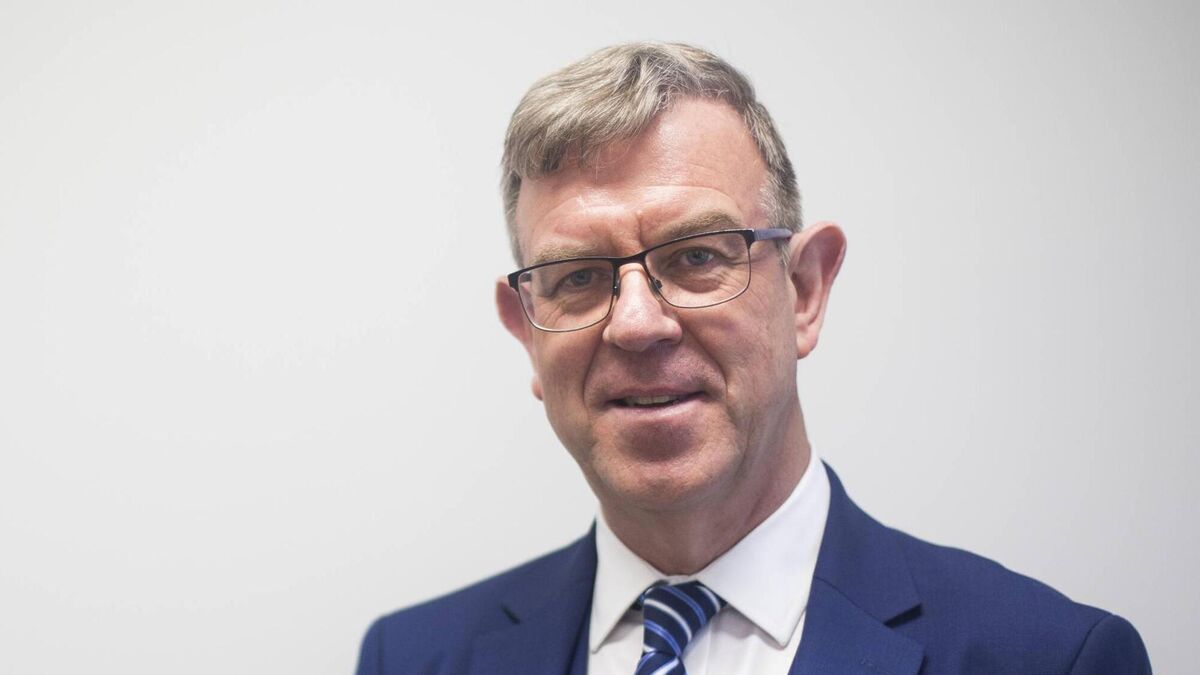
Ger Deering, Ombudsman.
“I THINK it’s really important that people are actually treated fairly.
“And when that doesn’t happen, I think it’s really important that there’s somebody there to turn to, somebody independent.”
So said Ombudsman Ger Deering, speaking to The Echo, as his office this week commenced monthly clinics in Cork where staff can take a complaint from a member of the public who feels they have been unfairly treated by certain public service providers.
Such public service providers include Government departments, local authorities, publicly funded third-level education bodies, the Health Service Executive (HSE), and agencies — such as charities and voluntary bodies — that deliver health and social services on behalf of the HSE.
“It’s important to point out that a public service provider in this context also includes nursing homes.
“People don’t often think of them in terms of our remit, but we also have a remit for nursing homes because they’re predominantly funded from the public purse now as well,” Mr Deering said.
Anyone who makes a complaint to the Ombudsman is first asked to make a complaint to the public service provider they have a grievance with.
“If the public service provider has not resolved the complaint or hasn’t resolved it to their satisfaction, then we start to look at it.
“The first thing we try to do is resolve the complaint informally.
“So, we talk to the complainant and hear their side of the story, we talk to the provider and hear what they have to say and see can we come up with some sort of a solution.
“We do resolve a considerable number of complaints at that stage but, if we can’t manage to do that, we do a full investigation and, where we believe the complaint should be upheld, then make a recommendation to the public service provider,” Mr Deering explained.
“It is, in fact, only a recommendation but there is kind of what I’d like to call a moral suasion on the public body… in the vast majority of cases, they do implement the recommendations.” Appointed in January 2022, fairness is the North Star of Mr Deering’s role as Ombudsman.
“I think it’s really important that people are actually treated fairly.

“And when that doesn’t happen, I think it’s really important that there’s somebody there to turn to, somebody independent.
“Sometimes people think of an Ombudsman as a champion of the consumer or a champion of the service user, but actually that’s not our role.
“Our role is really to be in the middle and to be independent and to be impartial because if we don’t stay in the middle as an impartial decision maker, we kind of lose the benefit of what we do.
“I describe the role of an Ombudsman as listening to somebody small who has a complaint against something big, whether that’s an individual and a Government department or an individual and a local authority, the point is there’s not an equality of arms — if you like — there and what really appeals to me about this role is that we bring that equality of arms,” Mr Deering said.
“We will listen to you in your own terms and ask you what has happened and what I call ‘level that playing pitch’ a bit.” One of the most fulfilling aspects of the role, he said, is the ability to conduct ‘own initiative investigations’.
“One of the first of those that I initiated was an investigation into the treatment abroad schemes,” Mr Deering said.
“We found, from the complaints we were receiving, that the HSE was administering this in far too bureaucratic a fashion.”
REPORT
Concerned by the difficulties complainants had with the schemes, Mr Deering compiled a report entitled In Sickness and in Debt, containing 21 recommendations on how the schemes could be improved.
When CEO of the HSE, Bernard Gloster, was appointed, Mr Deering wrote to him within the first two weeks of him taking up the position to outline the report.
“In fairness to him, full marks, he came back and said he accepted the report and the 21 recommendations,” Mr Deering said.
Such a scenario, “shows the benefits of the office”, he said.
“The HSE is now implementing all 21 recommendations.
“So, not alone are people getting money who should have gotten it at the time and were denied it but, in fact, the way the scheme is being implemented now means that people don’t come up against those kinds of problems anymore.
“There’s a much more practical approach to the implementation of it and they’ve taken on the recommendations, so that’s an example of through an own initiative investigation we can make a big difference in people’s lives.”
However, Mr Deering said the job can be disheartening when hearing from someone who has been treated unfairly.
“One of the things we are working strongly towards is making sure that we bring a human rights based approach.
“Sometimes there’s a bit of mystique around what are human rights, but actually it’s ordinary common decency.
“It’s treating people with respect and dignity and listening to them.
“We’ve sometimes found that that isn’t always evident from how people have been dealt with, but we now ask the public body ‘how does this accord with your public sector duty to treat people with respect and dignity?’.
“And sometimes we see communications that we know are unacceptable.
“There are times when it is frustrating and there are times when you see public bodies which just don’t get it.
“I think sometimes people feel under pressure if they’re questioned and they revert to their original decision, whereas what we ask people to do is take a look at this, if this was your mother or your sister how would you want them to be treated in that situation? The job is both rewarding and frustrating sometimes in equal measure.”
Complaints to the Ombudsman about public services reached a record high in 2022 with just under 4,800 received by the Office nationally — 345 from people in Cork.
“To be fair, there was a big chunk of those which were passport complaints, which I think can be described as sort of a once-off.
“There were particular issues in the Passport Office at that stage so that did see a big increase, but I think one of the positive outcomes of that was we got the Department of Foreign Affairs to improve its communication but most especially to improve its complaint system.
“They had a complaint system where you could actually only complain to them by letter.
“It was ironic because they have an online application process but then if you were unhappy with that, you actually had to write.
“I’m glad to say they have moved on and implemented a better complaint system, so those complaints have reduced quite significantly,” Mr Deering said.
In 2023, the Office received 455 complaints from people in Cork, and while the total figure is being finalised, Mr Deering said he believes it will be roughly on a par with 2022.
“We want people to complain where the service is not good, but we also want public bodies to learn from those complaints and I think the fact that we’re getting different complaints in different areas is positive in a sense, that people are becoming more aware maybe of the office,” he said.
Mr Deering pointed out that a high volume of complaints in itself against a body “is not an indication that the body is not performing well” as the total number of complaints may just be a fraction of the service users that body deals with.
“What we want to know is how do they deal with those complaints when they actually receive them,” he said.
Monthly complaint clinics in Citizens Information Centres (CIC) in Cork city and Mallow commenced on January 10 and will be held on every second Wednesday of the month.
At the monthly complaint clinic, a member of the Ombudsman team can take a complaint in person once the person has already complained to the public body.
“We had been doing these before, prior to covid, and of course, like everything else, they fell away during covid,” Mr Deering said.
“It’s important to point out, we take complaints in all sorts of formats.
“People can go online and they can make their complaint online, they can write to us, they can email us, but they can also ring us because we’re very conscious that not everybody can articulate their complaint in writing, so that’s where their clinics are particularly useful.
“We want to make it as easy as possible for people to make a complaint to us.”
For details on the complaint clinics, or more on the Office of the Ombudsman, see ombudsman.ie.






 App?


