Significant rise in STIs being reported in Cork and Kerry

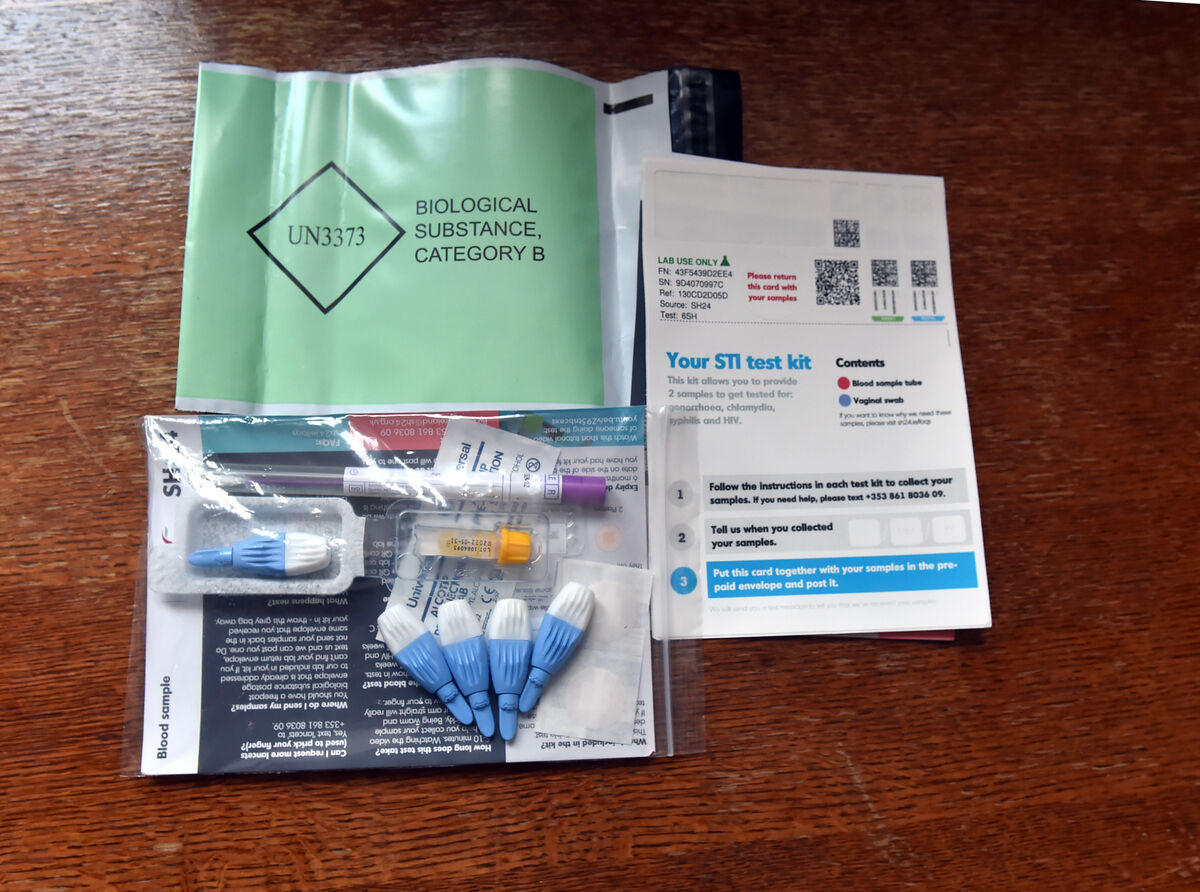
STI Test. Picture: HSE/ SH24.ie
New figures show there’s been a significant rise in the volume of sexually transmitted infections (STIs) being reported, with more than 300 cases reported in the Cork and Kerry region in the first nine weeks of the year alone.
According to figures from the Health Protection Surveillance Centre (HPSC), 2,647 STIs were notified nationally in the first nine weeks of 2022, an increase of more than 53% on the same period last year.
The largest year-on-year increase in notifications was for HIV, with 101 cases notified nationally up to the week ending March 5 of this year compared with 56 cases of HIV for the same period last year, an increase of more than 80%.
Notifications for gonorrhoea are up 76%, while they are up 75% for trichomoniasis, and up over 50% for chlamydia trachomatis infection.
The latest HPSC figures show that in the first nine weeks of the year, 321 STIs and HIV cases were notified in the HSE South region, comprising Cork and Kerry.
Chlamydia trachomatis infection accounted for the vast majority of these cases with 225 cases followed by 45 cases of gonorrhoea, 28 cases of herpes simplex (genital), 16 cases of syphilis (early infectious), six cases of HIV and one case of Lymphogranuloma venereum.
Provisional figures show that overall, 1,371 STIs were notified in the Cork and Kerry region for the whole of 2021 with chlamydia trachomatis infection accounting for 994 of these cases.
Dr Martin Davoren, Executive Director of the Sexual Health Centre, Cork said that the rise in notifications was in part at least due to fact that STI screening has become much more accessible for people as restrictions end.
“As an organisation here, we’ve definitely seen an increase in calls to our helpline and drop-in services, people contacting us, looking for screening opportunities and where they can go and we are filtering them on through to the STI clinic, or onto SH24.ie,” he explained.
“I think during Covid, we were all told to remain social distanced, we were all told to stay at home and services, especially STI services, were restricted due to in part to the fact that STIs sit under the infectious disease arm of the HSE and many people were redeployed, as well as clinics being in tight spaces and having to reduce the numbers coming through clinic.
Dr Davoren said that the availability of the SH24.ie service, which allows people to order a free STI kit which is delivered to their own homes, has also made screening even more accessible.
“SH24.ie has a been a great tool for us because it provides the kind of online resource for people who would like to access a screening tool- it comes to their home, they can do it at home and post it back and I think that as more and more people see that opportunity to access a screen, we are starting to see the results of that coming back.”
Dr Davoren highlighted how some individuals may not have accessed regular screening over the last two years and noted that a HPSC report last year showed that the numbers of people accessing screening were down significantly.
He stressed that many STIs may not cause symptoms and said that with free STI screening services now readily available, people should use the opportunity to access STI screening.
“Sexual health is an integral part of being a human. It is a form of connection and as we become more social and roll back into our lives, this may be something that people may put on the long finger, and they think I must get a screen but I haven't done it over the last while...There’s no time like the present and it’s actually never been simpler. The HSE have really moved to make STI screening an opportunity for everybody,” he said.
“After every risk exposure, after every time they have unprotected sex or they engage in sex with a new partner, it’s really important to have a screen, because that’s really the only way that individuals can be assured that they don’t have an STI and they won’t pass it on to a partner in the future,” he added.







 App?
App?


