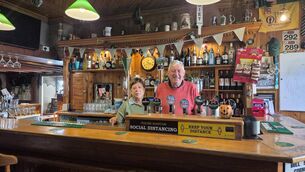
Rick Stein on his food memories...plus three comfort food recipes from his latest book 

Lauren Taylor chats to the TV chef Rick Stein about food memories from a long career and sustainable seafood. Plus, three recipes from his latest book to try at home
Rick Stein on his food memories...plus three comfort food recipes from his latest book 

Stein’s latest book provides step-by-step techniques – from how to make an omelette, doing pasta from scratch and making homemade mayonnaise, to perfectly cooked rice or fileting fish. Picture: James Murphy/Press Association

Veteran TV chef Rick Stein is a “naturally disorganised” person but the process of cooking brings him a sense of structure.

“I think that’s part of the pleasure for me of cooking – you have to conquer your natural disorganisation. Because if you’re not organised, you’re not going to cook well,” he says.

Stein, 79, adds: “I’ve got plenty of imagination and knowledge about how this should taste. My only problem is getting organised to make sure that I can carry that out successfully.

“I think it’s just conquering the disorder of things with order and achieving it.”

Stein made his name in the 1970s after co-founding The Seafood Restaurant in Cornwall, and through appearances on BBC cooking and travel shows in the 1980s, before his debut series Taste Of The Sea in 1995.

A lot has changed in the culinary world in that time.

“I started properly cooking in the ’70s, and during those early years, it was one of the excitements, working with new ingredients that other people wouldn’t know about,” says Stein. “Particularly artichokes, coriander, obviously lots of different types of fish which people had never heard of.

But it was a “struggle to get those things accepted by people”, says the chef and cookery author, whose new book, Rick Stein’s Cookery Course, shares many key kitchen skills and brings together 60 years of learnings.

“I can remember when we started using monkfish – I guess in the ’70s – when nobody knew anything about monkfish. We had this fish pie on [the restaurant menu] at the time called seafood thermado, and it used to say ‘crab, lobster, and other white fish’, and the white fish was always monkfish because it’s really firm, it stands up really well in a fish pie.

“But if you put monkfish on [the menu], nobody would go near it.” Some 50 years later, the fish is considered a delicacy.

Sardines, he says, needed to be renamed in the 1990s to get people to eat them. “They used to be called pilchards. That was the thing in those days, unless you made a big fuss about stuff that people didn’t know, you had to name them something else that people did.”

It was a similar tale with basil, “People wouldn’t have travelled to Italy,” Stein says, and most wouldn’t have known the herb.

“And certainly chilis – you had to be incredibly careful about what you said about how chilli would affect people. By then, I’d started going to India quite regularly and was in Mexico and was very happy to put chilli into various fish dishes.

“For a long time, we had this dish called Singapore chilli crab on the menu and the only way you could sell it – because it’s still in its shell – is to say ‘this is for people who like eating with their fingers’.

“It’s always been a bit of a struggle to get people to accept oysters,” too.

Stein is, of course, a proponent of sustainable fish eating. The best thing to substitute cod for his hake, he says, or coley, which some used to turn their noses up at “just because it’s not quite as white in its raw form, people think it’s not as nice but it’s absolutely lovely”.

He recommends pouting and whiting, too – “in terms of flat fish, Cornish sole is very nice,” Stein says.

“Brill is another flat fish similar to turbot, it’s not got the same quality, but it’s very well-flavoured. John dory, bream, again, has got a lot of flavour.

“There’s a big campaign in Cornwall to try and get people to eat more spider crab, [so] they called it Cornish king crab. Spider crab is beautifully flavoured, but the problem is it’s difficult to get out of the shell – far, far harder than brown crab. Once you have it out of the shell it pays off.

“One of the good things about trying to persuade people to eat different species to those well-known ones is that it takes the pressure off the stocks of those well-known ones.

“And it’s not really what the fish tastes like, it’s what you do with it and put it with. If the fish is a bit on the bland side, then you put something quite tasty with it.”

Monkfish tail is often the preferred part but, “there’s a big head which has these really chunky, firm, fleshy cheeks. They’re great because they’ve got this firm flesh”.

They aren’t the most flavourful part of the fish on their own, “but in a fish pie or with a cheese sauce, cheeks are totally wonderful, and the same with cod cheeks. I’d put them in a veloute or a bechamel cheese [sauce] with either a bread-crumb top of a mashed-potato top and gatinate them in the oven”.

Stein’s latest book provides step-by-step techniques – from how to make an omelette, doing pasta from scratch and making homemade mayonnaise, to perfectly cooked rice or fileting fish – as well essays on his nostalgic reminiscences over a long career, and 150 recipes. There are classics like steak and Guinness pie, lemon sole meuniere, and chocolate fondants, as well as some twists.

Some classic techniques are simpler than we might think, too – like souffles. “It sounds very grand, a twice-baked souffle,” says Stein. “But actually, souffles are really easy to make. The problem is timing [if you’re in a rush].

Rick Stein’s Cookery Course: Recipes And Techniques From A Lifetime In The Kitchen is published in hardback by BBC Books.

Cornish pasties 

The perfect cold-weather comfort food.

“I like to use butter and lard for the pastry as this does create a great texture,” says Stein. “Grating them means the pastry is flecked with streaks of the fat, giving a lovely flaky result.
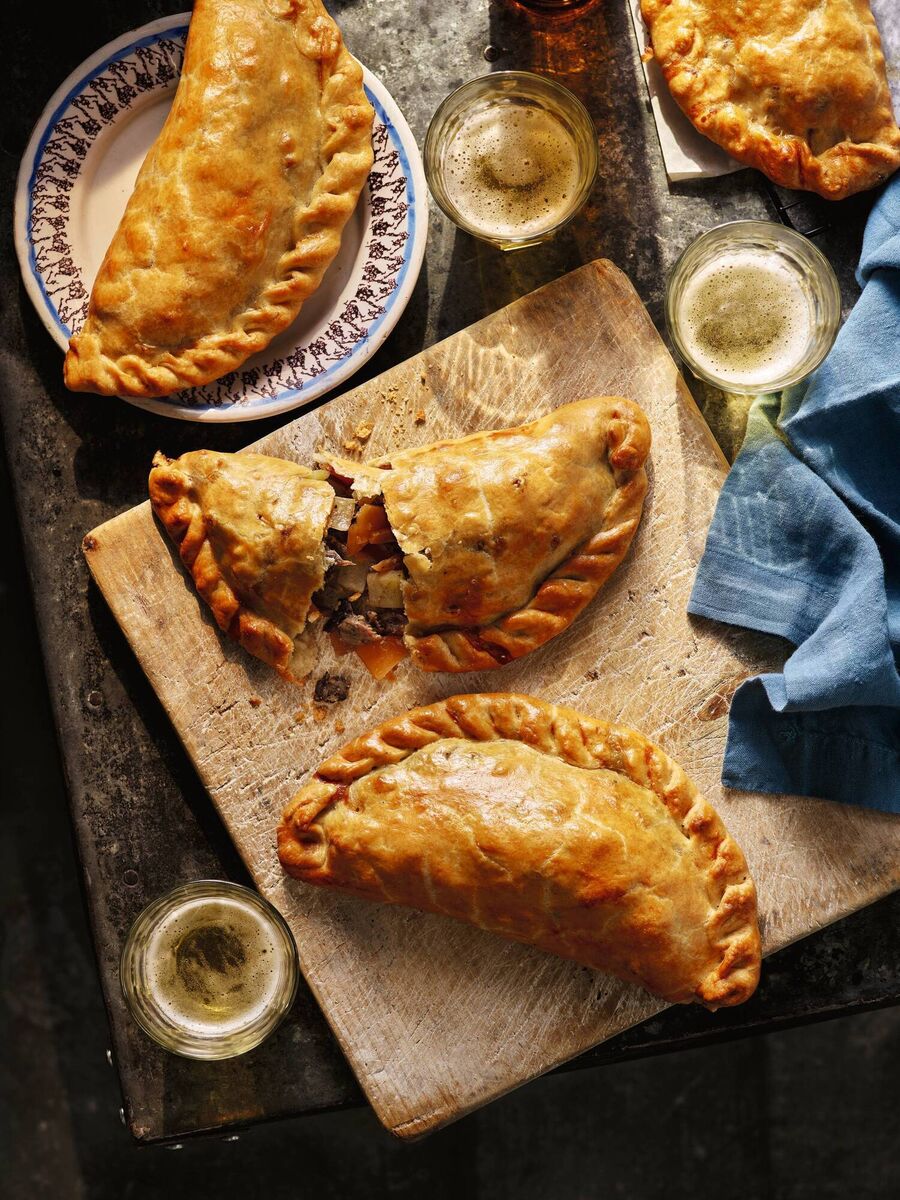
Rick Stein's Cornish pasties. Picture: Jamie Orlando Smith/Press Association 

“Traditionally, Cornish pastries don’t contain stock – the juiciness derives from the connective tissue slow-cooking beef skirt or chuck provides. In fact, though one might be tempted to give pasties more gravy by adding stock, they don’t taste like the real thing. I say this because I had a Cornish pasty in Australia recently and it tasted like an Aussie meat pie, albeit in a pasty shape. And the beef was minced.”

Ingredients (makes 4)

450g beef skirt or chuck steak

225-350g swede

750g potatoes, peeled

225g onion or shallot

1 beaten egg, or milk to glaze

Salt and black pepper

Pastry:

100g lard

100g butter

450g strong white flour, plus extra for dusting

A good pinch of salt

175ml very cold water

Method

1. Put lard and butter for the pastry in the freezer and leave until they are very hard.

2. Meanwhile, prepare filling. Trim any gristle off meat. Cut it and any fat into 5mm pieces. Peel and chop swede into similar-sized pieces. Slice potatoes and chop the onion or shallot, then mix all the filling ingredients together in a bowl. Season with plenty of salt and pepper.

3. For pastry, sift flour and salt into large bowl, then grate lard and butter straight from freezer into the bowl. Gently mix the fat through the flour, then using a table knife, stir in water a tablespoon at a time until the mixture comes together. Turn dough out onto a lightly floured surface and briefly knead into a ball. Put it back into the bowl, cover and chill for an hour.

4. Preheat oven to 180C/Fan 160C. Cut pastry into 4 even pieces and shape each into a ball. Roll them out, one at a time, on a floured surface into circles 20-23cm in diameter. The pastry should now be the right thickness, about 3-4mm. Place upturned plate of that size on each circle and trim into neat rounds.

5. Divide filling between the rounds, seal and crimp. Grease and flour large baking sheet. Brush pasties with beaten egg and place on the baking sheet, leaving 5cm between each. Bake for hour.

Broad Bean, Wild Garlic & Leek Risotto

Rich, creamy and packed with flavour.

“A little obsession of mine,” enthuses Rick Stein. “I love them [broad beans], but unless the beans are young and tender you do have to what I call double-pod them for this dish – that is, remove the grey outer skin of each bean.”

Ingredients (serves 4)

300g podded broad beans, fresh or frozen and defrosted.

60g butter

1 leek, trimmed, halved lengthways and finely sliced

300g Arborio rice

100ml white wine

1-1.2 litres hot vegetable stock

Handful of wild garlic, washed and chopped (or 3 garlic cloves, chopped, plus a handful of flatleaf parsley)

60g Parmesan, grated

Salt and black pepper

Method

1. Remove the greyish outer skins from the beans – you should have about 200g after doing this.

2. Melt half the butter in a large pan and add the leek. Sweat for about 3-4 minutes until soft, then add the rice and stir. Once the rice is all coated in buttery leeks, add the white wine and allow it to boil and bubble up.

3. Add the hot stock a ladleful at a time, stirring frequently until each addition is absorbed before adding the next. Continue until you have only a couple of ladlefuls left, then stir in the broad beans and add the remaining stock.

4. Take the pan off the heat and stir in the wild garlic, three-quarters of the grated Parmesan and the rest of the butter. Stir until well combined then season with salt and pepper. Serve with the remaining Parmesan.

This simple dish is perfect for a warming supper on a chilly evening.
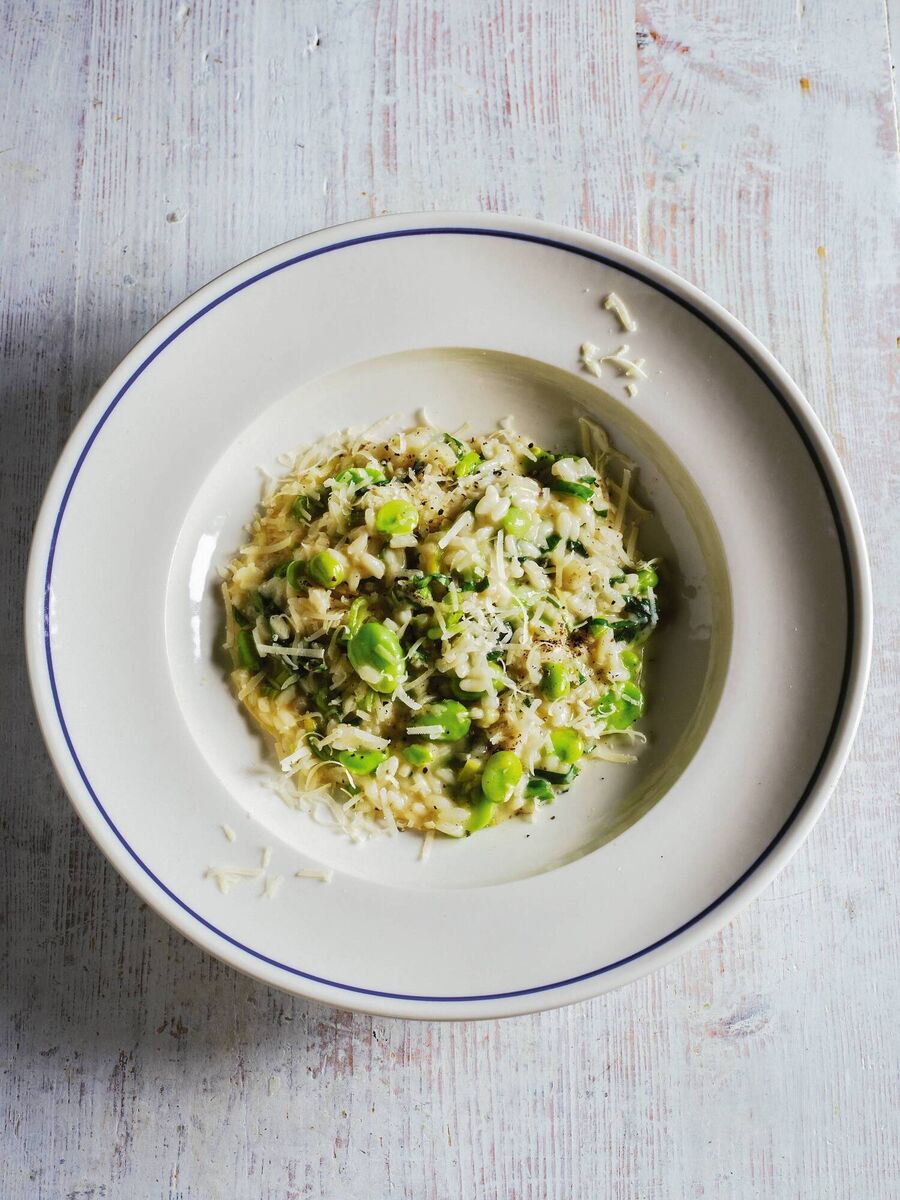
Rick Stein's broad bean, wild garlic and leak risotto. Picture: James Murphy/Press Association 

“This recipe demonstrates how to pan-fry a thick fillet of fish with the skin on. Most of the cooking is done skin-side down over a moderate heat and only the last 15% of the time is with the fillet turned over,” says Rick Stein. “This ensures the skin has a pleasing brown colour and crispness. The other point of this dish is the French ideas of using Asian spices in a sotto voce manner in butter sauces. I think you will find the Puy lentils go very well here. Alternative fish: barramundi, blue cod, blue-eye trevalla, coley, haddock, hake, hapuka, Murray cod and pollock.”

Cod with Puy Lentils & Red Wine Sauce

Ingredients (serves 4)

4 x 175g pieces of thick skin-on cod fillet

75g unsalted butter

50g each onion, carrot and celery, finely chopped

Small pinch each of ground allspice, ground cloves and grated nutmeg

A large pinch of curry powder

600ml red wine

600ml chicken stock

1tsp sugar

1tbsp plain flour

Salt and black pepper

Lentils:

50g dried Puy lentils

300ml fish stock

1 clove and 1 bay leaf

2 slices of peeled onion

½ tsp salt
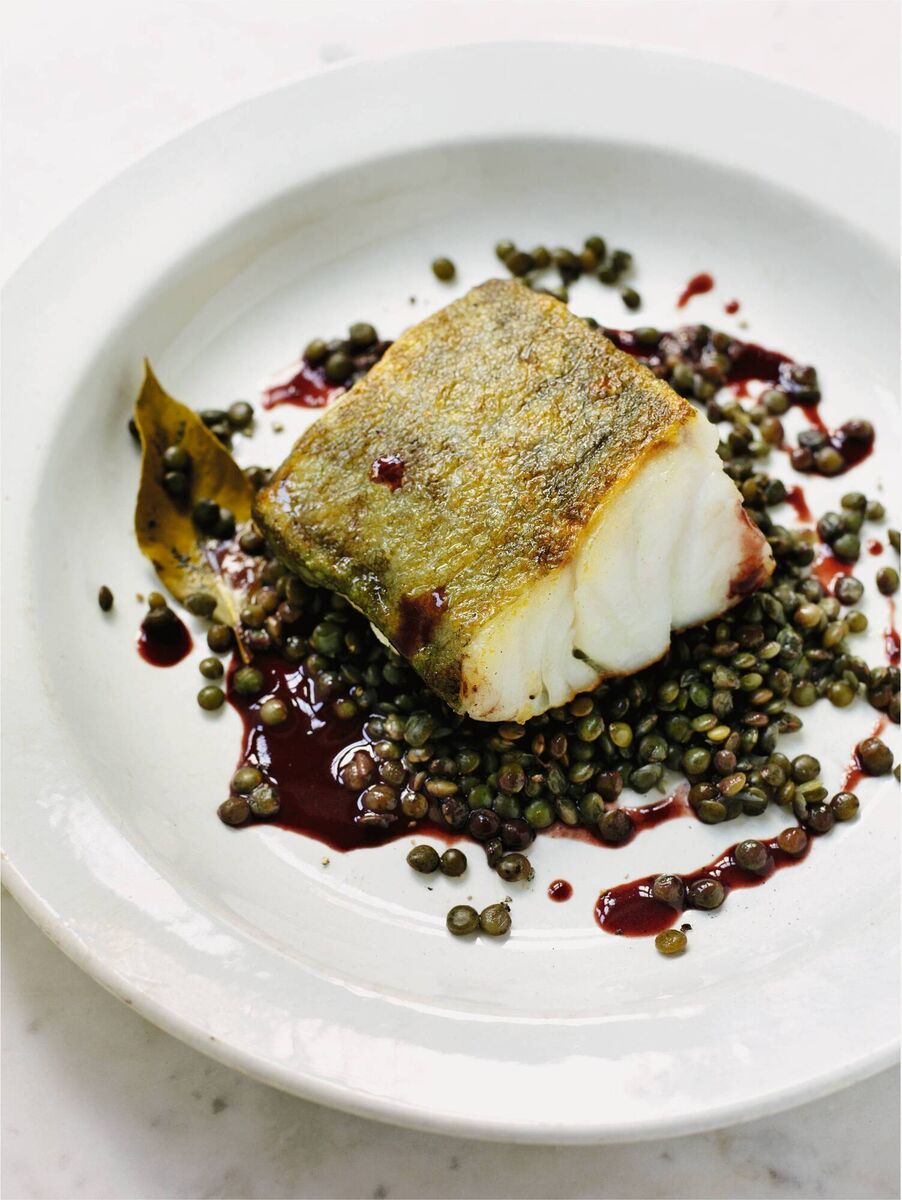
Rick Stein's cod with puy lentils. Picture: James Murphy/Press Association

Method

1. Put all ingredients for lentils into pan and simmer for 20-25 minutes until tender. Drain, then cover and keep warm.

2. Season cod with salt and pepper. Melt 50g of butter in non-stick frying pan over moderate heat. When butter is hot and starting to foam, add cod fillets, skin-side down, and cook for 8 minutes without turning. Carefully turn to cook the white side for a couple of minutes, then remove the fish from the pan with a slotted spoon and set aside.

3. For sauce, add chopped onion, carrot and celery and spices to melted butter in pan. Fry over medium heat for about 10 minutes, then add red wine, stock, sugar and ¼ teaspoon of salt. Bring to boil and boil until the sauce is reduced by three-quarters and is concentrated in flavour. Strain into a clean pan and keep warm.

4. Mix remaining 25g of butter with flour to make a smooth paste (beurre manié). Bring sauce to boil, then whisk in the paste a little at a time. Simmer for 2 minutes until smooth and thickened.

5. To serve, spoon the lentils on to 4 warmed plates and place the cod, skin-side up on top. Spoon the sauce around the lentils and fish.


More in this section

Five family friendly events at the Cork International Film Festival  Five family friendly events at the Cork International Film Festival 
My Weekend: 'When I'm off, I like to spend time with friends and family' My Weekend: 'When I'm off, I like to spend time with friends and family'
'It's like being a part of the history of Cork': Meet the Holly Bough cover artist 'It's like being a part of the history of Cork': Meet the Holly Bough cover artist

Sponsored Content

JSA Planning strengthens Cork presence as region prepares for next phase of growth JSA Planning strengthens Cork presence as region prepares for next phase of growth
CanesMeno sponsored Menopause: One in four say the biggest emotional burden is the pressure to appear fine
Tesco How Tesco is helping build friendship, purpose and community under one Men’s Shed roof
Contact Us Cookie Policy Privacy Policy Terms and Conditions

© Examiner Echo Group Limited

Add Echolive.ie to your home screen - easy access to Cork news, views, sport and more