Books: ‘At the first sign of a cold, I reach for my seaweed cure’

Food, medicine, fuel... seaweed has many uses, and West Cork author KATHY CUDDIHY explains how she even used it as a plot point in her latest murder mystery novel
Books: ‘At the first sign of a cold, I reach for my seaweed cure’

Kathy Cuddihy: "In our house, seaweed baths are a regular treat. A relaxing soak leaves the skin feeling like silk"

Driving along the Goat’s Path Road on the Sheep’s Head Peninsula in West Cork, I spotted a group of people making their way across the rocks, carrying bags and baskets.
They weren’t fishermen looking for a good spot, and they weren’t swimmers easing into the chilly water. They were gatherers, following a tradition locals have maintained for generations: collecting seaweed.

This gift of the sea has long played an important role in Irish life, both culturally and commercially, as fertiliser, food, medicine, fuel, and a source of income.

The hand-cutting technique, sometimes difficult and dangerous, depending on the location, is governed by tides, seasons, and accumulated knowledge: which seaweeds to gather for which purposes, when and how to gather it, and how much to take without exhausting the supply.

Seaweed was once valuable enough to cause bitter altercations between landowners and tenants. For farmers, it was an essential fertiliser, particularly in regions where the soil was poor.

Access to the shoreline could mean the difference between a productive field and a poor harvest.

In the 19th century, disputes over who had the right to gather seaweed sometimes ended up in court.

This question came to the fore not long ago in Bantry. When a Tralee-based company applied for a licence to mechanically harvest more than 1,860 acres of the bay’s seaweed, objections flared.

For some in the local community, this was personal. They weren’t simply opposing a commercial enterprise; they were defending their heritage.

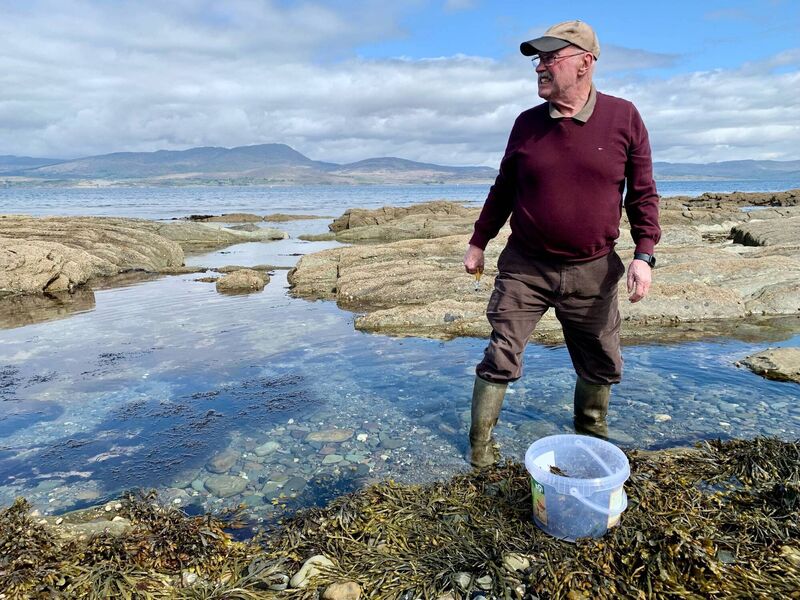
Kathy Cuddihy's husband Sean collecting seaweed. She says he has perfected the art of a seaweed bath

During a period of several years, conservationists fought, through media campaigns, public protests, and court cases, to preserve the rich kelp forest.

Although the company argued that the seaweed would regrow, conservationists questioned whether mechanical harvesting on such a scale could adequately protect an ecosystem on which fish, crustaceans and fishermen depend.

The hand versus machine-harvesting debate isn’t simple. A UCD-led study, published in 2023, estimated that manual harvesting of wild seaweed could supply only about 8.4% of a projected production target of 900,000 tonnes. This points to the potential need for seaweed farming and other harvesting methods.

The study also found that hand-harvesting wild rockweed was more environmentally sustainable than mechanical harvesting of kelp.

Against this backdrop, Ireland currently harvests an estimated 25,000-40,000 tonnes of seaweed annually, with more than 95% coming from wild sources.

Scientific research continues to discover new uses for seaweed, from nutrition and cosmetics to medicine and biotechnology.

Growing interest in these applications is reflected in the increasing demand for Ireland’s high-quality seaweed.

For generations, knowledge of edible and medicinal seaweeds has been passed from mother to daughter. When I first came to Ireland, my Irish mother-in-law introduced me to carrageen moss. She told me it’s often boiled with milk to make a set pudding, and used in home remedies for coughs and colds.

I can vouch for the latter. At the first sign of a cold moving to the chest, I break off a handful of the dried carrageen and heat it in water with honey and lemon. It’s a soothing drink, and one I’ve come to rely on.

Eating seaweed was sometimes associated with poverty, particularly during periods of famine, when coastal communities turned to the shore for food.

A medieval Irish verse, probably dating from the 12th century and originally attributed to St Colmcille, describes the daily activities of a monk: gathering dillisk (dulse) from the rocks, fishing, giving food to the poor, and spending time in his cell.

Nowadays, seaweed is marketed as a superfood. Restaurants and cookbooks showcase it on menus and in recipes, while health food shops carry a wide variety of seaweed products, including dried kelp, powders and snacks.

Increasingly, it also features in skincare products.

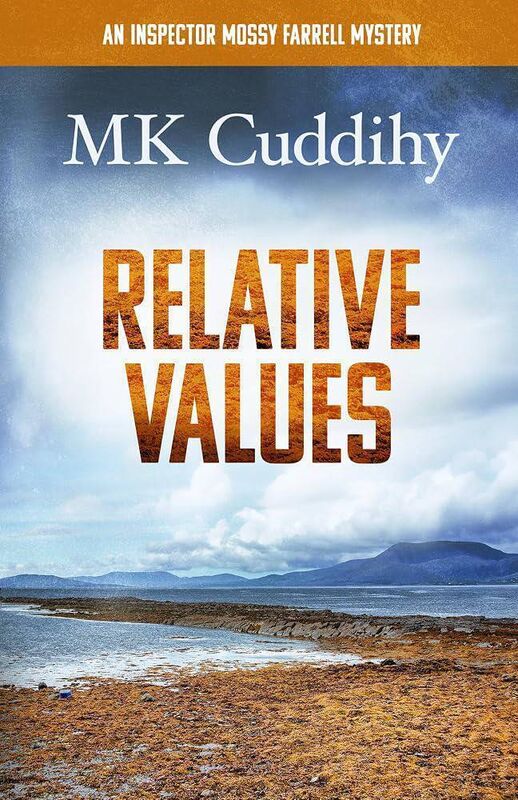
Relative Values: An Inspector Mossy Farrell Mystery, by MK Cuddihy

Long before spa days became fashionable, seaside towns offered seaweed baths. This tradition is being revived, albeit with a bit of a twist. Some entrepreneurs are promoting warm seaweed baths in repurposed Irish whiskey barrels.

In our house, seaweed baths (in the bathtub!) are a regular treat. A relaxing soak leaves the skin feeling like silk.

My husband Sean has perfected the preparation technique: hanging a bladderwrack-filled mesh bag from the tap, running hot water over it to release the natural compounds, then adding cooler water to moderate the temperature.

Before Sean gets in the bath, I give the bag a squeeze and apply the gelatinous substance to my face for a sea-nourished complexion.

Who needs an expensive facial when you have Bantry Bay on your doorstep?

Seaweed, it turns out, is useful for all sorts of things, including providing the plot for my latest murder mystery.

It was the long-running Bantry Bay controversy that inspired Relative Values, the second book in my Mossy Farrell series.

I asked myself, what if? What if, instead of allowing the law to decide the outcome, someone took matters into their own hands? What if the fight to reap the bay’s rewards was secondary to something darker? What if this wasn’t just about winning, it was also about surviving?

These questions were behind the story that became Relative Values. Read the book to find the answers.

Relative Values, by MK Cuddihy, is available on Amazon.

Join the author, Kathy Cuddihy, on November 19 at noon at the Bantry Bookshop for a book signing and chat.

Sign up for her monthly newsletter Prose & Cons at www.mkcuddihy.com.

You can follow Kathy on Facebook and Instagram @mkcuddihy.

More in this section

My Weekend: 'When I'm off, I like to spend time with friends and family' My Weekend: 'When I'm off, I like to spend time with friends and family'
'It's like being a part of the  history of Cork': Meet the Holly Bough cover artist 'It's like being a part of the  history of Cork': Meet the Holly Bough cover artist
My Weekend: I love to entertain and cook a roast beef dinner or a pot of stew My Weekend: I love to entertain and cook a roast beef dinner or a pot of stew

Sponsored Content

JSA Planning strengthens Cork presence as region prepares for next phase of growth JSA Planning strengthens Cork presence as region prepares for next phase of growth
CanesMeno sponsored Menopause: One in four say the biggest emotional burden is the pressure to appear fine
Tesco How Tesco is helping build friendship, purpose and community under one Men’s Shed roof
Contact Us Cookie Policy Privacy Policy Terms and Conditions

© Examiner Echo Group Limited

Add Echolive.ie to your home screen - easy access to Cork news, views, sport and more